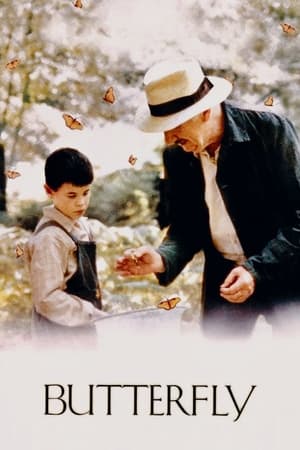
The film centres on Moncho and his coming-of-age experience in Galicia in 1936. Moncho develops a close relationship with his teacher Don Gregorio who introduces the boy to different things in the world. While the story centres on Moncho's ordinary coming-of-age experiences, tensions related to the looming Spanish Civil War periodically interrupt Moncho's personal growth and daily life.
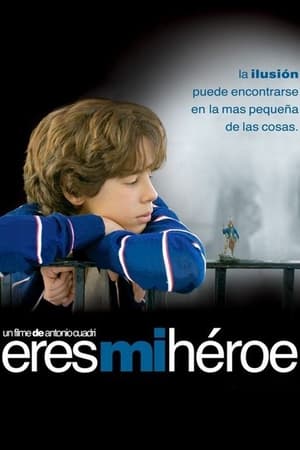
Thirteen-year-old Ramon is on the verge of many adolescent discoveries -- and the confusion that goes along with them. Shy and awkward, he's moved from town to town throughout his childhood and believes that life is about winning and losing. But he soon learns it's all about survival. Like Ramon, Spain is in transition (President Francisco Franco is about to die); it's a time of social upheaval marked by change, illusion and struggle.
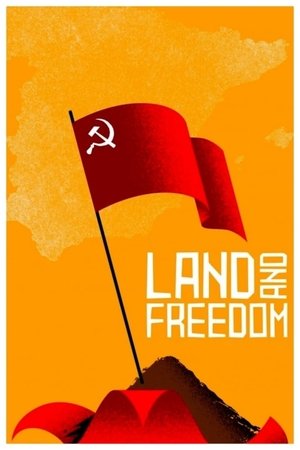
Summer 1936: young unemployed communist David Carr leaves Liverpool to join the fight against fascism in Spain. He joins an international group of Militia-men and women, the POUM (Partido Obrero de Unificación Marxista). After being wounded, he goes to Barcelona, where he joins another group of fighters.
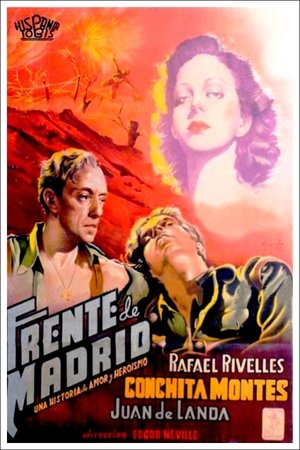
Javier Navarro, a Falangist, is ordered to infiltrate Republican Madrid to deliver a message to a member of the Fifth Column.
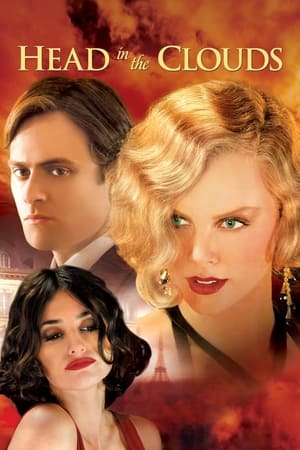
Gilda Bessé shares her Paris apartment with an Irish schoolteacher, Guy Malyon, and Mia, a refugee from Spain. As the world drifts toward war, Gilda defiantly pursues her hedonistic lifestyle and her burgeoning career as a photographer. But Guy and Mia feel impelled to join the fight against fascism, and the three friends are separated.
Spain, 1938. A woman is quietly planting seeds in her garden when two armed soldiers appear. Before being detained, she hides some of the seeds in her pocket.
Spanish poet Federico García Lorca is condemned to death by Captain Nestares after an absurd interrogation that serves to make it clear to the people that the Spanish Civil War is a war of ideas, and that there is no place for individuals like Lorca in Spain.
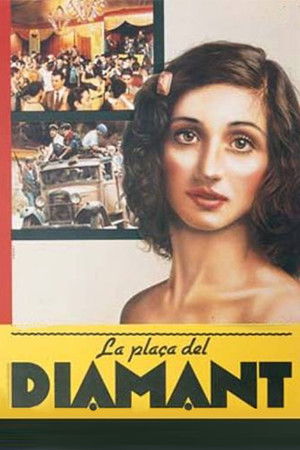
Colometa is an average housewife with two children to care for in the late 1930's, as the Spanish Civil War is starting and her husband goes off to fight. She had been an ordinary woman working in a shop when she met the lively carpenter who married her, and their life together was without major problems. But now she is forced to raise her children under straitened circumstances, and after her husband dies, her life undergoes another major change as she marries for the second time. Underneath Colometa's acquiescent, forebearing exterior must lie just a few discontents, a few unrealized dreams - but they never surface as she blithely moves from one episode in her life to another.
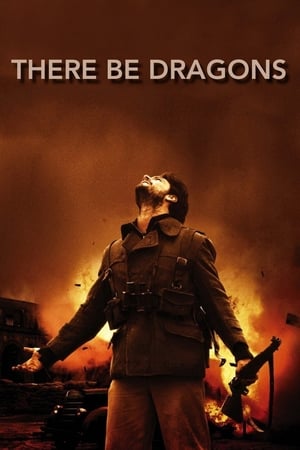
Arising out of the horror of the Spanish Civil War, a candidate for canonization is investigated by a journalist who discovers his own estranged father had a deep, dark and devastating connection to the saint's life.While researching the life of Josemaria Escriva, the controversial founder of Opus Dei, the young journalist Robert uncovers hidden stories of his estranged father Manolo, and is taken on a journey through the dark, terrible secrets of his family’s past.
An adaptation of the J.P. Sartre story "Le Mur". What goes on in his mind and what happens outside when he has left only few more hours left to live. The existential dilemmas of a prisoner condemned to death from a repressive regime for his participation in a resistance movement and his friendship with the leader of this resistance. When all seems lost and he has already given up the most unlikely coincidence changes the course of events and his life.
A short opera about the assassination of poet and dramatist Federico García Lorca at the hands of Nationalist forces at the beginning of the Spanish Civil War.
La fossa
At the end of the Spanish Civil War, the members of a group of vaudeville performers have been stripped of everything: all they have left is hunger and the instinct to survive. Day after day, agonizingly, lost and helpless between the victors and the vanquished, the musician Jorge, the ventriloquist Enrique, the couplet singer Rocío and the orphan Miguel search tirelessly for something to eat and a safe place to live.
Los ojos perdidos
1938. During the Spanish Civil War, a soldier is executed along with his comrades. Under the corpses of his friends he discovers that he is not dead.
Love story during the Spanish civil war in a psychiatric hospital.
In the last four days of his life, fear took over the figure of the poet Federico García Lorca.
Ángel Pedrosa (Álex González, Fernando Luján) returns to Bruma (Córdoba), his hometown, from where he had to flee during the Civil War. He returns to reconstruct his family's history, to forgive himself, and to remember others. Ángel stitches together the fragments of his life during Spain in the second half of 1939. His first love, the hatred of the post-war period, the intolerance and the passages he went through until he had to flee, hastily, out of his homeland to not return until many years later.
During the early moments of the Spanish Civil War, in a spanish village, Isidoro lives with his father Lucas and his horse Coco. Isidoro witnesses how his father, torn apart by their debts, wages his frustration upon Coco.
Based on the life of Marino Ayerra, who was appointed as parson priest of Alsasua (Navarra) two days before the start of the Spanish Civil War.