It was the biggest escape in the history of the Berlin Wall: in one historic night of October 1964, 57 East-Berliners try their luck through a tunnel into West Berlin. Just before the last few reach the other side, the East German border guards notice the escape and open fire. Remarkably, all the refugees and their escape agents make it out of the tunnel unscathed, but one border guard is dead: 21-year-old officer Egon Schultz.
This remarkable documentary dedicates itself to an extraordinary chapter of the second World War – the psychological warfare of the USA. America’s trusted cartoon darlings from the studios of Warner Bros., Paramount, and the “big animals” of the Disney family were supposed to give courage to the people at the homefront, to educate them, but also to simultaneously entertain them. Out of this mixture grew a genre of its own kind – political cartoons. Insightful Interviews with the animators and producers from back then elucidate in an amusing and astonishing way under which bizarre circumstances these films partially came into existence.
A collection of television celebrities pitch United States Savings bonds.
No one knows why for certain, but from 1968 to 1973 communist Albania enjoyed a brief liberalisation in the arts. Banned books and Beatles records changed hands. Albania’s Nobel-nominated novelist Ismail Kadare wrote two of his most famed masterpieces, Kështjella (The Castle) (1970) and Kronikë në gur (Chronicle in Stone) (1971) during this period. The rock'n'roll and jazz arrangements featured in this concert documentary were the pretext that brought about the end to the artistic thaw. Several performers seen in the festival were sent to prison or internal exile. The portly, smiling music conductor, Gasper Çurçia, was later accused of forging bus tickets and executed.
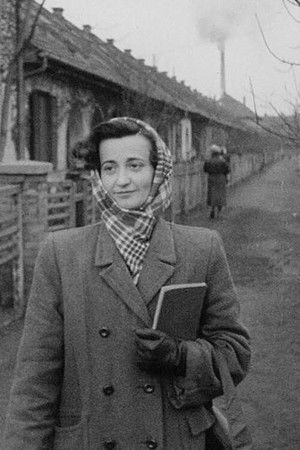
Made by the highly influential Russian cameraman Roman Karmen, this documentary vividly features Albanian life immediately after the communists came to power in 1944. The film is especially memorable since it’s missing much of the heavy socialist realism that marked Albanian doc making. Shortly after he completed the film, Karmen set off for Berlin to shoot the Soviet victory over Nazi Germany.
The story of Viktor Stratoberdha (1921-1991) mirrors many of Albania’s tragedies. Stradoberdha’s humorous, buoyant style led him to be one of the country’s most promising filmmakers. But after being denounced in 1956, he was expelled from the Kinostudio and sent into internal exile. In 1967, Stratoberdha directed a local theater play in which the economic five year plan was placed in a coffin. He was then jailed for the next two decades. Urime Shokë Studentë! is one of the surviving documentaries of Viktor Stratoberdha’s all too short career.
18. April
Social democracy propaganda film about future dreams for Denmark in 1960. Although Denmark is free again, the former opponent and worker, Svend, is disillusioned: "It is all something soft". The dream of the future is incarnated by a young woman, Karen, who shows Svend the visions of a better life in the 'youth's land'. There are homes and a nuclear-powered car for everyone.
Leading biblical scholars and religious experts discuss the implications of the Rapture, when prophecies predict that Jesus Christ will return to Earth and his true believers will be transported to meet him.
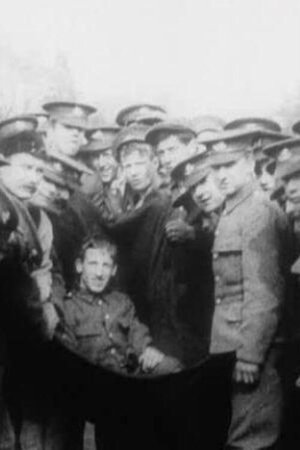
Compilation short film about the Communist Revolution and Soviet Union.
Holocaust survivors, children of survivors, and grandchildren - as well as German freedom fighters - express their shock at the Covid era's fear-mongering and divisive dictates that are reminiscent of the prelude to the Holocaust. This ambitious five-part docu-series is the brainchild of Holocaust survivor and human rights activist Vera Sharav.
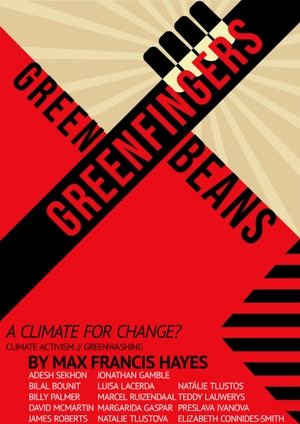
Spin doctors spread misinformation and confusion among American citizens to delay progress on such important issues as global climate change.
Based on the book by Major Alexander de Seversky's about his theories of the practical uses of long range strategic bombing. Using a combination of animation humorously telling about the development of air warfare, the film shows de Seversky illustrating his ideas of how air power could win World War II for the Allies.
The story of Istituto Luce and it's newsreels, full of visual records of the social and political history of Italy under Mussolini's leadership.
Warsaw's Central Railway Station. 'Someone has fallen asleep, someone's waiting for somebody else. Maybe they'll come, maybe they won't. The film is about people looking for something.
The story of how newspapers were distributed during the Blitz, stressing the importance of an accurate and objective press on the home front.
An exploration —manipulated and staged— of life in Las Hurdes, in the province of Cáceres, in Extremadura, Spain, as it was in 1932. Insalubrity, misery and lack of opportunities provoke the emigration of young people and the solitude of those who remain in the desolation of one of the poorest and least developed Spanish regions at that time.
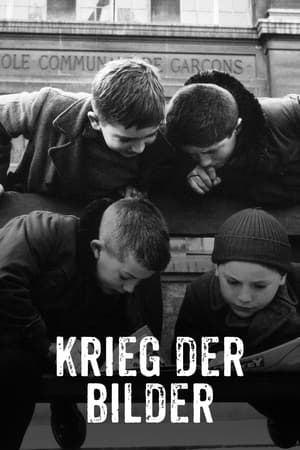
A Nazi propaganda film about the lead up to World War II and Germany's success on the Western Front. Utilizes newsreel footage of battles and fell into disfavour with propaganda minister Goebbels because of it's lack of emphasis on Adolf Hitler.
Programming the Nation? takes an encompassing look at the history of subliminal messaging in America. According to many authorities, since the late 1950s subliminal content has been tested and delivered through all forms of mass-media including Hollywood filmmakers Alfred Hitchcock and William Friedkin. Even our modern military has been accused of these practices in the "war on terror" against soldiers and civilians both abroad and at home. With eye-opening footage, revealing interviews, humorous anecdotes, and an array of visual effects, the film categorically explores the alleged usage of subliminals in advertising, music, film, television, anti-theft devices, political propaganda, military psychological operations, and advanced weapons development. Director Jeff Warrick makes it his personal mission to determine if these manipulative tactics have succeeded in "programming the nation?" Or, if subliminal messaging belongs in the category of what many consider urban legend.
As the debate over the state of America's public school system rages on, one thing everyone agrees on is the need for great teachers. Yet, while research proves that teachers are the most important school factor in a child's future success, America's teachers are so woefully underpaid that almost a third must divide their time between a second job in order to make a living. Chronicling the stories of four teachers in different areas of the country, American Teacher reveals the frustrating realities of today's educators, the difficulty of attracting talented new teachers, and why so many of our best teachers feel forced to leave the profession altogether. But this wake-up call to our system's failings also looks at possibilities for reform. Can we re-value teaching in the United States and turn it into a prestigious, financially attractive and competitive profession? With almost half of American teachers leaving the field in the next five years, now is the time to find out.