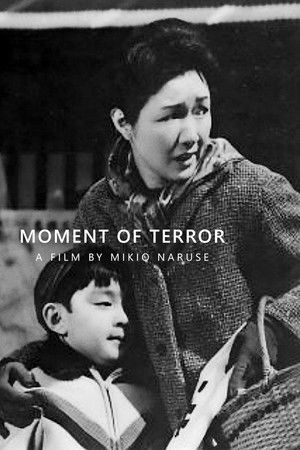
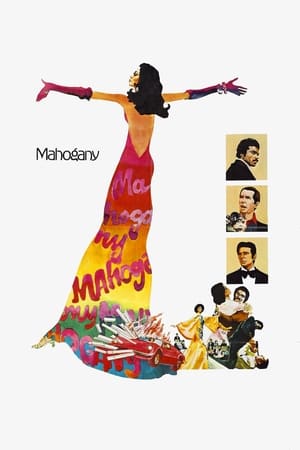
Keiko, whom everyone calls Mama, narrates her story: she's a hostess on the Ginza, 30, a widow. She describes life's vicious cycle: acting cheerful around drunks, dressing and living well to convey confidence, needing money for these expenses and for her demanding mother and brother, and knowing she's growing older.
AMERICAN COUP tells the story of the first coup ever carried out by the CIA - Iran, 1953. Explores the blowback from this seminal event, as well as the coup's lingering effects on the present US-Iranian relationship. Includes a segment on the 1979 Iranian Hostage Crisis and its relation to the 1953 coup. Concludes with a section on the recent Iranian presidential election. Contains interviews with noted Middle East experts and historians and prominent public figures such as Stephen Kinzer (author, All The Shah's Men), Prof. Ervand Abrahamian, Trita Parsi, Col. Lawrence Wilkerson, Ted Koppel and Rep. Ron Paul of Texas. With Iranian cinematography by James Longley.
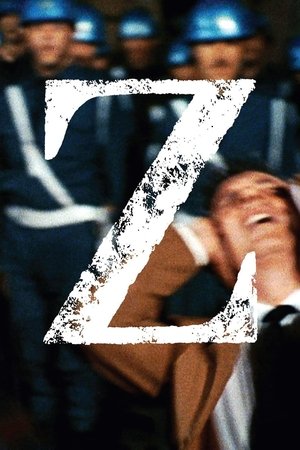
An actress of political torture movies made by her husband has to finish his latest film and arrange a screening for distributors while the husband, who is also secretly an anarchist revolutionary, is away for some resistance operation.
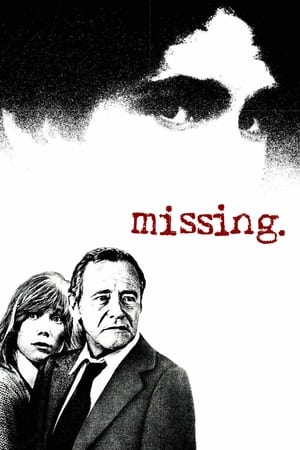
Committed pacifist Tom Jordan's decision to help former President Rivera escape a military coup is a simple act of mercy that takes him and his wife to the edge of despair. It turns them into outlaws and fugitives, hunted by a vicious South American regime; yet it could also bring them together in a way they have never been before.
It is a famous saying: "One can come to power with a bayonet, but not sit on it." The organization, which carried out 27 May, came to power with a bayonet. Moreover, these young officers seized power that night by breaking the traditional chain of command. In the morning, a 10-year DP period was over, the support of the public was gained at first hand, and a brand new phase was reached. Now, the days that would mark the future of Turkey were beginning. Now, as those days put it, the "second republic period" was beginning.
Two westerners, a priest and a teacher find themselves in the middle of the Rwandan genocide and face a moral dilemna. Do they place themselves in danger and protect the refugees, or escape the country with their lives? Based on a true story.
In the past, when spring came, there was a spring atmosphere in politics. But the spring of 1959 brought the CHP's spring offensive on the contrary. Seeing that the opportunity for a dialogue was completely lost after Menderes' plane crash, İsmet Pasha put on his boots in April and took his 46 deputies with him to the expedition. The chosen route was the route of the Great Offensive in the War of Independence. Uşak, where İnönü took the Greek Commander-in-Chief Trikupis prisoner, was the first stop...
Defense attorney Martin Vail takes on jobs for money and prestige rather than any sense of the greater good. His latest case involves an altar boy, accused of brutally murdering the archbishop of Chicago. Vail finds himself up against his ex-pupil and ex-lover, but as the case progresses and the Church's dark secrets are revealed, Vail finds that what appeared a simple case takes on a darker, more dangerous aspect.
A young lawyer defends a black man accused of murdering two white men who raped his 10-year-old daughter, sparking a rebirth of the KKK.
A portrait of Chinese writer Liu Xiaobo (1955-2017), a witness of the Tiananmen Square massacre (1989), a dissident, a woodpecker who tirelessly pecked the putrid brain of the Communist regime for decades, demanding democracy loudly and fearlessly. Silenced, arrested, convicted, imprisoned, dead. Nobel Peace Prize winner in 2010, alive forever. These are his last words.
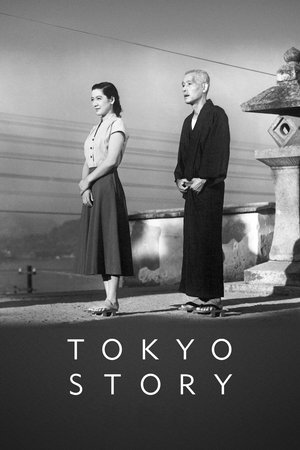
The elderly Shukishi and his wife, Tomi, take the long journey from their small seaside village to visit their adult children in Tokyo. Their elder son, Koichi, a doctor, and their daughter, Shige, a hairdresser, don't have much time to spend with their aged parents, and so it falls to Noriko, the widow of their younger son who was killed in the war, to keep her in-laws company.
Late 18th-century Joseon dynasty. The King is beleaguered and surrounded by traitors of the ruling elite. They plan to assassinate and replace him with a puppet. But the King has some aces up his sleeve that may help him defeat them all.
In this fact-based made-for TV film, Gary Gilmore, an Indiana man who just finished serving a lengthy stay in prison, tries to start anew by moving to Utah. Before long, Gary begins an ill-advised romance with the troubled Nicole Baker, a teenage single mother. As their relationship quickly deteriorates, Gary goes on a murderous rampage, leaving two dead. During his trial, he demands capital punishment; a media circus ensues and outsiders look to profit from his story.
Komari Sano's parents ran a small Tokyo factory that manufactured aircraft parts. With her parents' influence, Komari Sano dreamed of becoming a pilot. During World War II, her older brother died as a kamikaze pilot and her parents died during the bombing of Tokyo. Komari Sano became an orphan and lived with her aunt. Her aunt ran a ryotei (high end traditional restaurant). After the war, all aerial activities were initially banned in Japan. After long negotiations with the Supreme Commander of the Allied Powers, Sizuo Matsuki, who is the security chief of Civil Aviation Bureau, finally launched Japan's civil aviation. Komari Sano applies for the position of a cabin attendant.
And When the Magnolia Bloom
In 2017, twenty years after the British handed over Hong Kong to China in 1997, young people, more politicized than any previous generation and proud of their land, do not feel Chinese and actively fight against the oligarchs who want to subdue them to China's authoritarian power.
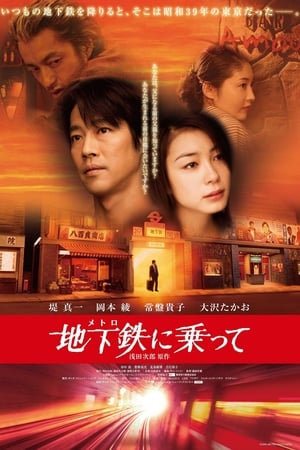
Shinji (Shinichi Tsutsumi) steps out of a train station to find himself transported back to 1964.
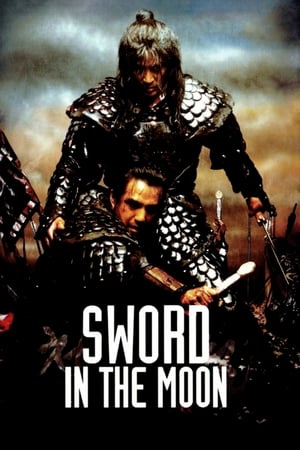
Kingdom of Joseon, ancient Korea. A usurper has conquered the throne. His ministers are being systematically eliminated by a mysterious assassin. An arrogant master swordsman is in charge of putting an end to the carnage.
Post-war Yokosuka, Kanagawa Prefecture. Adults who are swayed by the US military stationed in the country and swayed by US intentions cannot afford to care about children who should be protected. The war orphans, who had no choice but to survive on their own, were used to shining shoes for American soldiers, picking up cigarettes, and sometimes committing crimes. However, at some point, they came across a "cleaning" job. They work hard instead of committing crimes and earn money by being appreciated by people. The orphans begin to regain their smiles through experiences that make them feel like they should be alive. The children started to have a modest dream of "renting a house and living" with their own earnings, but they were attacked by an even harsher reality...
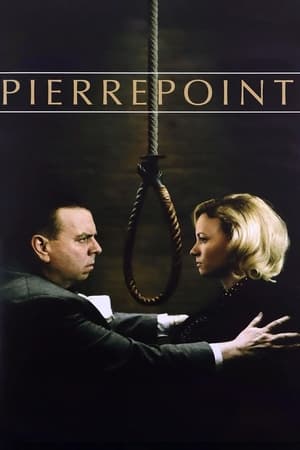
A newspaper publisher, wanting to prove a point about the insufficiency of circumstantial evidence, talks his possible son-in-law Tom into a hoax in an attempt to expose ineptitude of the city's hard-line district attorney. The plan is to have Tom plant clues leading to his arrest for killing a female nightclub dancer. Once Tom is found guilty, he is to reveal the setup and humiliate the DA.