The first of a planned trilogy. Nikola Tesla's tales as told to a female cub reporter assigned to cover him, seeking to reveal the secrets of a man who had come to be labeled a "mad scientist".
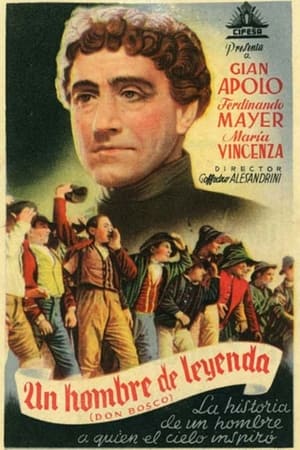
Follows the life of Catholic Priest John Bosco (1815–1888).
The year is 1764. For over a year, Josef has been leading a precarious life in Venice. He hopes to become an opera composer. The city, full of talented and already-established composers, seems closed to him. Looking for work as a violinist, he comes into the orbit of a rich young woman. Thanks to her, he gets the opportunity to play at salons. But his real opportunity arises when he becomes the lover of a libertine marquise. She teaches him worldly manners, rids him of signs of a provincial upbringing and introduces him to a hedonistic existence free from religious intolerance. Thus transformed, Josef gets an incan incredible commission: to write an opera for the San Carlo, Europe's largest theatre.
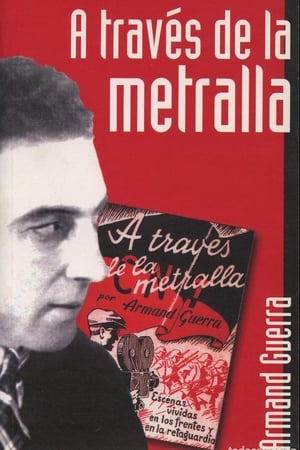
A re-enactment of the Jules Durand case. In 1910, Jean Jaurès [leader of the French socialist movement] took the lead in defending a working-class coal miner, Jules Durand, accused of complicity in and condemned to death for the murder of a labor leader. As in the Dreyfus Affair, a false dossier had been used to convict Durand. Jaurès argued that the memory of the Dreyfus Affair saved Durand, calling the case the working class’s Dreyfus Affair.
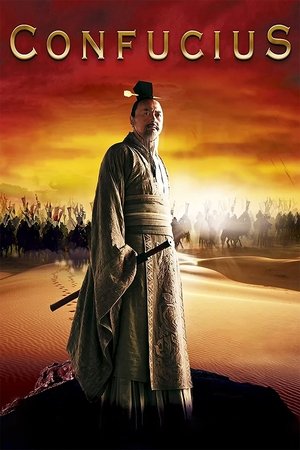
In 500 B.C., during Chinas famed 'Spring and Autumn Period', Kong Ze (Confucius), a commoner reverred for his outstanding wisdom, is made Minister of Law in the ancient Kingdom of Lu. Under his inspired leadership, Lu ascends to new heights but becomes a target of conquest for the warlike nation of Qi. Threatened with annihilation by their powerful neighbour, a desperate people turn to their greatest teacher to lead their most powerful army. When Confucius delivers a stunning victory against all odds, a jealous aristocracy sets out to destroy him, but they should never under-estimate a remarkable man whose wisdom is more powerful than the sword.
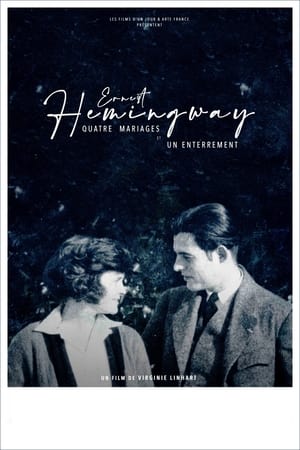
A look at the intimacy of the US writer Ernest Hemingway (1899-1961), a man infinitely more complex than his public image suggested, through the story of his relationship with his four wives.
Unable to live in his father's gigantic shadow, Mahatma Gandhi's eldest son, Harilal, gets distraught and resorts to alcoholism.
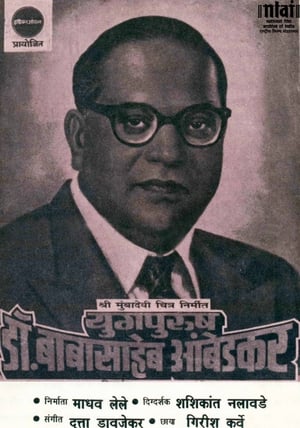
A film based on one of the world's greatest pioneers Dr. Babasaheb Ambedkar.
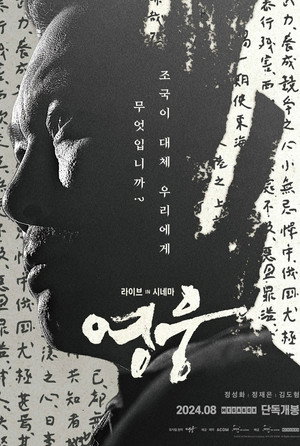
In 1909, the Korean Empire is on the verge of losing its sovereignty to Japan. Patriot Ahn Jung-geun and his comrades pledge their lives to the movement for Korea's liberation. Seol-hee, a court lady of the late Empress, also expresses her intent to join the independence movement. Ito Hirobumi, the first Japanese resident-general on the Korean Peninsula, heads to Harbin to pursue his dream of advancing into Asia. On Oct. 26, 1909, a shot rang out at Harbin Station. Beloved son, father of two children, and husband, Ahn Jung-geun, assassinated Ito Hirobumi. In court, Ahn claims not to be a terrorist, but a prisoner of war desperate to protect his beloved homeland, Korea. Who is the one guilty of a crime?
Indonesian activist Soe Hok Gie experiences a political awakening during the tumultuous regimes of Soeharto and Soekarno.
The Son of Sam, David Berkowitz testimony of his involvement into the occult, his descent into cold-blooded murder, his arrest, and his surprising conversion to Christianity in his years in prison.
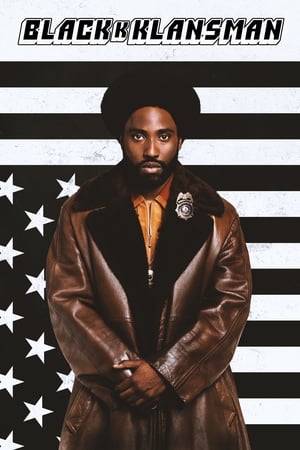
Colorado Springs, late 1970s. Ron Stallworth, an African American police officer, and Flip Zimmerman, his Jewish colleague, run an undercover operation to infiltrate the Ku Klux Klan.
An ongoing experiment, evolving from a biopic about Soviet physicist Lev Landau into a large scale project – part cinematic cycle, part behavioral experiment – involving hundreds of participants from around the world. Combining elements of film, theatre, science, psychology, architecture, visual arts and performance, it has created a complex and absorbing world that has to be lived as much as seen.
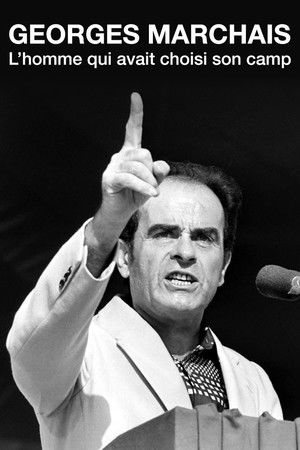
Both a political narrative and a psychological reflection, this documentary explores the personal journey of a quarry worker’s son from Calvados who rose to become the last great figure of the French Communist Party. It delves into the logic that shaped his path and his lasting impact on France’s history.
The life of a great man, his deeds and their impact on his family.
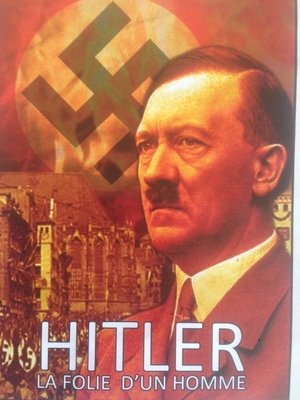
Hitler, la folie d'un homme
A dramatized account of Denmark's first women's rights activist, Mathilde Fibiger. Based on letters and diaries, it depicts her life and views from the 1850s, when she published the controversial epistolary novel Clara Raphael, until 1872, when she died at the age of only 41.
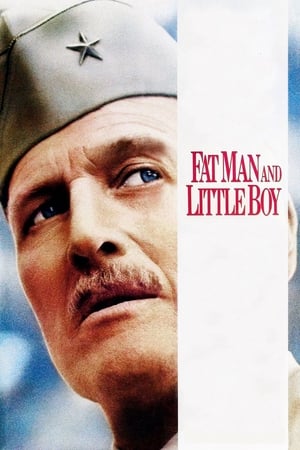
Assigned to oversee the development of the atomic bomb, Gen. Leslie Groves is a stern military man determined to have the project go according to plan. He selects J. Robert Oppenheimer as the key scientist on the top-secret operation, but the two men clash fiercely on a number of issues. Despite their frequent conflicts, Groves and Oppenheimer ultimately push ahead with two bomb designs — the bigger "Fat Man" and the more streamlined "Little Boy."
Vlčí halíř
Barely 22, Franz Klammer finds himself at the “eye of the storm” when he shows up for the men’s downhill competition at the 1976 Winter Olympic Games. Since the previous season the charismatic newcomer has won virtually every race. The pressure from the media and the public and the hopes of an entire nation are off the scales. His sponsor is pushing him to switch equipment right before the competition, the weather is getting steadily worse, and his toughest rivals know that Franz has to do better than just a flawless run. Franz senses that he has to find his own path and that only the love of his life can give him the strength to do that. This is the most important race of his life in which he skis a line that nobody even thought was possible and which will make him to this day a legend in the sport of downhill skiing.