Berlin, 1930, during the rise of Nazism. Hermann Hermann, a Russian emigrant and chocolate manufacturer, married to the capricious Lydia, loses his temper more and more every day when dealing with his workers and other businessmen; until he meets Felix, a vagrant, who seems to be physically identical to him; a disconcerting fact that leads Hermann Hermann to plot a particular way out of a fake world he actually hates.
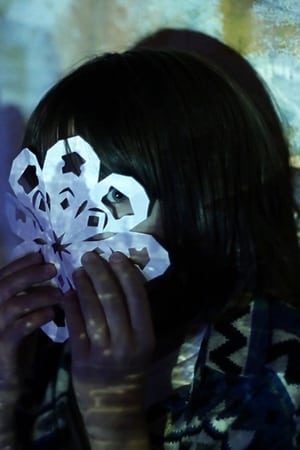
Two co-workers, one a vain woman and the other an awkward teenager, share an increasingly bizarre relationship after becoming roommates.
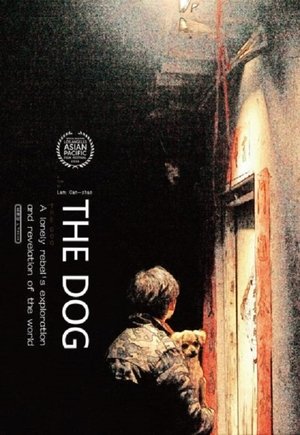
The story tracks the unhealthy and abusive relationship between an unnamed man and his wife in the days following his return to north eastern Tangshan. He's coming back to her as a wanted fugitive for a series of rapes and murders.
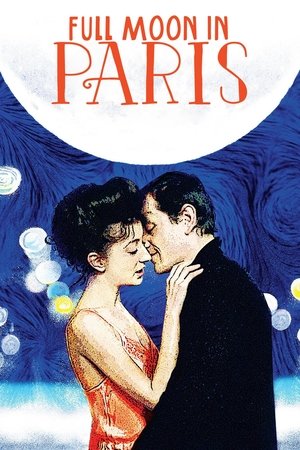
The veneer of the story is a tale of chance love: two French expatriates strike up a chance romance when they meet on a ship headed back to South America.
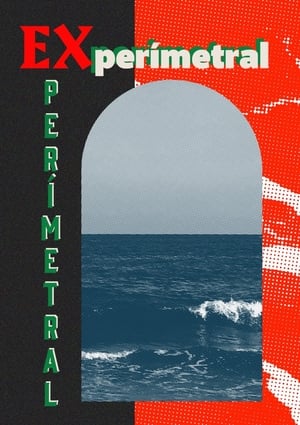
Images that take the viewer to the sea, before dark.
Without any sounds, dialogues and with unknown actors, the images are the focus of this film. Images that want to awake, to question determinant moments, state of a system's languages, the morality of deaths, the immobility, the silence, among other subjects. Shot at the height of the Brazilian military dictatorship, it is an affront to the most diverse types of repression in that period.
"We Go Past Future" is an experimental paper collage film by Anna Malina. The film reimagines a series of Soviet films from 1919 to 1953, blending them into a unique visual narrative.
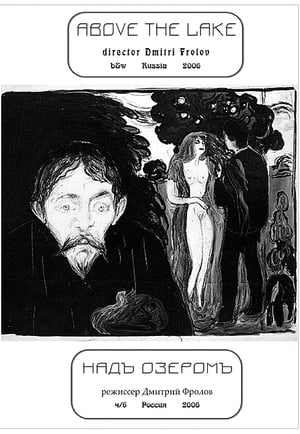
A journey into a mind of an artist with creative crisis.
A short Avant-Garde experimental film
Lou and Noodles are consumers. Adrift and empty, they are separate from each other and from the world. Ruled by desire and uncontrollable drives to excess, they spend their solitary hours in spaces both real and unreal. Occasionally, they are in the same part of the mall.
A spiral design spins. It's replaced by a spinning disk. These two continue in perfect alternation until the end: a spiral design, a disk. Each disk is labelled and can be read as it rotates. The messages, in French, feature puns and whimsical rhymes and alliteration. The final message comments on the spiral motif itself.
A couple stroll through a wintry landscape - Is this a dream? Is this Heaven?
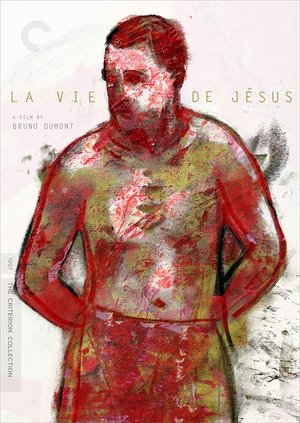
A deeply disturbed and epileptic young man benignly decides to murder other members of his dysfunctional family for altruistic reasons.
A Japanese fairy tale meets commedia dell'Arte. All in white, the naïf Pierrot lies in a wood. Doo-wop music plays as he rises, stares about, and reaches for the moon. Although music abounds and the children of the wood are there at play, Pierrot is melancholy and alone. Harlequin appears, brimming with confidence and energy. He conjures the lovely Colombina. Pierrot is dazzled. But can the course of true love run smooth?
In a world where everyone is expected to be on point 24/7, life isn’t lived anymore — it’s performed. Always grinding. Always proving. Always “doing fine”. But the mind keeps score. And when it can’t take it anymore… the body hits pause. JEEVA is a social satire on today’s pressure culture — where being human is replaced by being perfect, and panic attacks are just the body’s way of saying: slow down. breathe. exist.
Forough is a middle aged woman whose husband has temporarily married with another woman. Even though that was kept secret from her, but his action is considered legal in Iran. Now the husband is in prison, due to not being able to pay second wife’s “Mehrieh” (the bride’s marriage portion).The second wife intends to receive her Mehrieh by asking the court’s permission to sell his house. Forough, the first wife, in order to not lose her home, intends to sell all she has to pay for her husband’s debt and release him from the jail.
A satire about an alien who lands in Belgium and tries to attain citizenship. During the integration programme he experiences discrimination and unfairness whilst he just wants to fit in with the rest.
Tinskani mourns the death of his friend and mentor, Salvador. His partner, Citlali, urges him to attend the funeral with her, but Tinskani is haunted by the photograph of his friend's corpse. He'd rather wander through the town’s carnival, camera in hand, seeking to replace that ghostly portrait with new ones.
The film appears like a ritual with splendids and crypteds psalms. The Great Master of Order (Marcel Mazé, new fetish actor after Aloual) seduces the young male prey with a running cinema projector which carves Murnau's Nosferatu extracts on their bodies. Metamorphosis, rituals passages, Eros and Thanotos, illusion and reality, film into the film are the themes and images in perpetual osmosis in this Stéphane Marti's opus.
A true story of shocking violence catapults a picturesque little town into history. The close sibling relationship between the two maids takes on a new dimension as their overbearing employer discovers a sexual fever between the two sisters.