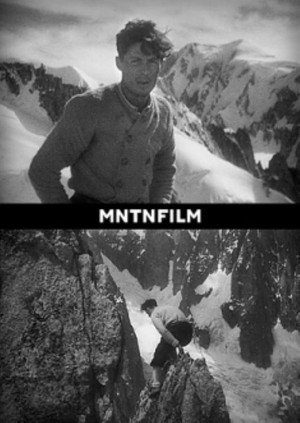
Investigation by the Museum of Walloon Life showing the different stages of the manufacture of rifle barrels using the so-called "Damascus" process, in Nessonvaux in 1925 and 1931
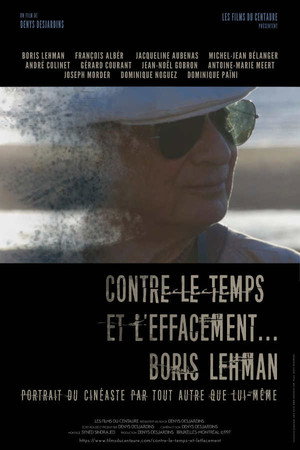
One of the most intimate and obstinate filmmakers in Belgium, Boris Lehman acts, directs, produces, and distributes his films, single-handedly incarnating the essence of a creator who manages to survive on the fringes of his industry. From Brussels to Paris, friends, filmmakers and critics offer their understanding of a man for whom life is a reason to film, and film, a reason to live.
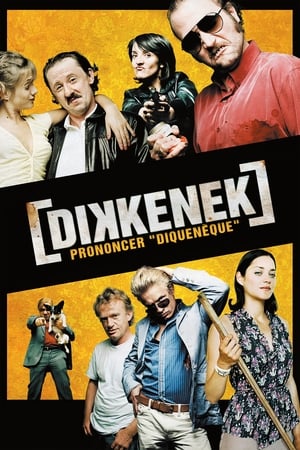
Jean-Claude is a loud-mouthed, know-it-all and full time boor who is best friends with Stef, a self-styled lady killer who would do better with the fairer sex if he could work up the ambition to wake up in the morning. Stef has decided that he may need some help in finding the woman of his dreams, and embracing loyalty rather than logic he turns to Jean-Claude for advice.
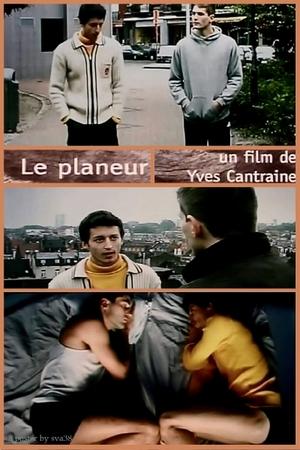
Bruno pursues Fabrice, runs without calculation, to fly away with him, until the end.
David Bono is a hitman hired to target Orshanabi Nazzar, a high-ranking priest-bureaucrat in a temple corporation in the fictional city of Babylonia (Brussels-based). The corporation has invented a way to avoid death by recording people's lives. While gathering information and preparing for the job, David meets Ellie, with whom they slept together. However, Ellie is a member of a cult called Children of Ishtar, and David's job would interrupt their life-recording ceremony. Facing an obsessive dilemma, David tries to find a way to do his mission without killing Ellie. First, he tries to convince Ellie not to attend the ceremony, and then he hires a local crook to kidnap her while he does the job. After the successful job, Ellie frees herself from the kidnapper, discovers the truth, and leaves for Akkadia. Meanwhile, David calls to receive the rest of his payment but gets ambushed by the contractor.
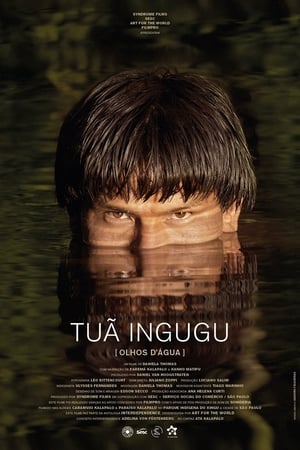
A child runs into the woods in an attempt to escape Evil.
Nil follows Luca off the beaten track through tall grass and low branches. The rising sun touches his face. He observes Luca, his back, his nape...
Although first glance reveals little more than stones and sand, the desert is alive. Witness moving rocks, spitting mud pots, gorgeous flowers and the never-ending battle for survival between desert creatures of every shape, size and description.
William Hart McNichols is a world renowned artist, heralded by Time magazine as "among the most famous creators of Christian iconic images in the world". As a young Catholic priest from 1983-1990 he was immersed in a life-altering journey working as a chaplain at St. Vincent's AIDS hospice in New York city. It was during this time that he became an early pioneer for LGBT rights within the Catholic church. "The Boy Who Found Gold" is a cinematic journey into the art and spirit of William Hart McNichols. The film follows his colorful life as he crosses paths with presidents, popes, martyrs, and parishioners, finding an insightful lesson with each encounter. McNichols' message as a priest, artist and man speaks to the most powerful element of the human spirit: Mercy.
The Remix: Hip Hop x Fashion highlights the hidden female figures that have curated and shaped hip-hop’s dynamic streetwear and ultimately swayed the entire fashion industry.
Raúl Juliá: The World’s a Stage is a warm and revealing portrait of the charismatic, groundbreaking actor’s journey from his native Puerto Rico to the creative hotbed of 1960s New York City, to prominence on Broadway and in Hollywood. Filled with passion, determination and joy, Juliá’s brilliant and daring career was tragically cut short by his untimely death at age 54.
A history of the political and social repression carried out by the ruthless regime of Spanish dictator Francisco Franco between 1936 and 1975 that focuses on the lives of gays and lesbians during those dark years and the death of the Spanish gay poet Federico García Lorca.
Both Mahmoud and Zeinab join hands to search for the original version of the first Egyptian independent film that was made back in the 1980s, all copies of which were either destroyed or confiscated for unknown reasons by the government film agency, an entity that governed film production and distribution at the time.
Since the late 18th century American legal decision that the business corporation organizational model is legally a person, it has become a dominant economic, political and social force around the globe. This film takes an in-depth psychological examination of the organization model through various case studies. What the study illustrates is that in the its behaviour, this type of "person" typically acts like a dangerously destructive psychopath without conscience. Furthermore, we see the profound threat this psychopath has for our world and our future, but also how the people with courage, intelligence and determination can do to stop it.
Short documentary about Lalo Parra Bello, a film director and actor from Ayacucho. Through his story, we discover the filmmakers of a growing industry that, despite its rapid growth, remains largely unknown because it operates far from the capital.
Black and white evokes nostalgia for The Great Depression. Things were so cheap, including lives. We see daredevils (desperate people) compete for money prizes. Baby prepares for WW2. [Originally a 70mm projection-performance, 1982, by Ken and Flo Jacobs. From THRILLS AND CHILLS (Castle Films, c. 1930)].
Documentary made by Marianne Thieme in which the chances of a plant-based society are examined.
Boire
Documentary addressing the difficulties that arose in the city of Nuevitas (Camagüey) between 1964 and 1967, due to the industrial development promoted in the territory, which led to an unexpected population growth in just a few months.
Five women perform nude tai chi.