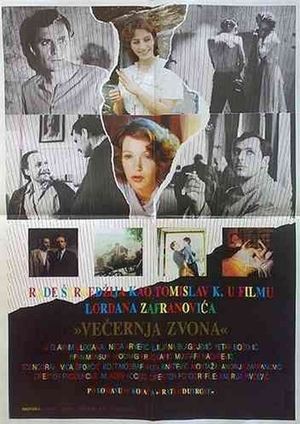
Trials and tribulations of a Croatian communist intellectual in the turbulent years before, during and after the Second World War.
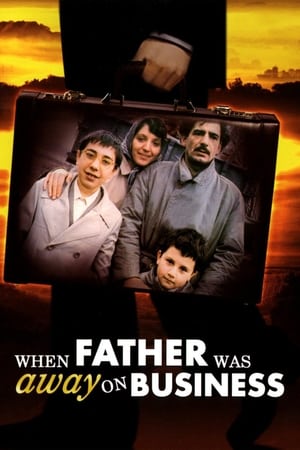
In a post-WWII Yugoslavia still under Stalinist rule in the 1950s, six-year-old Malik is oblivious as to why his father, Mehmed, has suddenly disappeared. In truth, Mehmed has been sent to a labor camp as punishment for acts of sexual indiscretion involving young girls. Malik's mother, Senija, however, has no answers, and the family must cope in the father's absence.
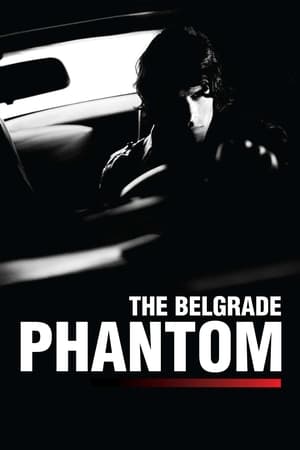
Belgrade, Yugoslavia, 1979; a mysterious "Phantom" occupies the attention and hearts of Belgrade. Every night, he exhibits spectacular driving maneuvers using a stolen white Porsche car through the city streets.
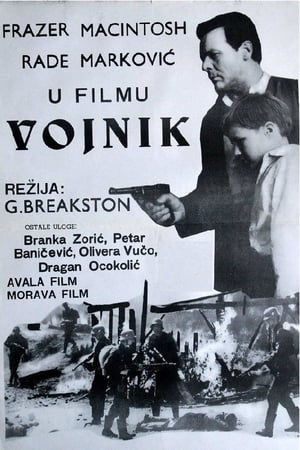
A story of a boy, forced to grow mature before his time and to die too early because of the cruel war circumstances. This film is dedicated to all the children who have died during the National Liberation War.
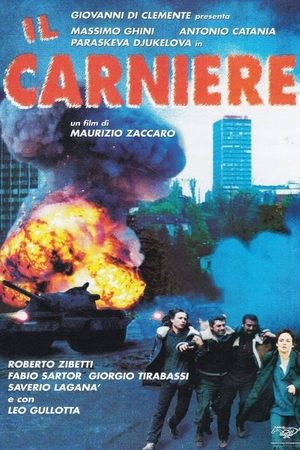
In late summer 1991, three Italians reach a hunting reserve in Croatia with a station wagon. They go to deer, but, unaware of what's in store for months, they do not decipher the enigmatic signs that surround them. One of the three is suddendly wounded in the knee by a bullet of unknown provenance, and they end up in a hotel targeted by snipers night and day.
During the Cold War, diplomatic courier Mike Kells must retrieve a dispatch containing top-secret intelligence. But when he arrives at the meeting point, a train station in Salzburg, his contact turns up dead, and the message is nowhere to be found. With no clear suspect in sight, Kells must sort through his uncertain relationships with two women, while sidestepping the pitfalls of subterfuge, sabotage and spies in his search for the documents.
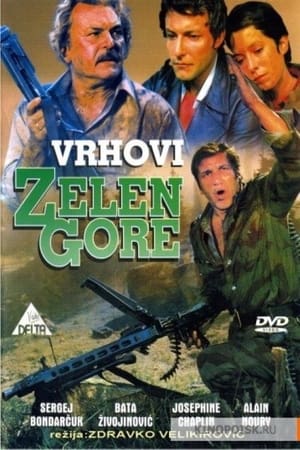
During the Battle of Sutjeska, partisan troops must endure 24 hours of big and heavy attacks on German units Ljubino grave, to the main Partisan units, with the wounded and the Supreme Headquarters, pulled out the ring that is tightened around them.
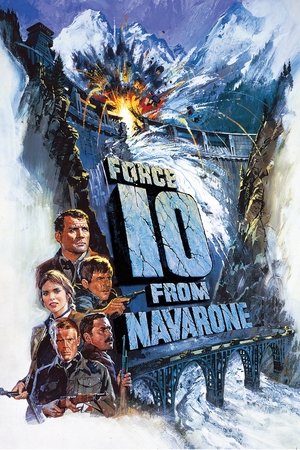
World War II, 1943. Mallory and Miller, the heroes who destroyed the guns of Navarone, are sent to Yugoslavia in search of a ghost from the past.
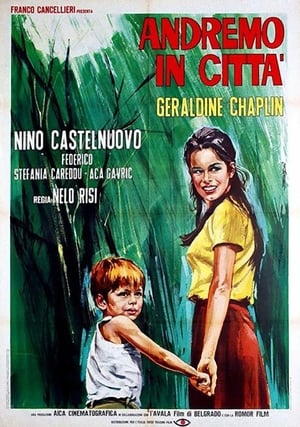
"Andremo in città" (We'll Go to the City) is a 1966 Italian drama film directed by Nelo Risi. It is based on the novel of the same name by Edith Bruck, Risi's wife. Bruck, a Hungarian concentration camp-survivor, settled in Italy after the Second World War and wrote about her experiences in autobiographical and fictional formats.[1] The film stars Geraldine Chaplin and Nino Castelnuovo.
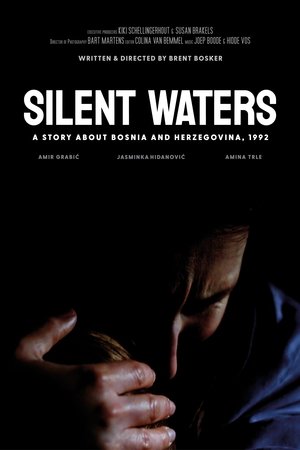
Silent Waters
Young farmer Mikajlo while on youth labour action falls in love with a student Nada and infatuated with her, he leaves the peasant brigade and Malena, a girl who as if she were overabundant, followed him to work the labour action. Mikajlo's courtship of Nada provokes laughter and ridicule, so ambitious 'Don Juan' returns to his brigade and the girl.
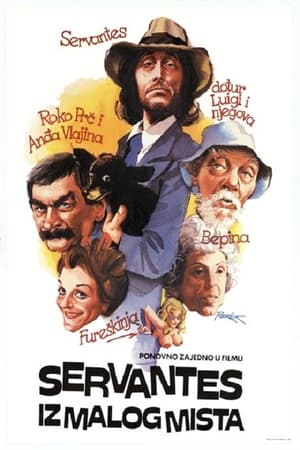
'Malo Misto' lives its own life, but not far behind the times. Hotel manager Roko Prč strives to organise tourism, so he introduces the first nudist beach. His wife Anđa brings two of her cousins from the Dalmatian hinterland and demands Roko to hire them. One of them, a young man named Ikan, earns the attention of a beautiful Swedish tourist. From Chile to Malo Misto returned Tonči, nicknamed Servantes, of course, without any money. He fell on the back of his hardworking aunt Keka, who even without him has enough problems of her own. Servantes also experiences an unexpected romance.
Belgrade in 1963. In a yard surrounded by buildings, a group of young people of different backgrounds and social status, but of similar views about love and self-affirmation, spend their time together. Their friendship is dyed with various events typical for socialism, such as working actions or Youth Day's parade. All what happens within this yard may become an allegory of one generation's destiny.
They meet in Yugoslavia. Katharina, daughter of a Yugoslavian immigrant worker, has grown up in the Federal Republic of Germany. She is a confident, energetic career woman who has managed to work her way up to become a successful television journalist. She goes to visit her parent's country, to do a story about the children of immigrant workers in their home country. Although she says she doesn´t need a "home" any more, even she feels strange in her own country. Peter is a rather "untypical" sort of man: a dreamer, a thinker. He has given up his steady job as a composer for advertising films and is divorced. He goes to Jugoslavia to find something out about the past. He travels to the places where his father was stationed during the Second World War.
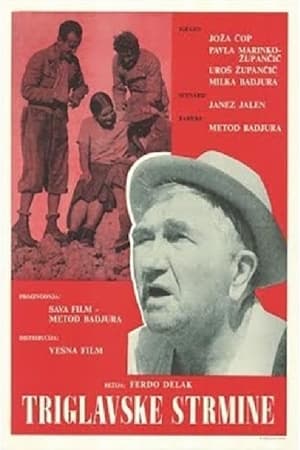
Miha invites his fiancée Minka to the dance, but he's tempted by another big desire of his - climbing. Frustrated Minka insists on the festivity, where she finds herself in a company of older hiker. However, all ends happily, as Minka and Miha, after many smaller adventures, meet at the top of Mount Triglav, where they sign the marriage contract, but also confirming their love for the mountains. In addition to its charming story, the movie features footage of picturesque Slovenian mountains.
In the whirlpool of WW2, two peaceful towns that have already tasted peace are once again attacked by the Germans. Casualties are high, but the dream of a boy and a girl about their liberated towns cannot be destroyed.
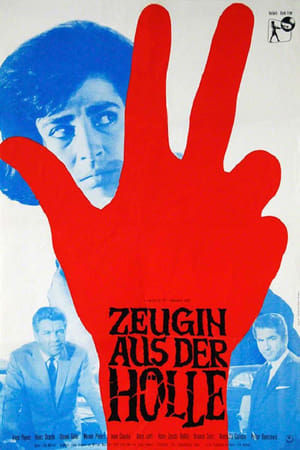
Leah Weiss, a Polish Jew, was first forced into prostitution at Auschwitz. Afterwards, she was victimized in medical experiments. Now, twenty years later, German war crimes prosecutors hope she will be their star witness. But can she stand up to the shame, the publicity, and the reliving of those experiences?
Based on a TV sit-com series and set in World War II, about how an ordinary woodcutter develops into an active partisan fighter.
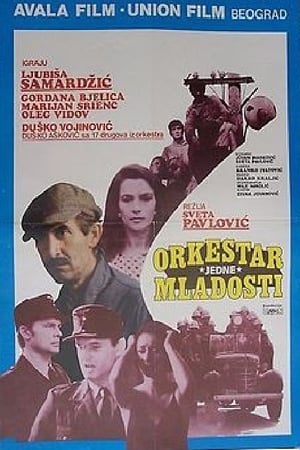
True story about the brass band of a fire brigade during WW2.
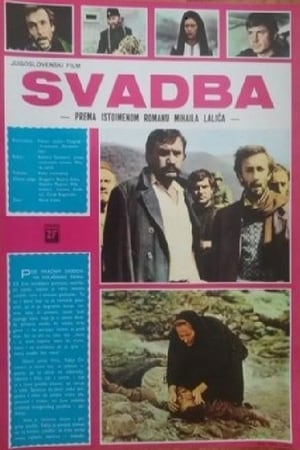
Beginning in 1943. year. The tragic story of the prisoners... partisans and others who were found in a prison in Montenegro at the time when the Chetniks and the occupiers at all costs they want to crush the uprising in Yugoslavia.