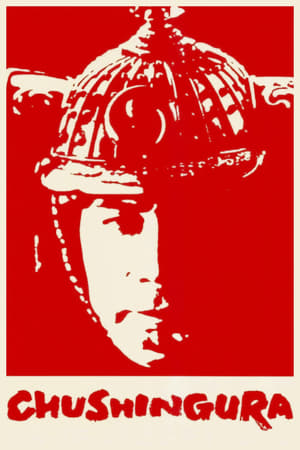
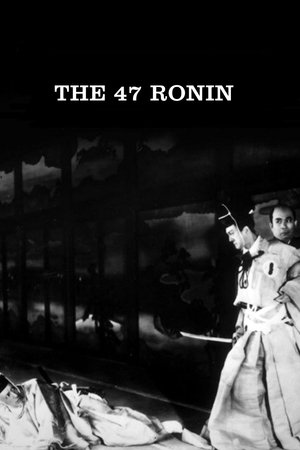
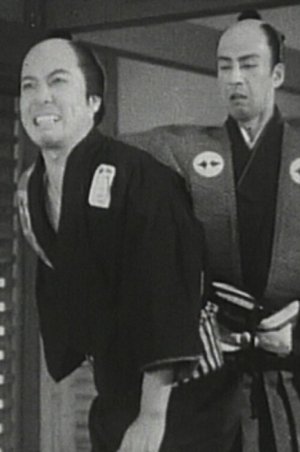
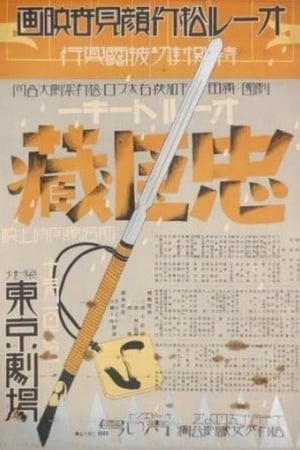
An adventure film with Benshi performers. Sometimes considered the 'first Japanese feature film', it survives today as a compilation of scenes from various different 1910s adaptations totaling nearly three hours in length. The bulk of the content comes from the 1911 adaptation by legendary Japanese filmmaker Makino Shozo.
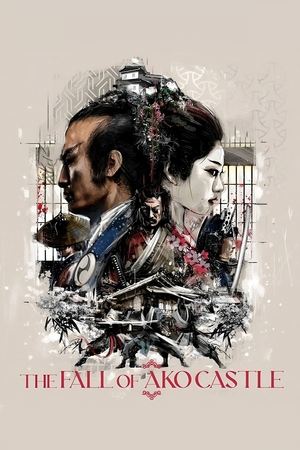
In the early 18th-century, Lord Takumi-no-kami Asano, feuding with Lord Kira, tries to kill his opponent in the corridors of the Shogun's palace. The Shogun sentences Asano to seppuku and deprives the palace and lands from his clan, but does not punish Kira. Asano's vassals leave the land and his samurais become ronin and want to seek revenge against the Lord's dishonour. But their leader Kuranosuke Oishi seeks to restore the Asano clan with his brother Daigaku Asano. One year later, the Shogun refuses, and Oishi and 46 rōnin are out for revenge.
This is the story of "The Forty-Seven Ronin." Based on historical events in 1701-2, the movie tells the tale of the Asano clan's downfall and the revenge of its former samurai on the perpetrator of the catastrophe. Lord Asano was goaded, or tricked, into drawing his sword inside the Shogun's palace -- a crime which carried the death penalty. The newly installed Shogun was furious at Asano and ordered all his clan's assets seized, meaning some 20,000 samurai and commoners were unemployed and landless at a stroke. Forty-seven of these ronin (masterless samurai) banded together to take attempt revenge on Lord Kira, who had goaded Asano into drawing his sword.
After their lord is tricked into committing ritual suicide, forty-seven samurai warriors await the chance to avenge their master and reclaim their honor.
Naosuke, a servant of Okajima Yasoemon, devoted himself to his master. One day, his master Okajima Yasoemon, lost his face in front of people. It was a revenge by Oono, a karo (minister) who lost his chance to earn money by selling a fake antique to the lord. Okajima told the lord it was fake. Okajima endured Oono's humiliation. But, his servant Naosuke, could not. But what could he do? Oono is superior of his master. Naosuke would not hesitate to lay down his life for his master. But killing Oono would ruin his master. He wanted to clear his master's disgrace. What to do?
This 1932 adaptation is the earliest sound version of the ever-popular and much-filmed Chushingura story of the loyal 47 retainers who avenged their feudal lord after he was obliged to commit hara-kiri due to the machinations of a villainous courtier. As the first sound version of the classic narrative, the film was something of an event, and employed a stellar cast, who give a roster of memorable performances. Director Teinosuke Kinugasa was primarily a specialist in jidai-geki (period films), such as the internationally celebrated Gate of Hell (Jigokumon, 1953), and although he is now most famous as the maker of the avant-garde silent films A Page of Madness (Kurutta ichipeji, 1926) and Crossroads (Jujiro, 1928), Chushingura is in fact more typical of his output than those experimental works. The film ranked third in that year’s Kinema Junpo critics’ poll, and Joseph Anderson and Donald Richie noted that 'not only the sound but the quick cutting was admired by many critics.
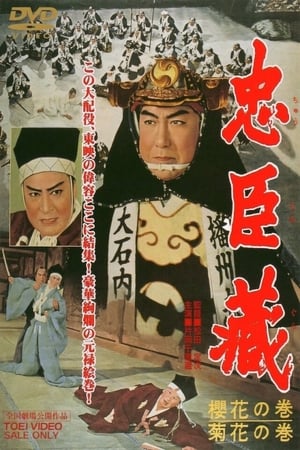
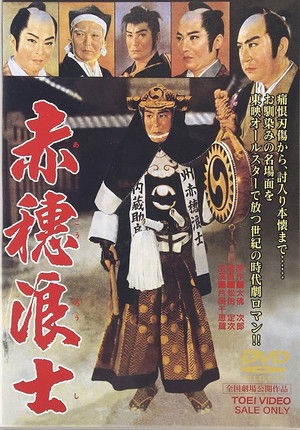
While the story of the Ako Clan's vendetta has been told countless times, never before has there been an array of major motion picture stars to bring new life to this timeless tale. Starting with the corrupt practices of Lord Kira and Yanagi-sawa, the Shogun's Secretary, which in essence led to the incident of Lord Asano's attacking Kira in the Pine Corridor of the Shogun's Palace, this is the definitive version. Asano Takumi no kami was a young lord with high scruples, who refused to join in the general corruption and bribery which ran rampant in the capital at that time. By not giving bribes, he angered Kira Kozuke no suke the elder lord in charge of protocol at the Palace. Refusing to teach the younger man, and giving him false instructions was only the beginning. Insults followed, and a man of honor had no choice but to draw his sword in anger. Forty seven masterless samurai are willing to give their lives to avenge their lord.
Toei’s 10th anniversary film, featuring an all-star cast from the golden movie era of the 1960s. A famous story of the 47 loyal samurai. When Lord Asano is unjustly executed, his loyal retainers strike back for revenge.
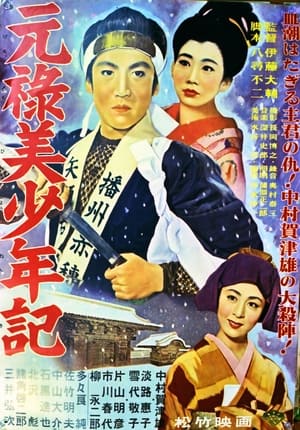
On February 4th of the 16th year of the Genroku era, Yatō Uemon no Shichi reminisces while waiting his turn for seppuku at the Mizuno residence. When news of his lord, Asano Naganori, attacking Kira Yoshinaka in the palace reached Akō, Uemon no Shichi was sixteen. The family elder, Ōishi Kuranosuke, determined to avenge, gathered allies, but Uemon no Shichi's father, Chōsuke, being sickly and considered too young, was not included. Chōsuke committed suicide.
A taxi driver from Alleppey who always tries to keep his wife happy by taking her to very materialistic trips. She becomes more greedy and in order to keep her happy, he knowingly or unknowingly undertakes few tasks that gets him trapped.
Byeong-Gu used to be a professional boxer. But one day he finds out that he’s got punch-drunk. With not much time left, he decides to start boxing again. To complete his own style, called “Pansori-boxing.”
A weary undercover cop must maintain his cover while trying to save the daughter of a notorious Triad Boss from becoming collateral damage in a sting operation gone wrong.
It's love at first sight for Anjali and Jai Walia. However, after Anjali gets an anonymous tip-off about Jai's alleged infidelity, cracks begin to appear in their once happy marriage.
A retrospective of the classic game show, What's My Line, in which a four-member celebrity panel attempted to identify a contestant's occupation through yes or no questions. In addition, each episode featured a celebrity mystery guest that the panelists tried to identify the guest while blindfolded. The show ran from 1950-1967 and prominently featured John Daly, Bennett Cerf, Arlene Francis, and Dorothy Kilgallen. This documentary looked back on the show 25 years after it premiered.
A homicide detective begins to suspect that the black teenager accused of murdering two white girls is being framed by his fellow detectives.
Rei Kiriyama is a 17-years-old shogi (Japanese chess) player. He debuted as a professional shogi player when he was in middle school. He lives by himself in Tokyo, because his parents and younger sister died in an traffic accident when he was little. One day, Rei Kiriyama meets three sisters who are his neighbors. The three sisters are Akari Kawamoto, Hinata Kawamoto and Momo Kawamoto. This is his first meeting with someone outside of the shogi world in many years. Having meals with the Kawamoto family brings warm feelings to Rei Kiriyama. As Rei Kiriyama continues his shogi career, his interactions with his neighbors allows him to grow as a shogi player and as a person.
Lilo is a resolute woman, creative in her mind and images, until a devastating diagnosis tears her from everyday life and forces her to face unpleasant truths. Without further ado, she makes her escape with the help of the illegal truck driver Sami and unintentionally sets the whole family in motion.
After the death of his father, Alex goes back to his native island to find inner peace. There he finds three girls longing for him.