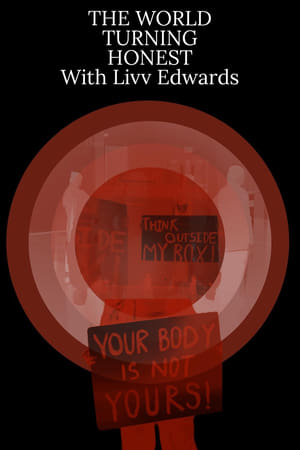
This documentary portrays the way in which attacks against a twisted concept of “gender ideology” in four countries are being used to gain political power by right-wing conservative politicians supported by conservatives in the Catholic and evangelical churches.
The charismatic Snow Leopard is the least understood of all the big cats and one of the most challenging to film. Over a period of five years, veteran Indian wildlife filmmakers, Naresh and Rajesh Bedi endured extreme cold and the thin air of the Himalayas in their daunting quest to reveal the secret lives of these elusive predators, ultimately with great success.
In an era of antifeminist backlash, this articulate documentary by the makers of Thank God I’m a Lesbian forcefully reminds us that the revolution continues. Powerful interviews with feminist leaders including bell hooks, Gloria Steinem, and Urvsahi Vaid are intercut with documentary sequences to engagingly explore the past and present status of the women’s movement. Discussing the unique contributions of second wave feminism, they explore their racial, economic and ideological differences and shared vision of achieving equality for women. Anessential component of women’s studies curricula, My Feminism introduces feminism’s key themeswhile exposing the cultural fears underlying lesbian baiting, backlash, and political extremism.
In a poetic hour and a half, director Mani Kaul looks at the ancient art of making pottery from a wide variety of perspectives.
The women of Ghana have a reputation for independence. They, rather than the men, sit enthroned at the market stalls and run a large proportion of the nation's retail trade. But Ghanaian women are now thrusting even more vigorously into the arena of power and influence
After their mother's femicide, three siblings are separated and forced to live in different places. Years later they gather to raise their voices and fight to be made visible in a country where orphans for femicide are ignored by the state and invisible to society. It's up to them to tell their story.
Women’s voices rise to deliver testimonies of victims of sexual violence. By reconstructing a story with these fragments of experience, a societal portrait is painted throughout the documentary. Like a mosaic, the pieces stick together to build a unique story that could belong to any human.
Behind The Looking Glass is a film about the lives of women whose partners have or want to ‘transition’. While we hear a great deal of “stunning and brave” stories of men, there is a deadly silence when it comes to the stories of the wives or partners. This film will be the first of its kind in collecting such experiences of women from around the world.
The film explores the campaign waged by the Hindu right-wing organisation Vishva Hindu Parishad to build a Ram temple at the site of the Babri Masjid in Ayodhya, as well as the communal violence that it triggered. A couple of months after Ram ke Naam was released, VHP activists demolished the Babri Masjid in 1992, provoking further violence.
An ascetic walks through the narrow streets of a village every morning while his family is still asleep. In his semi-somnolent state he dreams about the history of the village mixing up myths, folklore and facts.
A film portrayal of a pioneering aviator and best-selling author whose extraordinary public life had a deep impact on her inner world.
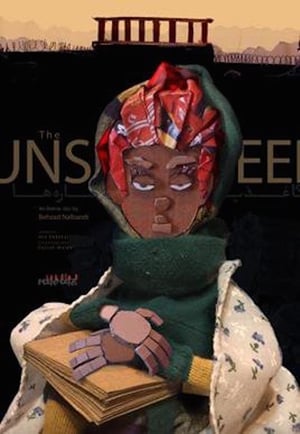
The Other Side of Burka is a 2004 Iranian documentary directed by Mehrdad Oskouei. In the southern island of Qeshm, Iran, which is a very strict region in point of tradition and African-Arabic rules, all women are under the pressure of patriarch society. Their sufferance is manifested by different mental (Zar, Possession) and physical diseases which must be only treated by Zar Ceremony. For the first time, despite the danger these women face, this film tells us the sad story of their life and shows their confection in front of the camera. It tries to be an honest mirror which reflects their sufferance and unveils their Burka to reveal their real characters.
Celebrate International Women’s Day with this brand new inspiring film from LETTERS LIVE. In “LETTERS LIVE from the Archive: International Women’s Day”, remarkable letters are read by a diverse array of outstanding luminaries, including stunning performances from Olivia Colman, Gillian Anderson, Daisy Ridley, Caitlin Moran, Rose McGowan, Adwoa Aboah, Louise Brealey and more. Plus music from Roxanne Tataei.
María and Isabel are two women in their fifties who, like many others, recycle in Quito, where there is no recycling system. María leads a collective fight for basic labor rights; while Isabel transmits her knowledge of environmental care while she raises her daughters.
This film shows the work done by the "socorristas" feminist network. Through informative talks and stories about the actions of emotional containment these women have with others who need support, it seeks to eliminate the stigmas on abortions while also bringing out the reality of the clandestine abortion.
BRIDE KIDNAPPING documents in harrowing detail four such abductions, from the violent seizures on city streets and the tearful protests of the women, who are physically restrained and persuaded to accept their fate by the women of the groom's family, to the often tense negotiations between the respective families, and either the eventual acquiescence or continued refusal of the young women.
This film explores the complexity of female infanticide in southern India and shows steps that are being taken to eradicate the practice. Every year in India thousands of baby girls are killed. Partly because of the dowry system which makes a daughter a liability to a family. In a country where being a woman means living a life of hardship, the murder of female infants may be seen by the mothers as being a humane solution. URISE, a non-governmental agency, is working in the villages to promote the idea among women that female children are equal in the eyes of the law and can be an asset in the family, setting up associations called sanghams to support pregnant women and mothers in their decision to keep their daughters. When a girl is born, the sanghams celebrates her arrival with gifts, showing that a girl is something to be valued. This sensitive film does not dwell on the horrors of the practice. Rather, it allows the women to speak for themselves showing how they can be empowered.
Five women veterans who have endured unimaginable trauma in service create a shared sisterhood to help the rising number of stranded homeless women veterans by entering a competition that unexpectedly catalyzes moving events in their own lives.
On September 16, 2022, in Teheran, the murder by police of the young Mahsa Amini, arrested for "wearing a headscarf contrary to the law", sparked off an unprecedented insurrection. Within hours, a spontaneous movement formed around the rallying cry: "Woman, life, freedom". For the first time, women, joined by men and students, took the initiative and removed their veils, the hated symbol of the Islamic Republic. The Iranian population, from all regions and social categories, rose up in protest. Social networks went wild. The diaspora (between 5–8 million Iranians) took up the cause, and the whole world discovered the scale of this mobilization: could the theocratic regime be overthrown this time?
Takes the audience behind the artistry, intellectual spirits, and production of the second season of the holy grail of Indian sitcom.