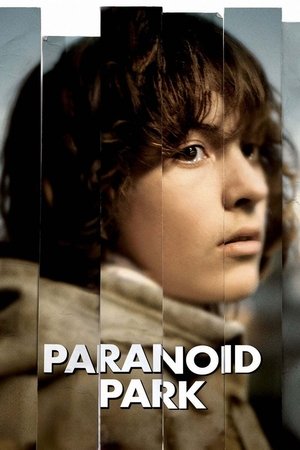
A teenage skateboarder becomes suspected of being connected with a security guard who suffered a brutal death in a skate park called "Paranoid Park".
In 1981, a film about the misadventures of a German U-boat crew in 1941 becomes a worldwide hit almost four decades after the end of the World War II. Millions of viewers worldwide make Das Boot the most internationally successful German film of all time. But due to disputes over the script, accidents on the set, and voices accusing the makers of glorifying the war, the project was many times on the verge of being cancelled.
An intimate portrait and saga of four film pioneers--Harry, Albert, Sam and Jack who rose from immigrant poverty through personal tragedies persevering to create a major studio with a social conscience.
Using testimonies by pioneers and witnesses of the times, delve into the feverish visual culture the media generated – with far-fetched examples of canine television games, seduction manuals, aerobics class while holding a baby, among others.
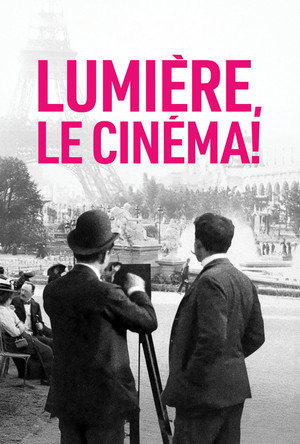
In one of those wonderful coincidences of history, lumière, the French word for “light,” was also the last name of brothers Auguste and Louis, whose brilliant invention, the cinematograph, helped to inaugurate the most beloved art form of the last 130 years. Institute Lumière director Thierry Frémaux uses Lumière, Le Cinema! to guide the viewer through over a hundred shorts—some famous, some forgotten, some never before seen—directed by Lumière and company. In the process, Frémaux illuminates how the brothers employed the camera as a creative instrument as they (and their operators) mastered framing, staging, and subject selection for quotidian and exotic microdocumentaries as well as the first ever fictional motion pictures. The result is not only a glorious re(telling) of the genesis of cinema but a profound meditation on the beautiful world captured—and the mysterious world imagined—by the Lumières.
Cameramen and women discuss the craft and art of cinematography and of the "DP" (the director of photography), illustrating their points with clips from 100 films, from Birth of a Nation to Do the Right Thing. Themes: the DP tells people where to look; changes in movies (the arrival of sound, color, and wide screens) required creative responses from DPs; and, these artisans constantly invent new equipment and try new things, with wonderful results. The narration takes us through the identifiable studio styles of the 30s, the emergence of noir, the New York look, and the impact of Europeans. Citizen Kane, The Conformist, and Gordon Willis get special attention.
A teacher discovers his calling. Marco relocates to Palermo from Milan and takes a job teaching in a reform school while he waits for a high school position. He tries to understand and motivate his handful of students, reading them colloquial poetry, encouraging them to stand up for their rights, finding out about their histories. Natale, in for murder, enamoured of the Mafia, the King Rat within the group; Mery, a drag queen, arrested for assault when defending himself, in love with Mario and, in daylight, rejected by all; Pietro, illiterate, muscular, believing his destiny is set; the callow Claudio, vulnerable, learning to harden himself. What can Mario learn and do in such a short time?
The greatness, fall and renaissance of Hammer, the flagship company of British popular cinema, mainly from 1955 to 1968. Tortured women and sadistic monsters populated oppressive scenarios in provocative productions that shocked censorship and disgusted critics but fascinated the public. Movies in which horror was shown in offensive colors: dreadful stories, told without prejudices, that offered fear, blood, sex and stunning performances.
After years spent working as a prostitute in her Italian village, middle-aged Mamma Roma has saved enough money to buy herself a fruit stand so that she can have a respectable middle-class life and reestablish contact with the 16-year-old son she abandoned when he was an infant. But her former pimp threatens to expose her sordid past, and her troubled son seems destined to fall into a life of crime and violence.
Post-war provincial Iceland: around 1950, Freyja, who'd been a plump teen, returns from America, a widow with a 20-inch waist, seven suitcases of dresses, and a list of who ever wronged or slighted her. She moves in with an aunt and socialist uncle: finding a new husband is high on her agenda, and she's mistrusted by Agga, a pre-teen who's our eyes and ears. The social order and Freyja are more complicated than they seem at first, and so may be her prospects. Class divisions, families ties, pride, the onset of puberty, and the power of Eros sliver the ice.
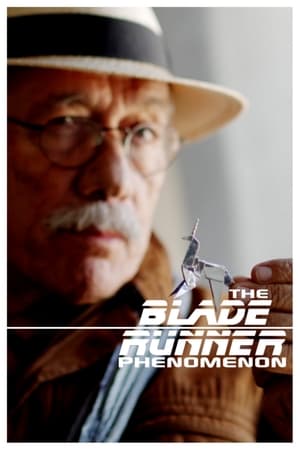
Ridley Scott's cult film Blade Runner, based on a novel by Philip K. Dick and released in 1982, is one of the most influential science fiction films ever made. Its depiction of Los Angeles in the year 2019 is oppressively prophetic: climate catastrophe, increasing public surveillance, powerful monopolistic corporations, highly evolved artificial intelligence; a fantastic vision of the future world that has become a frightening reality.
Del and his friends agree to take part in a robbery with a boy fresh from the borstal prison. When Del falls in love with Irene they decide to run away from their nagging parents - and the law.
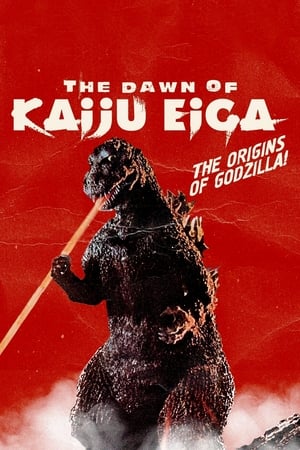
Japan, 1954. A legend emerges from the ashes of Hiroshima and Nagasaki, devastated by atomic bombs in 1945. The creature's name is Godzilla. The film that tells its story is the first of kaiju eiga, the giant monster movies.
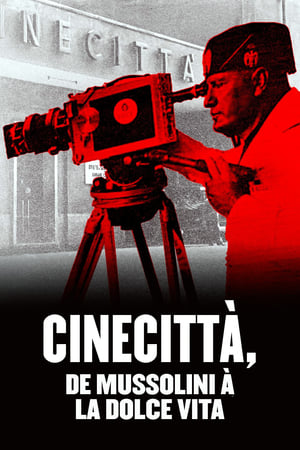
Cinecitta is today known as the center of the Italian film industry. But there is a dark past. The film city was solemnly inaugurated in 1937 by Mussolini. Here, propaganda films would be produced to strengthen the dictator's position.
Carpenter Pepe El Toro lives peacefully with his daughter Chachita in an impoverished Mexico City neighborhood. He pursues a romance with the pretty Celia, but tragedy comes knocking on his door when he is falsely accused of having perpetrated a felony.
Where do we come from and where do we go ? The eternal question of humanity which religions have tried to answer over the centuries - lt's the end of the year 2012. The Universe is about to undergo an imposing planetary alignment and a Total Eclipse will soon be upon Planet Earth. Great vibrational changes are imminent and set to disturb us. The eight members of the Galactic Council, led by Lord Ogmha (William Shatner), meet to discuss the effects of the imminent alignment. They are 8 creators (aliens) and each one of them governs a Planet. They are each responsible for the security and well-being of a 'LENS'. Together they balance the conflict and allegiance of the Universe. Treason puts Earth in danger and the LENS, the hard disc (crystal core) containing the recording of the entire history, DNA, memories and nucleus of mankind is hidden somewhere in Italy. Everyone is searching for it. If the Lens is opened and in the wrong hands it could reveal to the human beings the shocking
1947, in France, Antoine and Antoinette, a young couple living in Paris, lead a monotonous existence: he works in a print shop while she is a shop assistant. But one evening, they regain hope: Antoine finds a winning lottery ticket in his girlfriend's handbag. He decides to cash it in, but loses his wallet. What follows is a series of twists and turns that redefine the couple's priorities while forcing them to remain optimistic.
An inventive remembrance of the impact of the Hollywood blacklist on two American classics, rendered as a visually mesmerizing dialogue between Carl Foreman and Elia Kazan.
The ennui of a filmmaker, trapped between aspiration and reality, frames Lana Jing’s quirky, sarcastic, and cinematic-joke filled quarter-life crisis. At her lecture hall job, where aging white men wax on, self-involved, Lana accidentally frames her friend and co-worker when she destroys the only copy of an aging tech-bro’s high-profile lecture. Lana is forced to navigate stop motion animation, a secret admirer, and terrible bridge traffic to sort out a way forward to her destiny… kinda.
The glorious and tragic story of American athlete and actor Johnny Weissmuller (1904-84), Olympic swimmer, water polo player and the only true Tarzan, an archetypal character and myth of cinema, that of the original Hollywood blockbusters (1932-48).