Return to 'burn' only to find out you're already in that urn.
Made up of piano, this shows Basinski's patented tape-loop technique perfectly and still stands as one of his most affecting pieces of music; still film-work scoring the James Elaine's painting of the same name.
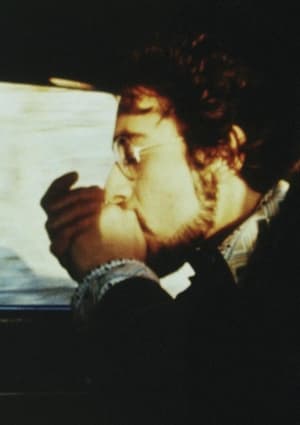
Animation by japanese artist Keiichi Tanaami for John Lennon's song "Oh Yoko!" -- the song was released in 1971, and the animation made in 1973. Keiichi Tanaami (田名網 敬一, Tanaami Keiichi, born in 1936 in Tokyo) was one of the leading pop artists of postwar Japan, and was active as multi-genre artist since the 1960s as a graphic designer, illustrator, video artist and fine artist until his death in 2024.
Lumiere's The Arrival Of A Train in Russian.
Part documentary, part personal essay, this experimental film combines archive imagery with the striking wintry landscapes of Alaska to tell the story of immigrant experience coming into the UK from 1960 onwards.
Maya Deren’s shortest, two-minute A Study in Choreography for Camera seems like an exercise piece to capture a dancer’s movement on celluloid, which later on developed into her masterpieces such as Ritual in Transfigured Time and Meditation on Violence.
A visual essay shot entirely on a Nintendo 3DS
Cine-diaries about rock bands and personalities from the eighties from the archives of Edgar Pêra.
Produced by Frank Zappa in 1982, The Dub Room Special combines footage from a performance at the KCET studios in Los Angeles on August 27, 1974, a concert performed at The Palladium, NYC on October 31, 1981, some clay animation by Bruce Bickford, and several interviews. Previously only available through mail-order, it was made widely available on DVD on October 17, 2005.
A one-hour documentary on the making of Frank Zappa's bizarre 1971 comic musical. Vintage private footage from Frank's personal archives plus behind-the-scenes of the actual shooting and recording. With Ringo Starr, Theodore Bikel, Keith Moon and such songs as "Sleeping in a Jar," and "Strictly Genteel." The inside history of the first feature-length film to be shot on video in 6 days.
A musical audiovisual journey in four parts. A young man finds himself unexpectedly taking an audiovisual odyssey into a world of surreality, slowly recounting his memories, revealing the puzzle pieces that led him to where he is, and maybe how he can get out.
The Dreamer That Remains is a documentary produced by Betty Freeman and directed by Stephen Pouliot in 1972. Here is the director’s original cut along with his commentary. If you’ve never seen Partch or his instruments before, this is the place to start.
Andy Warhol's experimental reconstruction of the assassination of the President of the United States, John F. Kennedy, which serves as his critical commentary on the way the media presented the tragic event.
Utilizing potent TV interviews and many forgotten performances from his 30-year career, we are immersed into Frank Zappa’s world while experiencing two distinct facets of his complex character. At once Zappa was both a charismatic composer who reveled in the joy of performing and, in the next moment, a fiercely intelligent and brutally honest interviewee whose convictions only got stronger as his career ascended.
Songs for Drella is a concept album by Lou Reed and John Cale, both formerly of The Velvet Underground, and is dedicated to the memory of Andy Warhol, their mentor, who had died unexpectedly in 1987. Drella was a nickname for Warhol coined by Warhol Superstar Ondine, a contraction of Dracula and Cinderella, used by Warhol's crowd. The song cycle focuses on Warhol's interpersonal relations and experiences, with songs falling roughly into three categories: Warhol's first-person perspective (which makes up the vast majority of the album), third-person narratives chronicling events and affairs, and first-person commentaries on Warhol by Reed and Cale themselves. The songs on the album are, to some extent, in chronological order.
Arf Arf is a sound poetry (voice and gesticulation) group. They describe their first film together as 'songs nailed together in a film'. The film is not given over to simply recording a performance of sound poetry but is worked out as a filmic combination of images and sound, each member of the group having individually previously made experimental films.
Several fragments of one day in Leningrad in the autumn of 1989, refracted in the imagination of the artist.
The historical-revolutionary film by Dmitry Frolov, permeated with the romanticism of the revolutionary events of 1917, echoing the moods of August 1991. Since the film was shot the day after the victory over the coup plotters in the USSR in August 1991. All thoughts of the beekeeper - quotations from Lenin's works.
All day of St. Petersburg bohemia in 4 minutes of the film.
Utopía 360°