A documentary about the technological progress responsibility in employment destruction, analyzed by philosopher Zygmunt Bauman and others.
Forget all you have heard about how “Renewable Energy” is our salvation. It is all a myth that is very lucrative for some. Feel-good stuff like electric cars, etc. Such vehicles are actually powered by coal, natural gas… or dead salmon in the Northwest.
In America, size matters. The bigger you are, the more power you have, especially in the business world. Anat Baron takes you on a no holds barred exploration of the U.S. beer industry that ultimately reveals the truth behind the label of your favorite beer. Told from an insider’s perspective, the film goes behind the scenes of the daily battles and all out wars that dominate the industry.
A very human tech doc, uncovers the real costs of the platform economy through the lives of workers from around the world for companies including Uber, Amazon and Deliveroo. From delivering food and driving ride shares to tagging images for AI, millions of people around the world are finding work task by task online. The gig economy is worth over 5 trillion USD globally, and growing. And yet the stories of the workers behind this tech revolution have gone largely neglected. Who are the people in this shadow workforce? It brings their stories into the light. Lured by the promise of flexible work hours, independence, and control over time and money, workers from around the world have found a very different reality. Work conditions are often dangerous, pay often changes without notice, and workers can effectively be fired through deactivation or a bad rating. Through an engaging global cast of characters, it reveals how the magic of technology we are being sold might not be magic at all.
For 200 years, coal mining had been a way of life in Cape Breton. By 1920 things were looking up: miners were unionized and paid decent wages. Then the British Empire Steel Corporation arrived and bought every single steel and coal company in Nova Scotia. BESCO cut wages by a third, setting off a bitter labour dispute. The miners settled in for a long strike. Finally, in 1925, the military ended the unrest with brute force. But the miners, in one sense, had won. They broke up the monopoly and provided an example to workers across the country.
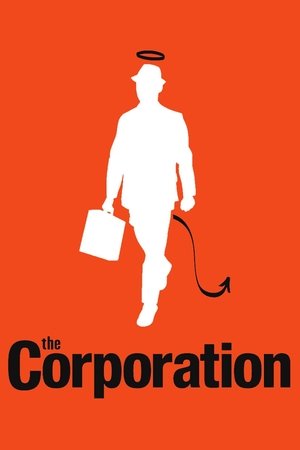
Since the late 18th century American legal decision that the business corporation organizational model is legally a person, it has become a dominant economic, political and social force around the globe. This film takes an in-depth psychological examination of the organization model through various case studies. What the study illustrates is that in the its behaviour, this type of "person" typically acts like a dangerously destructive psychopath without conscience. Furthermore, we see the profound threat this psychopath has for our world and our future, but also how the people with courage, intelligence and determination can do to stop it.
A documentary about the Enron corporation, its faulty and corrupt business practices, and how they led to its fall.
After his Tokyo farewell ceremony, Yamamoto's ashes were sent to Kyoto on March 9. Many friends and citizens gathered at his home in Uji. On the 15th a worker-farmer funeral was held at the Sanjo YMCA. Prokino's Kyoto Branch shot these five days of activities. The long line of cars is filled with taxis, whose drivers deeply admired Yamamoto. The Watanabe in the title refers to the head of the Communist Party of Japan. Watanabe was returning to Japan from Taiwan when he was stopped by authorities. He committed suicide in their custody. Yamamoto and Watanabe were mourned together.
A main agenda of the prewar farmer's movement was struggle against landowners. Prokino also considered this as their prime concern. The main title sequence and the latter part of the film have unfortunately been lost. While we cannot see its entire structure, we can still get a glimpse of it from this surviving short.
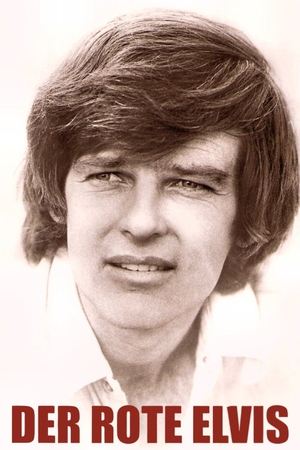
A documentary on the late American entertainer Dean Reed, who became a huge star in East Germany after settling there in 1973.
Warsaw's Central Railway Station. 'Someone has fallen asleep, someone's waiting for somebody else. Maybe they'll come, maybe they won't. The film is about people looking for something.
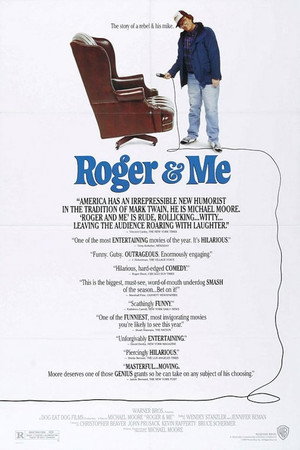
A documentary about the closure of General Motors' plant at Flint, Michigan, which resulted in the loss of 30,000 jobs. Details the attempts of filmmaker Michael Moore to get an interview with GM CEO Roger Smith.
The film is a controversy on democracy. Is our society really democratic? Can everyone be part of it? Or is the act of being part in democracy dependent to the access on technology, progression or any resources of information, as philosophers like Paul Virilio or Jean Baudrillard already claimed?
This documentary takes the viewer on a deeply personal journey into the everyday lives of families struggling to fight Goliath. From a family business owner in the Midwest to a preacher in California, from workers in Florida to a poet in Mexico, dozens of film crews on three continents bring the intensely personal stories of an assault on families and American values.
British director Terence Davies reflects on his birthplace of Liverpool - his memories of growing up there and how it has changed in the years since - in the process meditating on the internal struggles and conflicts that have wracked him throughout his life and the history of England during the second half of the 20th century.
From the acclaimed director of American Movie, the documentary follows former Los Angeles police officer turned independent reporter Michael Ruppert. He recounts his career as a radical thinker and spells out his apocalyptic vision of the future, spanning the crises in economics, energy, environment and more.
When 90% of Iceland’s women walked off the job and out of their homes one morning in 1975, they brought their country to its knees and catapulted Iceland to the forefront of today's global fight for gender equality. Unexpectedly funny, laced with evocative animation and powerfully told by the women who lived it – this is the true story of 12 hours that launched a revolution.
Swedish documentary film on consumerism and globalization, created by director Erik Gandini and editor Johan Söderberg. It looks at the arguments for capitalism and technology, such as greater efficiency, more time and less work, and argues that these are not being fulfilled, and they never will be. The film leans towards anarcho-primitivist ideology and argues for "a simple and fulfilling life".
The End of Poverty? asks if the true causes of poverty today stem from a deliberate orchestration since colonial times which has evolved into our modern system whereby wealthy nations exploit the poor. People living and fighting against poverty answer condemning colonialism and its consequences; land grab, exploitation of natural resources, debt, free markets, demand for corporate profits and the evolution of an economic system in in which 25% of the world's population consumes 85% of its wealth. Featuring Nobel Prize winner Amartya Sen and Joseph Stiglitz, authors/activist Susan George, Eric Toussaint, Bolivian Vice President Alvaro Garcia Linera and more.
Once upon a time... consumer goods were built to last. Then, in the 1920’s, a group of businessmen realized that the longer their product lasted, the less money they made, thus Planned Obsolescence was born, and manufacturers have been engineering products to fail ever since. Combining investigative research and rare archive footage with analysis by those working on ways to save both the economy and the environment, this documentary charts the creation of ‘engineering to fail’, its rise to prominence and its recent fall from grace.