Summaries "The John Wayne Gacy Murders: Life and Death in Chicago", Focuses on serial killer John Wayne Gacy's time in Chicago and includes information about Gacy's childhood, his career of crime in Waterloo, Iowa, and Gacy's becoming a celebrity in prison. Containing interviews with Chicago attorneys, news reporters, law enforcement officers, and history experts, the film illustrates what the atmosphere was like in Chicago when Gacy was murdering and ultimately apprehended. Gacy's time in prison as a celebrity serial killer is also explored in this groundbreaking film by Chicago native filmmaker John Borowski. —John Borowski
This documentary about serial killers and FBI Behavioral Sciences profilers features interviews with Ed Kemper and Ted Bundy as well as crime victims and law enforcement officials. The film includes some dramatic recreations.
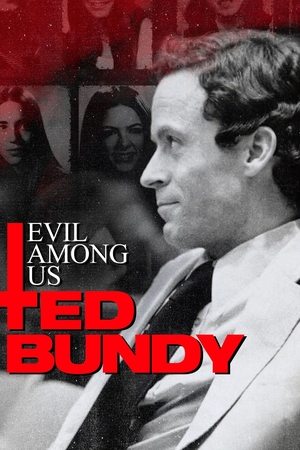
New exclusive access and never before heard testimony gives a unique insight into the mind of America's most notorious serial killer, Ted Bundy. Breathtaking archive from the time and the voice of Bundy himself, reveals the monster inside the man.
Doctor Harold Shipman believed he was God, all-knowing and wise, a supreme being who set out to demonstrate his superiority over others through an ability to murder. His victims were usually elderly, vulnerable and trusting. Some needed help to ease the pain that came with age. Others simply sought re-assurance. All received a death sentence from the man who had taken an oath to save life. From his practice in a Cheshire market town, Shipman achieved infamy as Britain's worst ever serial killer. Officially his victims numbered 15. But he murdered at least 215 times and possibly 1,000. His own greed finally snared Doctor Death, whose evil was exposed through the love of a daughter for her mother, sending him on the path to Hell.
Occurring from the mid-1970s to 1981, the Ripper committed 13 murders. Viewed as ritualistic in nature, they were done with extreme brutality as he mocked the police during their desperate hunt for him. The victims were primiarly prostitutes or poor girls, with a few working girls tossed in. Generally he would hit a victim on the head with a hammer, sexually assault the lady, mutilate her, and then redress/re-arrangement the clothing and cover the corpse with her own coat.
Jack the Ripper was a prince, a pauper, a mason, a madman... A host of more and more bizarre theories have surrounded the unexplained killings in Whitechapel since they hit the headlines in 1888. This film dispels the grisly fiction, revealing for the first time the true contents of the police and Home Office files on the case, drawing on the expertise of historians and of those who have encountered today's killers - on the street or behind bars.
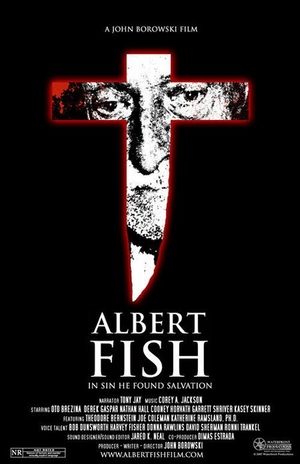
Albert Fish, the horrific true story of elderly cannibal, sadomasochist, and serial killer, who lured children to their deaths in Depression-era New York City. Distorting biblical tales, Albert Fish takes the themes of pain, torture, atonement and suffering literally as he preys on victims to torture and sacrifice.
Gory real-life footage of blood and guts on the German Autobahn, drug smugglers getting blown away, a parachutist landing in a crocodile pit, torture and murder in El Salvador, a PCP addict getting stoned, a videotaped rape/murder, a car thief getting ripped apart by two junkyard dogs, and much more.
"Sam, could you do me a favor?" A seemingly simple request sparks the story that has now become part of America’s true crime hall of fame - the journey of a young lawyer, fresh from the Public Defender’s Office, whose first client in private practice turns out to be the most evil serial killer in our nation's history.
The film follows the career of detective inspector Marianne Atzeroth-Freier through the Hamburg police force of the 80s and 90s. At the end of the 70s, Marianne is 30 years old and a single parent; she becomes one of Hamburg's first female police officers. Marianne is one of the first women ever to be promoted to the Hamburg homicide squad. The opposing forces in this male-dominated world are strong, she is not really taken seriously and is even bullied along the way, until she comes to the attention of the furrier Lutz R.. Against the considerable resistance of her superior, Marianne investigates in her spare time and makes a significant contribution to solving the case of the "acid barrel murderer".
A Made-for-TV documentary detailing the criminal investigation and subsequent trial of Harold Shipman, an English general practitioner and one of the most prolific serial killers in recorded history.
This documentary examines a selection of real life serial killers and compares them to the fictional Hannibal Lecter.
Harold Frederick Shipman, known to acquaintances as Fred Shipman, was an English general practitioner and serial killer. He is considered to be one of the most prolific serial killers in modern history, with an estimated 250 victims. We delve into the psychology of Harold to try and understand what turned him into such a cruel murderer and how he managed to get away with it for so long.
The incredible story of Bruno Lüdke (1908-44), the alleged worst mass murderer in German criminal history; or actually, a story of forged files and fake news that takes place during the darkest years of the Third Reich, when the principles of criminal justice, subjected to the yoke of a totalitarian system that is beginning to collapse, mean absolutely nothing.
When Lonnie Franklin Jr. was arrested in South Central Los Angeles in 2010 as the suspected murderer of a string of young black women, police hailed it as the culmination of 20 years of investigations. Four years later documentary filmmaker Nick Broomfield took his camera to the alleged killer’s neighborhood for another view.
A short documentary in the Chaplin Today series about Chaplin's "Monsieur Verdoux." Includes an interview with Claude Chabrol, whose 1963 film "Landru" concerns the same serial killer that inspired Chaplin's film.
In the eyes of the law, former neonatal nurse Lucy Letby is one of Britain's worst ever serial killers, found guilty of the murder of seven babies and the attempted murder of many others. This documentary explores new questions that have emerged about the case, as well as meeting experts who hope to have it officially reviewed
During a three-month period in 1888, a knife-wielding serial killer murdered six women on the streets of Whitechapel. Their throats were cut and their bodies horribly mutilated. He was never caught and his identity remains one of the world's greatest crime mysteries. In the years that have passed since Jack the Ripper's killing spree, many high-profile suspects have been suggested, yet the fact remains that none of them can be placed at any of the crime scenes. Now, journalist Christer Holmgren believes that he has found a suspect who can not only be linked directly to one of the murders but also whose daily routine could be consistent with all the other deaths
America has a fascination with serial killers. Many of them are household names, Ted Bundy, John Wade Gacy, Jeffrey Dahmer. But there is another group of serial killers with even higher body counts. However, chances are you've never heard of Samuel Little, The Grim Sleeper, or The Sunday Morning Slasher. Combined these men have 85 confirmed murders. There are no books, movies, or television shows about these killers. Why? Because they are black serial killers. Filmmaker Sean Reid explores black serial killers and the lack of public information and media representation about them. Reid interviews Allan Branson, a criminal justice professor. Branson discusses the history of African-American serial killers and the negative stereotypes and biases that have influenced their portrayal in the media.
Eleven bodies are found dumped on Long Island between 2010 and 2011; journalists Alexis Linkletter and Billy Jensen investigate corruption at the highest level of the Suffolk County Police Department and why the case has never been solved.