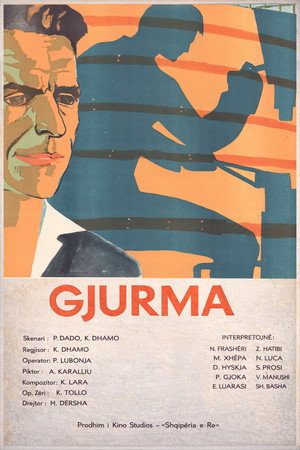
The architect Daniel Brenner is in his late thirties when he receives his first challenging and lucrative commission: to design a cultural center for a satellite town in East-Berlin. He accepts the offer under the condition that he gets to choose who he works with. This way, he reunites with former colleagues and friends - most of them architects or students of architecture who have since chosen a different profession due to personal restraint or economic confinement. Together, they develop a concept which they hope will be more appealing to the public than the conventional and dull constructions common to the German Democratic Republic. However, their ambitious plans are once and again foiled by their conservative supervisors. As frustration grows, Daniel has trouble keeping his career in balance with his family-life: his wife Wanda wants to leave for West-Germany.
Two small children and a ship's cook survive a shipwreck and find safety on an idyllic tropical island. Soon, however, the cook dies and the young boy and girl are left on their own. Days become years and Emmeline and Richard make a home for themselves surrounded by exotic creatures and nature's beauty. But will they ever see civilization again?
A Nazi propaganda movie from 1941 directed by Max W. Kimmich, covering a story of Irish heroism and martyrdom over two generations under the occupation of the British.
In this belated sequel to 'The Decline of the American Empire', middle-aged Montreal college professor, Remy, learns that he is dying of liver cancer. His ex-wife, Louise, asks their estranged son, Sebastian, a successful businessman living in London, to come home. Sebastian makes the impossible happen, using his contacts and disrupting the Canadian healthcare system in every way possible to help his father fight his terminal illness to the bitter end, while reuniting some of Remy's old friends, including Pierre, Alain, Dominique, Diane, and Claude, who return to see their friend before he passes on.
A successful doctor comes into conflict with his friends and family and is slowly driven towards suicide.
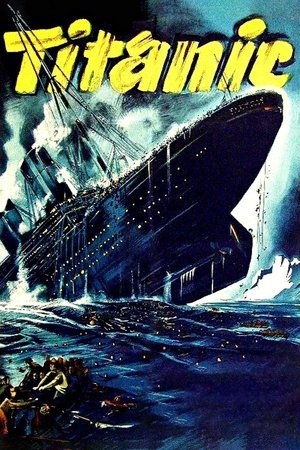
In 1912, the Titanic embarks on its inevitable collision course with history. In the wake of the over-spending required to build the largest luxury ship in the world, White Star Line executive Sir Bruce Ismay schemes to reverse the direction of his company's plummeting stock value. Onboard the Titanic, brave German 1st Officer Petersen struggles to convince his self-important British superiors not to overexert the ship's engines.
Communist Szczęsny juggles between his revolutionary activities and love to a fellow party member Madzia in this sequel to "Cellulose".
During the Nazi occupation of 1944 Rome, Resistance leader Giorgio Manfredi is pursued by the Nazis as he seeks refuge and a means of escape.
A former Prohibition-era Jewish gangster returns to the Lower East Side of Manhattan over thirty years later, where he once again must confront the ghosts and regrets of his old life.
As the title "The Queen's Heart" suggests, this early German black and white version of Mary Queen of Scott's eventful reign and death focuses on her emotional perception rather lyrically, with some songs, mainly by her.
County Durham, England, 1984. The miners' strike has started and the police have started coming up from Bethnal Green, starting a class war with the lower classes suffering. Caught in the middle of the conflict is 11-year old Billy Elliot, who, after leaving his boxing club for the day, stumbles upon a ballet class and finds out that he's naturally talented. He practices with his teacher Mrs. Wilkinson for an upcoming audition in Newcastle-upon Tyne for the royal Ballet school in London.
In a run-down South American town, four men are paid to drive trucks loaded with nitroglycerin into the jungle through to the oil field. Friendships are tested and rivalries develop as they embark upon the perilous journey.
Working-class Angie, sacked from a recruitment agency for bad public behaviour, teams up with her flatmate to run a similar business from their kitchen. With immigrants desperate for work, the opportunities are considerable, particularly for two girls so in tune with these times.
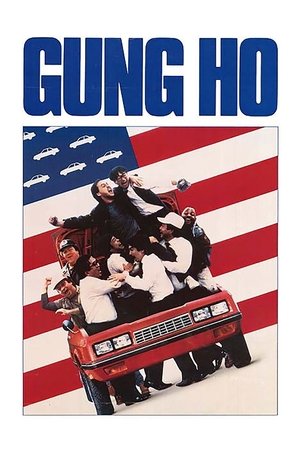
When a western Pennsylvania auto plant is acquired by a Japanese company, brokering auto worker Hunt Stevenson faces the tricky challenge of mediating the assimilation of two clashing corporate cultures. At one end is the Japanese plant manager and the sycophant who is angling for his position. At the other, a number of disgruntled long-time union members struggle with the new exigencies of Japanese quality control.
Joe, who owns a gas station along with his brothers and is about to marry Katherine, travels to the small town where she lives to visit her, but is wrongly mistaken for a wanted kidnapper and arrested.
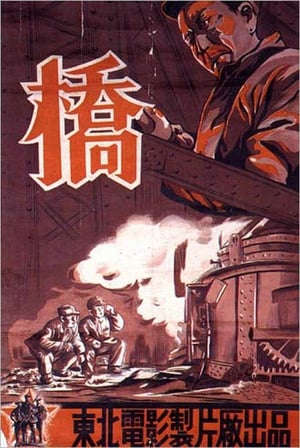
Factory workers in 1947 repair a bridge over Song Hua River so that Communist forces can use it.
This is part one of a two-part biopic about Karl Liebknecht. In 1914, Germany is arming itself for war. Karl Liebknecht, left-wing revolutionary Social Democrat, workers’ leader and a virulent antimilitarist, is one among 110 SPD members of Parliament who vote against approving war loans. From then on, he is considered un-German and a traitor to the fatherland, and his own party’s leadership turns against him. Despite threats, Liebknecht speaks up against the war and writes the manifesto “The Main Enemy Is at Home.” Even when he is arrested and charged with treason, he does not surrender.
The story of Johann Friedrich Böttger, an apothecary’s apprentice and alchemist’s assistant. Fleeing from the Prussian King, he goes to Saxony, where King Frederick August the Strong takes him to a fortress and demands that he create gold. Böttger is equipped with everything he would need for the task, but he has known for a while that actual gold production is a myth and instead experiments with porcelain—white porcelain, as the Chinese are said to possess. In 1709, he finally succeeds in surprising the King with the "white gold," the first white porcelain made in Europe, he hopes for freedom.
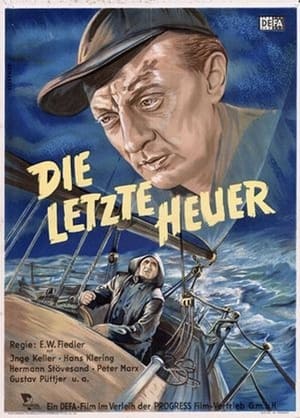
The ship stoker Heini Holler leaves Greece for health reasons and reports to the consulate of fascist Germany. The consul sends him back to Hamburg. He had previously reported him to the Gestapo there as politically suspicious. On his arrival, Holler is immediately arrested. His comrades kidnap the consul and demand an exchange for Heini, which is to take place in Marseille. The Gestapo agree to this as a pretense and secure the support of the French police to arrest the kidnappers. However, the solidarity of the sailors in Marseille is stronger and Heini is able to cure his lung disease in the Soviet Union.
Prince Klemens von Metternich orders Friedrich Gentz, one of his aides, to keep the Duke of Reichstadt---Napoleon Francois Joseph Charles---son of Napoleon and heir to the French throne, from thinking about French politics. Gentz enlists the help of ballerina Fanny Elsser, all the rage in several European capitals, to keep the Duke distracted.