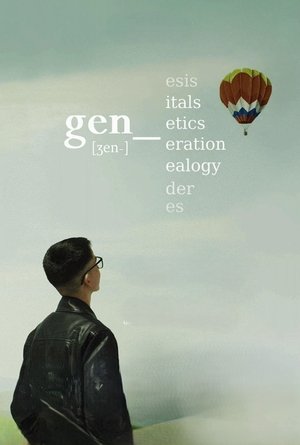
Somber tells the story of three depressed young people, all three in a different phase of the disease. What does depression do to a person? What does it actually mean? And above all, is there a way out?
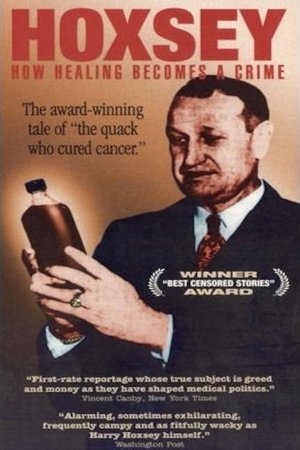
In the 1920s, former coal miner Harry Hoxsey claimed to have an herbal cure for cancer. Although scoffed at and ultimately banned by the medical establishment, by the 1950s, Hoxsey's formula had been used to treat thousands of patients, who testified to its efficacy. Was Hoxsey's recipe the work of a snake-oil charlatan or a legitimate treatment? Ken Ausubel directs this keen look into the forces that shape the policies of organized medicine.
The Conspiracy - Assasination in Beirut
Toubib
MOLE MAN follows RON, a 66-year-old autistic man who has spent the last five decades building a 50-room structure in his parents' backyard. Using no nails or mortar, Ron instead creates perfectly balanced structures from scavenged materials he finds in the woods outside his Western Pennsylvania home. When Ron's father passes away, leaving him living alone with his 90-year-old mother, Ron's siblings are left to figure out what's best for Ron - who has never been officially diagnosed with autism - when his mother can no longer care for him. In an effort to find the money to keep Ron in his home, his friends team up in search of a mythical mansion Ron insists lays abandoned in the forest. But will they be able to find it? And, more importantly, does it even exist? This is the story of an extraordinary life, a family, and the beauty of thinking differently.
This MGM Passing Parade series short presents how separate events led to the creation of three provisions - freedom of speech, freedom of the press, and prohibition of the infliction of cruel and unusual punishments - in the U.S. Constitution's Bill of Rights.
Danton and Robespierre were close friends and fought together in the French Revolution, but by 1793 Robespierre was France's ruler, determined to wipe out opposition with a series of mass executions that became known as the Reign of Terror. Danton, well known as a spokesman of the people, had been living in relative solitude in the French countryside, but he returned to Paris to challenge Robespierre's violent rule and call for the people to demand their rights. Robespierre, however, could not accept such a challenge, even from a friend and colleague, and he blocked out a plan for the capture and execution of Danton and his allies.
Just days after the Civil War ended, President Abraham Lincoln was assassinated at Ford's Theatre. As a fractured nation mourned, a manhunt closed in on his assassin, the twenty-six-year-old actor, John Wilkes Booth. The Assassination of Abraham Lincoln tracks the converging paths of the president and his killer, then tracks and draws connections between their last journeys, in the forms of Lincoln's funeral train route and Booth's desperate efforts to escape.
Hiding in the Walls unwinds the fraught history of lead poisoning in Baltimore and follows the adult survivors who are on a mission to reclaim the narrative.
L'Odyssée des Jeux olympiques
This movie is about an Iranian filmmaker called Davood Roostayi, whose all movies ( more than 100 movies ) have been banned both before and after the Islamic revolution of Iran and none of his movies have been screened.
November 2016 : The United States of America are about to elect their new president. AMERICA is a deep dive into the heart of Arizona, meeting the inhabitants of a little town crossed by Road 66, the broken inheritors of the American Dream who deliver us their hopes and fears.
The greatest amphitheatre ever built by the Romans and a monument to blood and brutality. But what were the origins of the Colosseum and the gruesome spectacles performed within? With unique access to new archaeology, Colosseum: Rise and Fall explores the true purpose of the Colosseum and the network of amphitheatres spread throughout the Roman Empire. Visiting sites across Europe and north Africa, exploring finds that reveal both the scope of the games and the secrets of the gladiators, Colosseum: Rise and Fall charts the expansion of Rome and the ultimate decline of one of history’s most barbaric empires, through the most iconic of Roman landmarks, the Colosseum.
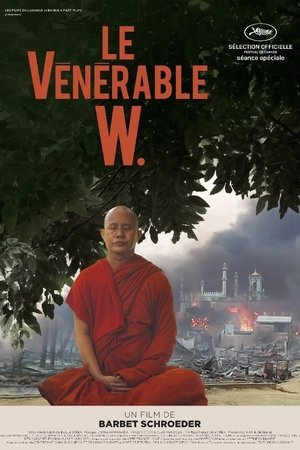
Since the rise to power of Hindu nationalists in 2014, India has been gradually moving away from democracy towards a regime where ethnic identity prevails. This transition is driven by Hindutva, a Hindu supremacist ideology embodied by Narendra Modi. For the past 10 years, Prime Minister Modi has relentlessly pursued his fascist policy based on Hindu supremacy. This ideology of hatred towards other religions in the country, particularly Islam, has also spread globally. Those who follow this belief want India to be only for Hindus, treating people of other religions, like Muslims or Sikhs as second-class citizens. Attacks against Christians have surged by 400% since Modi's election, accompanied by discriminatory laws targeting Muslims and widespread lynching incidents. Hindutva's influence permeates all levels of Indian society. This documentary thus unveils a darker side of India, far from its portrayal as the world's largest democracy and Gandhi's dream of peace among communities.
A documentary that follows Anya, a woman residing in Ukraine during the early stages of the war, who tells her story and contemplates how countries will treat her fellow Ukrainians who were forced to flee.
HORIZONTE EM RUÍNAS
50 years on, the Aboriginal Tent Embassy is the oldest continuing protest occupation site in the world. Taking a fresh lens this is a bold dive into a year of protest and revolutionary change for First Nations people.
Down the road from Woodstock in the early 1970s, a revolution blossomed in a ramshackle summer camp for disabled teenagers, transforming their young lives and igniting a landmark movement.
Fox Rich, indomitable matriarch and modern-day abolitionist, strives to keep her family together while fighting for the release of her incarcerated husband. An intimate, epic, and unconventional love story, filmed over two decades.
Exploring the fallout of MIT Media Lab researcher Joy Buolamwini's startling discovery that facial recognition does not see dark-skinned faces accurately, and her journey to push for the first-ever legislation in the U.S. to govern against bias in the algorithms that impact us all.