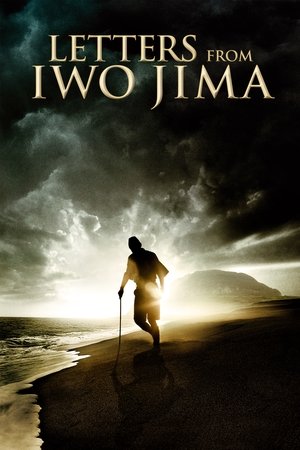
An hour long documentary on the war in the Pacific. Using Marine Corps color footage, the only footage of its kind, it traces the major battles, including Saipan, hew Jima and more narrated by Marine Corps veteran Lee Marvin.
The Toth family resides in Northern Hungary. The couple has a daughter and a son, the latter a member of the armed forces. When his weary major is ordered to take a vacation, the son talks him into a visit to his family home. Comedy ensues when the Toths go overboard trying to make things pleasant for the visiting major in hopes of an easier life for their son the soldier.
After the events of The African Queen (1951), Charlie and Rose are recaptured by the Germans and forced to tug one of their big cannons that could bring the Nazis victory against the local Allied forces.
The story of a group of men, an Army Rifle company called C-for-Charlie, who change, suffer, and ultimately make essential discoveries about themselves during the fierce World War II battle of Guadalcanal. It follows their journey, from the surprise of an unopposed landing, through the bloody and exhausting battles that follow, to the ultimate departure of those who survived.
This chilling, vitally important documentary was produced to mark the 40th anniversary of the liberation of Auschwitz Concentration Camp. The film contains unedited, previously unavailable film footage of Auschwitz shot by the Soviet military forces between January 27 and February 28, 1945 and includes an interview with Alexander Voronsov, the cameraman who shot the footage. The horrifying images include: survivors; camp visit by Soviet investigation commission; criminal experiments; forced laborers; evacuation of ill and weak prisoners with the aid of Russian and Polish volunteers; aerial photos of the IG Farben Works in Monowitz; and pictures of local people cleaning up the camp under Soviet supervision. - Written by National Center for Jewish Film
A driver is tasked with sending weapons illegally to the partisan soldiers.
Story depicting the national liberation struggle of the Albanian people against the Italian and German invaders during World War II.
At the beginning of the Second World War, Czech music student Honsik comes to Germany from Prague to join a "foreign worker company". After rescuing a boy from the rubble of a bombed-out house, he himself is seriously injured and taken to a hospital in Stralsund. There he is regarded as a second-class citizen and the Germans are preferred to him. Nurse Käthe stands up for him, cares for him and defies all prohibitions. A love affair is kindled between the two, but it is not under a good star. Honsik tries to flee to his homeland with his comrades and Käthe supports him. At the last moment, however, Honsik realizes that his love for Käthe is stronger than his homesickness and makes his way back. Once back home, he can only watch as Käthe is arrested by the Gestapo. With the help of a resistance fighter, the young man from Prague manages to escape after all.
In SIRIUS, a young boy whose most cherished companion is his loyal German shepherd devises his own form of resistance when the Nazis arrest his father, then order the confiscation of local canines, including his pet, to be retrained as attack dogs against the rebellious populace.
During routine manoeuvres near Hawaii in 1980, the aircraft-carrier USS Nimitz is caught in a strange vortex-like storm, throwing the ship back in time to 1941—mere hours before the Japanese attack on Pearl Harbor.
Gunman Flame and his partner Citron assassinate Nazi collaborators for the Danish resistance. Assigned targets by their Allies-connected leader, Aksel Winther, they relish the opportunity to begin targeting the Nazis themselves. When they begin to doubt the validity of their assignments, their morally complicated task becomes even more labyrinthine.
A paratrooper drops behind enemy lines to rescue the deposed king of a mythical Balkan nation.
Nebi Surreli lives in poverty along with his mother. Doing small jobs to earn a living, he also helps his town's communist unit.
In Fascist Albania 1942, Albanian partisans will do all they can to remove the Italian fascists from their country.
For fans of history, this glimpse of Munich society in the 1920s will be a much-treasured event. The story revolves around an art-gallery manager who puts on a show featuring the scandalous works of a woman artist who committed suicide. He is unjustly accused of having committed adultery with her, and for some reason the authorities decide to make an example of him. He is imprisoned at about the same time that Hitler and the nascent Nazi party attempt the infamous Beer Hall Putsch, and the gallery manager's girlfriend and a Swiss writer valiantly (and unsuccessfully) attempt to get better justice for him. Nobody in authority, it seems, has the courage to take up the challenge of righting this particular injustice.
We’ve all heard of the Warsaw Ghetto Uprising, but most people have no idea how widespread and prevalent Jewish resistance to Nazi barbarism was. Instead, it’s widely believed “Jews went to their deaths like sheep to the slaughter.” Filmed in Poland, Lithuania, Latvia, Israel, and the U.S., Resistance – They Fought Back provides a much-needed corrective to this myth of Jewish passivity. There were uprisings in ghettos large and small, rebellions in death camps, and thousands of Jews fought Nazis in the forests. Everywhere in Eastern Europe, Jews waged campaigns of non-violent resistance against the Nazis.
1944, Japan. One of the kamikazes, by misfortune, survives. When he jumps with a parachute, he lands in Nardaran — right in the house of Gulbala, who is nicknamed “the Japanese.” When the representative of the State Security Committee learns of this unusual incident, he intervenes, saying: “This matter is under Stalin’s control; we must keep the Japanese alive,” and begins the operation. From then on, the funny stories continue.
Sonja Wigert, Scandinavia's most acclaimed female movie star, enlists as a spy for Swedish intelligence but ends up becoming entangled with the German Reichskommissar Terboven.
Nazis L'origine du Mal
During World War II, the British Army assigns a group of competent soldiers to carry out a mission against the Nazi forces behind enemy lines... A true story about a secret British WWII organization — the Special Operations Executive. Founded by Winston Churchill, their irregular warfare against the Germans helped to change the course of the war, and gave birth to modern black operations.