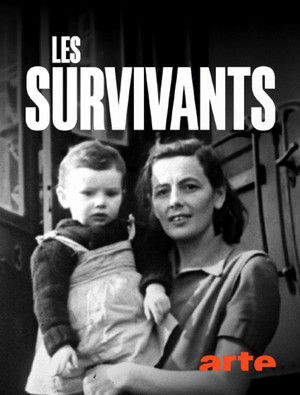
William Wolff is nearly 90 and perhaps the most unconventional rabbi in the world. As the State Rabbi of North-East Germany, he looks after the Jewish Communities in Schwerin and Rostock, but still lives in a bungalow near Henley-on-Thames. Midweek he usually flies from Heathrow to Germany. After the services on Saturdays, he either makes his way home or on a leisure city trip. His annual highlight is betting at the Horse Race of Royal Ascot and joining a fasting-retreat in Bad Pyrmont. Willy Wolff leads a Jet-Set-Life, which he actually cannot afford, but dealing with money isn't one of his strengths. Naturally, that occasionally leads to quite temporal conflicts. Rabbi Wolff is the portrait of a fascinating character, a deeply religious man who, blessed with a tremendous joie de vivre, defies all conventions. More than that, it gives insight into the world of Judaism and introduces us to a uniquely German biography.
Paul Wellstone was the charismatic Minnesota progressive who used grassroots organizing to get elected and give ordinary people a stake in government. His 3rd election campaign was cut short when his small plane crashed into the north woods of Minnesota just 11 days before the 2002 election. Wellstone! explores the origin of his politics, his controversial road to the United States Senate, his deep bond with his wife and 'co-senator' Sheila, and the legacy of a life of progressive populism.
Street art, creativity and revolution collide in this beautifully shot film about art’s ability to create change. The story opens on the politically charged Thailand/Burma border at the first school teaching street art as a form of non-violent struggle. The film follows two young girls (Romi & Yi-Yi) who have escaped 50 years of civil war in Burma to pursue an arts education in Thailand. Under the threat of imprisonment and torture, the girls use spray paint and stencils to create images in public spaces to let people know the truth behind Burma's transition toward "artificial democracy." Eighty-two hundred miles away, artist Shepard Fairey is painting a 30’ mural of a Burmese monk for the same reasons and in support of the students' struggle in Burma. As these stories are inter-cut, the film connects these seemingly unrelated characters around the concept of using art as a weapon for change.
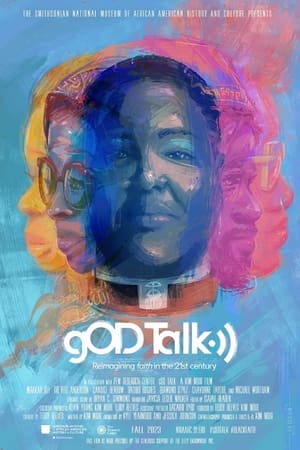
Explores the lives of seven Black Millennials – Atheist, Buddhist, Christians, Muslim, Ifa, and Spiritualist – and the challenges and discoveries with faith and spirituality.
Buddhist monks open up about the joys and challenges of living out the precepts of the Buddha as a full-time vocation. Controversies swirling within modern monastic Buddhism are examined, from celibacy and the role of women to racism and concerns about the environment.
Brilliant Moon chronicles the life of the writer, poet, and meditation master Khyentse Rinpoche, one of Tibet's most revered 20th-century Buddhist teachers. Spiritual guide to His Holiness the Dalai Lama and the Royal Family of Bhutan, his life and teachings were an inspiration to all who encountered him. Richard Gere and Lou Reed provide the narration for his dangerous journey out of China, the subsequent spread of his influence and the search for his reincarnation after his death.
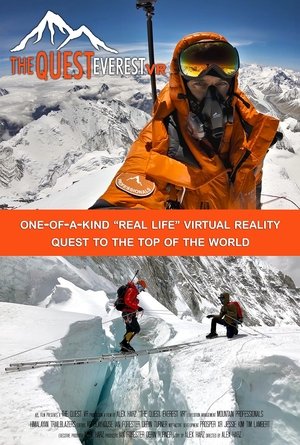
'THE QUEST: Everest VR' is a one-of-a-kind "real-life" Virtual Reality documentary to climb and reveal the most legendary mountain on earth, Mt. Everest, in stunning 360 degree video! It is the only real-life Virtual Reality experience that puts you directly in the boots with filmmaker and explorer, Alex Harz, on an epic 52 day quest to the Top of the World (29,032 feet / 8849 meters), and the closest thing to climbing Everest without all the rigorous training, planning and high risk needed to physically step foot on the mountain! 'THE QUEST: Everest VR' can be experienced worldwide in Virtual Reality headsets, and on computers, phones, tablets, etc...
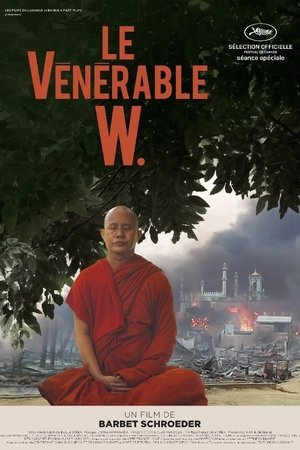
A view of the religious tensions between Muslims and Buddhist through the portrait of the Buddhist monk Ashin Wirathu, leader of anti-Muslim movement in Myanmar.
A Zen priest in San Francisco and cookbook author use Zen Buddhism and cooking to relate to everyday life.
How do we live, knowing we are going to die? In search of answers, we probed the minds of atheists, Buddhists, Jews, Christians, physicians, philosophers, authors, academics, a legendary stand-up comic, and scores of random pedestrians.
The first woman rabbi in the world, Regina Jonas, comes to light, courtesy of Rachel Weisz – who plays her – and her father George Weisz, who was the executive producer for this poetic and beautiful documentary. The daughter of an Orthodox Jewish peddler, Jonas was ordained in Berlin in 1935. During the Nazi era and the war, her sermons and her unparalleled devotion brought encouragement to the persecuted German Jews. Regina Jonas was murdered in Auschwitz in 1944. The only surviving photo of Jonas serves as a leitmotif for the film, showing a determined young woman gazing at the camera with self-confidence.
A Catholic priest discovers that he was born to Jewish parents
Filmed in Cordoba, Granada, Seville, and Toledo, this documentary retraces the 800-year period in medieval Spain when Muslims, Christians, and Jews forged a common cultural identity that frequently transcended their religious differences, revealing what made this rare and fruitful collaboration possible, and what ultimately tore it apart.
After World War II a group of young writers, outsiders and friends who were disillusioned by the pursuit of the American dream met in New York City. Associated through mutual friendships, these cultural dissidents looked for new ways and means to express themselves. Soon their writings found an audience and the American media took notice, dubbing them the Beat Generation. Members of this group included writers Jack Kerouac, William Burroughs, Allen Ginsberg. a trinity that would ultimately influence the works of others during that era, including the "hippie" movement of the '60s. In this 55-minute video narrated by Allen Ginsberg, members of the Beat Generation (including the aforementioned Burroughs, Anne Waldman, Peter Orlovsky, Amiri Baraka, Diane Di Prima, and Timothy Leary) are reunited at Naropa University in Boulder, CO during the late 1970's to share their works and influence a new generation of young American bohemians.
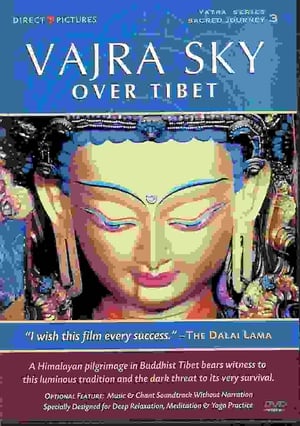
Vajra Sky is a cinematic pilgrimage to central Tibet, bearing witness to the indomitable faith of its Buddhist community and the imminent threat to its very survival. This poignant journey bears witness to the indomitable faith of its endangered Buddhist community and the imminent threat to its very survival. The vastness of the Tibetan sky, reflecting snowy mountains, rushing rivers, and turquoise lakes, leads the journey west. Tibetans respond to the denial of the human right to practice one's religion without interference with a defiant devotion.
This documentary is the third part of The Yatra Trilogy created by John Bush. Vajra is the Sanskrit word signifying the thunderbolt of illumination, and yatra is the word for pilgrimage or spiritual journey. This film offers a cinematic pilgrimage to central Tibet, bearing witness to the indomitable faith of its endangered Buddhist community and the imminent threat to its very survival.
A cinematic journey through the world. Non-verbal.
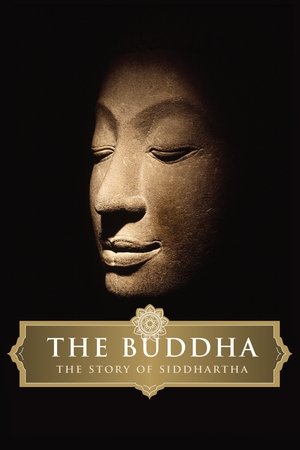
This documentary for PBS by award-winning filmmaker David Grubin and narrated by Richard Gere, tells the story of the Buddha’s life, a journey especially relevant to our own bewildering times of violent change and spiritual confusion. It features the work of some of the world’s greatest artists and sculptors, who across two millennia, have depicted the Buddha’s life in art rich in beauty and complexity. Hear insights into the ancient narrative by contemporary Buddhists, including Pulitzer Prize winning poet W.S. Merwin and His Holiness the Dalai Lama. Join the conversation and learn more about meditation, the history of Buddhism, and how to incorporate the Buddha’s teachings on compassion and mindfulness into daily life.
Wang Shin-hong is suffering from insomnia. A fortune teller advises the Mandalay businessman, whose car and bulging wallet suggest that business is going pretty well, to spend 14 days in a monastery, living life as a monk and eating an apple a day. Such a thing is possible in Burma today. Wang Shin-hong arrives at the rural monastery, has his head shaved and dons a red robe, in which he instantly becomes an authority. During the welcome procession, the village women, their poverty clear from their clothing and the huts in the background, put more than they have in his alms bowl. During his fleeting role as their advisor, Wang Shin-hong soon learns of the villagers’ attempts to survive and make a living as legal or illegal migrants in China, Thailand or Malaysia. He also finds out how the other monks try to generate profit and additional income.
Developed by Thích Nhất Hạnh himself, the exercises taught here combine simple stretching and graceful gestures with mindfulness meditation. Join Thich Nhat Hanh and Plum Village monk Brother Michael to explore ten unique movements. Practice them before or after sitting meditation anytime you have a few minutes to refresh your body and quiet your mind.