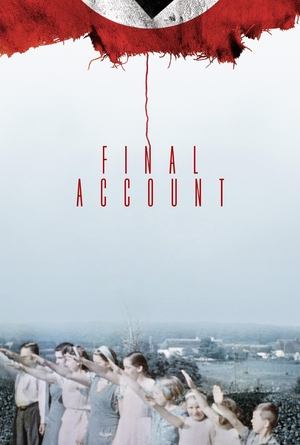
In 1944, two prisoners miraculously escaped from Auschwitz. They told the world of the horror of the Holocaust and raised one of the greatest moral questions of the 20th century.
Benito Mussolini: Anatomy of a Dictator
Featuring excerpts from diaries and letters written by local residents and soldiers from both sides, the documentary tells the story of the Battle of Stalingrad through the voices of those who lived it.
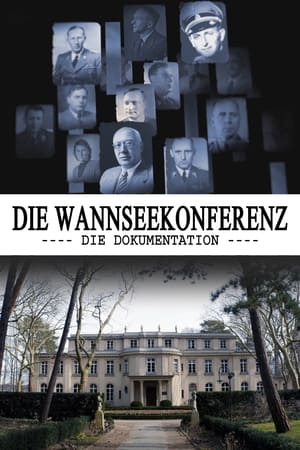
In 2016, an album containing 250 previously unseen photos of Nazi officials was discovered in the USA by Stephan Hördler, a prominent Holocaust historian, who immediately understood the album's inestimable value. The album brings together photographs of a "group of friends," all from the same region of Germany, all of whom became SS men. From 1928 to 1943, the photo album allows us to follow their journey. Hördler conducted the investigation, comparing the photos in the album with other, better-known ones, the faces of these men with those of concentration camp officials, and ultimately revealed that it was at Lichtencburg that these young men were trained, a "school" for future camp executioners, and the bonds of camaraderie and informal network that would allow them to help each other, even after the war.
Recorded during World War II, this rare color film traces an RAF Bomber Command night attack on Berlin -- from strategic planning and preparation to the execution of the actual attack with Avro Lancaster bombers. Air Commodore H.I. Cozens filmed the events during a period when the Bomber Command flew into Germany nearly every night for a massive series of raids on key targets.
A slice-of-life documentary following Ulla, a blind woman adjusting to life after eye removal surgery. With the help of her guide dog, Laina, she navigates Helsinki while pursuing a prosthetic eye and a deeper understanding of photography.
This documentary explores the creation of the Holocaust Memorial in Berlin as designed by architect Peter Eisenman. Reaction of the German public to the completed memorial is also shown.
Based on years of research into the mass rapes committed by the Red Army at the end of the Second World War. In the first part of the documentary Helke Sander interviews multiple German women who were raped in Berlin by Soviet soldiers in May 1945. Most women never spoke of their experience to anyone, after 46 years of silence they talk for the first time publicly about their violent experiences that have left such a mark.
Australian filmmaker Sophia Turkiewicz investigates why her Polish mother abandoned her and uncovers the truth behind her mother's wartime escape from a Siberian gulag, leaving Sophia to confront her own capacity for forgiveness.
A documentary exploring how Albanians, including many Muslims, helped and sheltered Jewish refugees during WWII at their own risk, and trying to help the son of an Albanian baker that housed a Jewish family for a year return some Hebrew books that the family had to leave behind.
A feature-length, condensed version of the 1952 documentary TV series 'Victory at Sea'.
"This 20 minute documentary sheds light on the worst antisemitic riot in American history, which occurred in Crown Heights, Brooklyn, in 1991. Triggered by a Hasidic man running a red light and accidentally hitting and killing a young black child, the riot led to attacks on Jews. Stores and police cars were burned and a Hasidic man was killed. David Dinkins, New York’s mayor at the time, allowed the riot to go on for three full days, while the media downplayed the antisemitism at the heart of the violence. The film’s interviews include Rev. Al Sharpton and then-Deputy Police Chief Ray Kelly as well as WSJ Opinion writer Elliot Kaufman. The current wave of antisemitism makes these events newly relevant and worthy of reconsideration" (The Wall Street Journal).
A documentary about the decisions parents made in evacuating their children out of harm's way (the Nazis), and being forced to stay behind, the parents realize that this may possibly be the last time they will see their loved ones.
"City of Baseball" is a documentary that explores both the past and the present of the Italian baseball league in the seaside resort of Nettuno near Rome. Through league pioneers, current players, fans, and local historians, "City of Baseball" captures the story of how the 1944 Allied invasion of Nettuno brought the American pastime to a town which embraced the sport with a passion that continues today.
Documentary detailing the successful Operation Mincemeat in 1943, which led to the Allies successfully invading Sicily and the war turning in their favour.
Based on testimony by Ethel’s brother, David Greenglass, the Rosenbergs are arrested by the FBI. The couple is accused of passing secret information about the atomic bomb to the USSR. Though the Rosenbergs maintain their innocence from the start, the media and public opinion seem to have condemned them from day one. The trial does nothing to change this and ends in a death sentence. On Friday June 19, 1953, Julius and Ethel Rosenberg are executed in the electric chair. Julius first, then Ethel. 30 years later, the truth finally comes out. Declassified FBI archives reveal that Ethel was not guilty of being a spy; she was merely married to one. Julius did indeed commit espionage for the Soviet Union, though primarily as a recruiter, nothing at all like the fictional James Bond. This documentary, made entirely of archival footage and animated illustrations, offers a tale of espionage as well as a complex family tragedy.
June 6, 1944: The largest Allied operation of World War II began in Normandy, France. Yet, few know in detail exactly why and how, from the end of 1943 through August 1944, this region became the most important location in the world. Blending multiple cinematographic techniques, including animation, CGI and stunning live-action images, “D-Day: Normandy 1944” brings this monumental event to the world’s largest screens for the first time ever. Audiences of all ages, including new generations, will discover from a new perspective how this landing changed the world. Exploring history, military strategy, science, technology and human values, the film will educate and appeal to all. Narrated by Tom Brokaw, “D-Day: Normandy 1944” pays tribute to those who gave their lives for our freedom… A duty of memory, a duty of gratitude.
The story behind the Hollywood film 'The Great Escape', examining the search for the Gestapo men who murdered 50 of the escapers.
What would your family reminiscences about dad sound like if he had been an early supporter of Hitler’s, a leader of the notorious SA and the Third Reich’s minister in charge of Slovakia, including its Final Solution? Executed as a war criminal in 1947, Hanns Ludin left behind a grieving widow and six young children, the youngest of whom became a filmmaker. It's a fascinating, maddening, sometimes even humorous look at what the director calls "a typical German story." (Film Forum)
A remarkable film that takes a special look at the first war to be truly reported and recorded by one of the more unsung heroes of World War II: the combat photographer. Through the unflinching eye of their camera's lenses, these courageous soldiers continually risked their lives in their brave attempts to capture history.