In a futuristic city sharply divided between the rich and the poor, the son of the city's mastermind meets a prophet who predicts the coming of a savior to mediate their differences.
A couple of boy gangs in Budapest constantly fight over the neighborhood turf.
A melodrama about a painter who is infected with syphilis, refuses treatment, turns to the use instead of narcotics, and withers away.
A showman introduces a small coastal town to a unique movie experience and capitalizes on the Cuban Missile crisis hysteria with a kitschy horror extravaganza combining film effects, stage props and actors in rubber suits in this salute to the B-movie.
Just as Galeen and Wegener's Der Golem (1915) can be seen as a testament to early German film artistry, The Story of the Kelly Gang (1906) symbolizes both the birth of the Australian film industry and the emergence of an Australian cinema identity. Even more significantly, it heralds the emergence of the feature film format. However, only fragments of the original production of more than one hour are known to exist, preserved at the National Film and Sound Archive, Canberra; Efforts at reconstruction have made the film available to modern audiences.
Ilda Barosky, a Jewess whose father was killed by Russian soldiers, is a violin student in love with Alexis Nazimoff, son of the Russian aristocracy. Alexis' father arranges a marriage of convenience between Alexis and Olga Karischeff, the daughter of the ambitious minister of police and attempts to shame Ilda at the betrothal celebration. Defiant, Ilda is whipped before the entire assembly. Alexis rushes in to rescue her and terminates his engagement to Olga. In retaliation, Karischeff sentences both Ilda and Alexis to ten years in Siberia as his last official act. The couple attempt to escape their Siberian captivity, are caught and face a firing squad until Count Nazimoff, who has assumed Karischeff's position as minister of police, arrives with a pardon. The couple return home, and the penitent count finally grants them his blessings.
James Rallston, facing financial hardship, marries a wealthy invalid widow with a daughter, Jean, and plots to control her fortune. He orchestrates her confinement in a sanitarium by drugging her and falsely claiming she is insane, with the help of a conniving doctor and sanitarium keeper. Fifteen years later, Rallston has lost Jean's fortune through speculation and seeks help from John Bigelow to recover it, offering Jean as a reward. Bigelow, suspicious of Rallston, discovers the truth about the widow and Jean's father, and rescues the widow from the sanitarium.
In the rural village of Mosville, inventor and fire chief Lem Blossom, the son of a pumpkin farmer, falls in love with unsophisticated country girl Mary Griggs. His rival is the worldly Tom Perkins, who is conspiring with her father, Joshua, to corner the pumpkin market. Unable to sell his pumpkins, Pa Blossom turns bootlegger in desperation. Lem learns that the pumpkin crop up north has been destroyed by frost and attempts to corner the market himself by offering a $1,000 prize for the largest pumpkin. When the Griggs home catches fire, Lem saves Mary and Joshua with the aid of his water pump and folding ladder, both of which he invented. Joshua then partners with Lem and approves the young man's betrothal to Mary.
His Last Race
A peasant girl goes to great lengths to protect her child in 19th century Vienna. The film is considered lost, and only four minutes of footage are known to remain.
During the last moments of a romantic involvement with an older man, Martina finds herself deeply overwhelmed by disappointment and confusion, left alone to question who she really is.
Follows a big star who brings a film crew to her remote hometown for a shoot, and while the production is afflicted by disagreements between the crew, a bored local restaurant owner finds excitement to be the stand-in for the star.
Conrad Veidt plays a famous musician who is blackmailed for being gay. Eventually he stands trial and is convicted. At the end the film pleads for the abolition of §175 (the law that punishes homosexuality).
An exposé of the "fake" or "wicked" Bohemian social circles, highlighting the moral consequences of their actions. The film features a "pleasure-seeking" philosophy, evidenced by the intertitle that read, "May we help ourselves to life's pleasures?"
Focuses on the suspenseful, intertwined stories of the Chancery court injustices and the scandalous secrets surrounding Lady Dedlock's past. Part of serial Tense Moments from Great Plays.
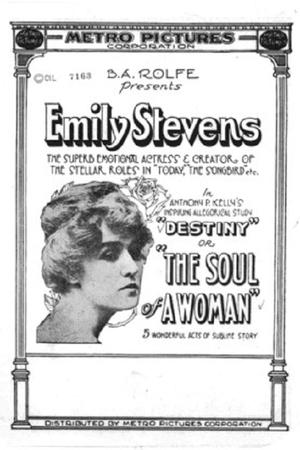
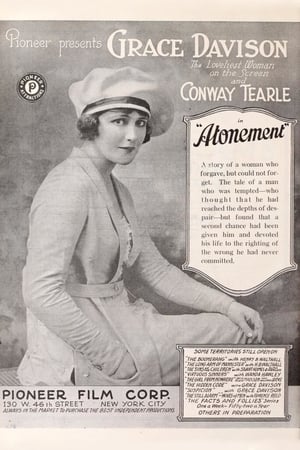
Artist Standish using his wife Mary as his model finishes a painting of the Madonna. When the Connoisseur and the Parishioner inspect the picture, the Connoisseur tells Standish that the model was a one-time paramour. Buying the painting they depart. Standish confronts Mary, who tells him that she believed herself legally married to the Connoisseur. Unbelieving he ejects her and their baby son. Penniless Mary leaves her boy on the steps of a monastery. Years later before becoming a monk the boy is sent to see the world. Wandering into a café he is seduced by Beauty as the other inmates of the place, Lust, Rum, Avarice and Passion dance around him. The proprietor enters; it is Mary. Recognizing the crucifix, she left with him as a baby she persuades him to go back without revealing her identity. After he becomes a priest Mary, now a bedraggled old woman enters his church. She recognizes him and just before she dies her son gives her absolution.
At a media-swamped party to celebrate his seventieth birthday and screen his avant-garde film-in-progress, a legendary but jaded Hollywood director is faced both with voracious fans and unsettling questions about what became of his lead actor.
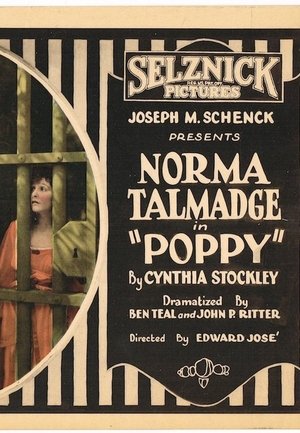
Abandoned on the church steps at birth Jacques Revilly is a pariah in his small hamlet finally heading to Paris to fulfill his dream of being an artist. After three years he has become quite adept but due to his slovenly ways and appearance he has been nicknamed “The Beast” and is once again exiled among society. One night he discovers a young girl who has collapsed in the roadside snow, with the assistance of his one friend Varney they nurse her back to health and “The Beast” begins to mend his ways.
A young author, Everett Dryden Hale, has written a book of such strength and originality that it becomes one of the best sellers. The book is entitled "Waifs" and deals with the underworld, a subject of which Hale, who is a New Englander with a Puritanical strain, knows by personal experience, practically nothing at all.
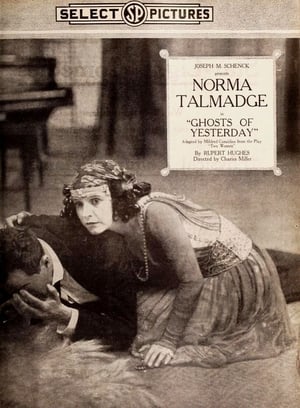
Claire Curtis, Jimmie Strong and Mary have spent their childhood together in the country. Upon reaching adulthood, Claire goes to New York and becomes a success on stage. Jimmie, who has always dreamed of becoming an inventor, goes to New York to sell the machine he invented, and there he renews his acquaintance with Claire. Soon their old friendship ripens into love. Meanwhile, back in the country, Ralph and David Harding, who are making Jimmie's machine, plan to steal the right to it. Back in New York, Mary appears and informs Claire that she loves Jimmie, and the actress resolves to give her a chance to win him. When it appears that the Hardings' scheme to steal Jimmie's machine will succeed, however, Mary's ardor turns cold. Claire and Jimmie then rush back to the country in time to avert the takeover and save his firm from bankruptcy.