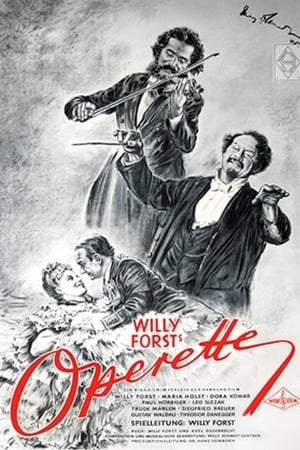
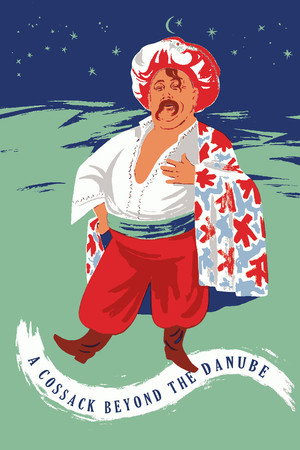
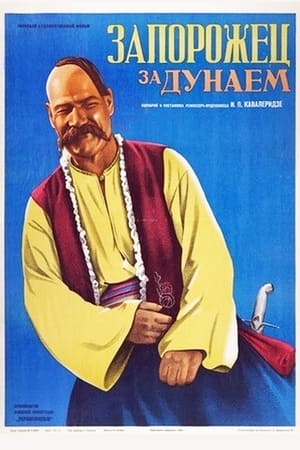
Based on a revolutionary play supposedly written by the Eternal President of the Democratic People's Republic, Kim Il-sung, and rumored to have been co-directed by Kim Jong-il. This revolutionary work is also popular among the Chinese, especially those who lived through the Cultural Revolution, and have fond memories of revolutionary antics.
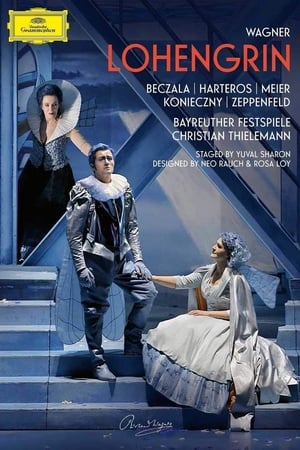
After Tristan und Isolde (2016), Parsifal (2017) and Die Meistersinger von Nürnberg (2018) this is the fourth installment of the exclusive, multiyear partnership between Deutsche Grammophon and the Bayreuth Festival, in which the Yellow Label is the exclusive audiovisual partner of the mythical Wagner festival, releasing each edition's new production on Blu-ray. This year, we are proud to release on Blu-ray the celebrated production of Lohengrin which was premiered on 25 July 2018, featuring an illustrious cast including Piotr Beczala and Anja Harteros in their house debuts, as well as the acclaimed return of Waltraud Meier to the Bayreuth Festival. The New York Times praised Piotr Beczala’s Lohengrin as “outstanding”, Anja Harteros [making] her impressive Bayreuth debut” as Elsa, and Ortrud “played with dominant presence by the incomparable Waltraud Meier”.
The Zurich Opera gathered a superb cast for this production: Italian soprano Eva Mei sings the Countess Violante, known as Sandrina, the feigned gardener of the title. Spanish soprano Isabel Rey is her opponent Arminda, and Arminda's former lover, the melancholy Cavaliere Ramiro, is sung by Romanian mezzo Liliana Nikiteanu. Moretti's staging presents the action in a modern villa in a hierarchical world of the rich and famous.
A version of Benjamin Britten's opera based on the Melville story. Will the virtuous young sailor Billy Budd be hanged for murder?
Pietro Mascagni's opera recorded in 2009. Conductor Stefano Ranzani leads the orchestra and chorus of the Zurich Opera House, with performances by Argentinian tenor Jose Cura and soprano Pauletta Marrocu.
Oscar©, a powerful exploration of the life and writings of literary legend, Oscar Wilde. A spectacular new full-length ballet by Tony Award-winning choreographer Christopher Wheeldon In a celebration of the beauty and complexity of love in all its forms, Oscar© brings queer romance to life through Wheeldon’s innovative and heart-stirring choreography. Oscar© journeys through the extraordinary life of Wilde – a man who dared to live and write with unapologetic boldness – while masterfully integrating two of Wilde’s best-known works, The Nightingale and the Rose and The Picture of Dorian Gray.
A production of Mozart's opera recorded live at Zurich Opera House in 2000. Cecilia Bartoli leads an all-star cast including Roberto Saccà, Liliana Nikiteanu, and Agnes Baltsa. The conductor is Nikolaus Harnoncourt. Filmed live at the Zurich Opera House in February 2000 on a set which visualises the subtitle "The School for Lovers", the plot revolves around two army officers arguing about the fidelity of their brides, then setting out to test their chastity. Despite the often playful humour, this is not only psychologically telling music-making, but reveals Mozart exploring the structure of opera, discarding convention to mix large ensemble sections with arias for as many different combinations of singers as possible. With Liliana Nikiteanu attractively contrasted with Bartoli, and thoroughly convincing performances by Roberto Sacca (Ferrando) and Oliver Widmer (Guilelmo), this Così has a freshness and flow which, coupled with the timeless romantic themes, feels very contemporary.
Viva Vivaldi! is a concert by the Italian mezzo-soprano Cecilia Bartoli interspersing arias from the 20 surviving operas of Vivaldi with two concertos. Given with the early music ensemble Il Giardino Armonico before a very appreciative audience in the Théâtre des Champs-Élysées, the performance is part of Bartoli's exploration of the Venetian composer's opera music which also includes The Vivaldi Album. There is a startling dynamic energy, which contrasts powerfully with the more restrained interpretations by singers such as Emma Kirkby. Bartoli's natural Italian and the live atmosphere of Maria Grazia d'Alessio's oboe gives her interpretation of the quietly haunting and melodically rich "Non ti Lusinghi la Crudeltade" from Tito Manlio a particular piquancy. The Flautino Concerto is a most attractive interlude, while the more famous Lute/Violin Concerto beguiles with its exquisite lyricism.
The celebrated mezzo-soprano Cecilia Bartoli joins Bryn Terfel for a recital of arias and duets recorded at Glyndebourne Opera House in 1999. The programme features favourite pieces from Mozart, Rossini and Donizetti, with the London Philharmonic Orchestra conducted by Myung-Whun Chung.
Performed live at the Royal Opera House, Covent Garden, Gluck's opera in three acts is conducted by Hartmut Haenchen. Performers include Jochen Kowalski, Gillian Webster and Jeremy Budd, alongside the Royal Opera Chorus and Orchestra. When Orpheus mourns for his late wife Eurydice, the god Cupid offers him the chance to descend into the underworld and lead her back to the land of the living, on the condition that he does not look at her face. He sets out on his journey, but his path to the Elysian Fields is blocked by the fierce Furies.
“In a world that often demands certainty, Dialogues des Carmélites invites us to sit with profound questions that have no easy answers: What makes a life worthy? How can we be truly prepared for our inevitable end? What does security mean when everything familiar is threatened? What sustains us when our institutions crumble? … Rather than imposing answers, the opera creates room for reflection on how faith manifests not as abstract doctrine, but as lived experience under extraordinary pressure.” — Louisa Muller, Director’s Note. Juilliard Opera directed by Louisa Muller. Matthew Aucoin conducts the Juilliard Orchestra. Performed and recorded on April 26, 2025 at the Peter Jay Sharp Theater. Dialogues des Carmélites, an opera by Francis Poulenc. Libretto adapted by the composer.
John Eliot Gardiner conducts Gluck’s 1776 French version of “Alceste” at the Théâtre du Châtelet in Paris. Soprano Anne Sofie von Otter takes the title role of Alceste, Queen of Thessaly, who offers to die at the hands of the gods in place of her husband, Admète (Paul Groves), so that the people will not lose their king. Alceste is then saved from the underworld by Hercule (Dietrich Henschel).
Part of the celebrations for the 150th anniversary of the death of the Pesaro composer, Il Barbiere di Siviglia staged in Lugano, is the result of a virtuous collaboration that involved Swiss Radio and Television, LuganoInScena and LuganoMusica. The musical part was entrusted to Maestro Diego Fasolis who, together with his Barocchisti ensemble, was involved in the project from the very beginning. Internationally renowned soloists such as Edgardo Rocha (who embodies the Count of Almaviva), Riccardo Novaro (Bartolo), Lucia Cirillo (Rosina), Giorgio Caoduro (Figaro), Ugo Guagliardo (Basilio) and Alessandra Palomba (Berta) performed on stage.
St. Margarethen is a magnificent structure and a grand setting for Nabucco. This venue, along with the gorgeous costumes, spectacular lighting, lasers and pyrotechnics made for one grand, five star production! This is reason enough to see it and it must be an advantage to view it on DVD.--It would probably be harder to digest the whole spectacle if you were actually sitting in the audience, as there is so much to take in. The whole cast was in great form, both in singing and acting. Simon Yang as Zaccaria and Igor Morosow as Nabucco were excellent. Gabriella Morigi was a convincing Abigail who got better and better. Bruno Ribeiro as Ismaele and Elisabeth Kulman as Fenena were great, too.
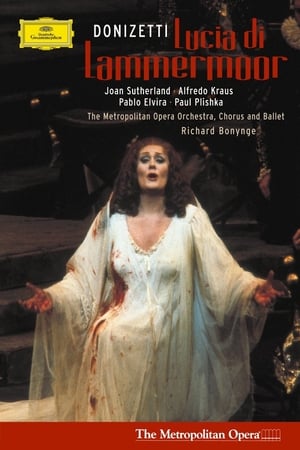
Lucia di Lammermoor, dramma tragico in three acts by Gaetano Donizetti (1797 - 1848). Libretto by Salvadore Cammarano, after Walter Scott's 'The Bride of Lammermoor'. First performance in Naples, Teatro San Carlo, 26 September 1835 Recording: December 23 2015 - Gran Teatre del Liceu | Barcelona Director: Fabrice Castanier Conductor: Marco Armiliato Orchestra & Chorus of the Gran Teatre del Liceu
Franz Woyzeck, a lowly soldier stationed in a mid-nineteenth century provincial German town, is the father of an illegitimate child by his mistress Marie.
In 1931 Shostakovich wrote a full-length score for the Leningrad Music Hall, for a show that involved many of the leading entertainers of the day, as well as dancing girls, a jazz band, a dancing dog, sequences of silent film, simulated air-raids and gas attacks, a lorry, a storm, waiters and waitresses in a luxury restaurant, river nymphs and even a scene in Heaven with the Devil, the Twelve Apostles, the Archangel Gabriel and all the other angels doing a blasphemous knees-up. The show was naturally a momentary scandal and the score soon disappeared. In 1991 Gerard McBurney reconstructed from the surviving sketches a sequence of 21 of the orchestral numbers to make a hilarious sequence of gallops, saucy polkas, marches and schmoozy waltzes.
The director, Roland Schwab, has created his version of Hell. The set is like a high iron walled hanger and the stage is continually occupied with people who look like fugitives from Mad Max and who interact with Mefistofele. The orchestra and choir are wonderful. Rene Pape gives a nuanced interpretation with a certain amount of sardonic humour under the evil. His singing and acting are first rate, as is that of Kristine Opolais and Joseph Calleja.
This live version of Puccini s superbly dramatic opera was recorded in Rome in the exact locations and at the precise times of day as Puccini had written into his score. The action opens in Rome's beautiful 16th-century church of Sant Andrea della Valle, where Cavaradossi (Plácido Domingo) is innocently painting, moves to the Farnese Palace where Tosca (Catherine Malfitano) dramatically stabs the lustful Scarpia (Ruggero Raimondi), and finally to the battlements of the Castle Sant Angelo at dawn the following day where Cavaradossi is cruelly killed, and Tosca takes her own life.
In 1935, renowned Portuguese neurologist Egas Moniz visits psychiatrist Sobral Cid, trying to convince him to use his patients as subjects for an experimental treatment: frontal leukotomy. The film is a film adaptation of a scene from the play Brainland, which explores three key episodes in the history of 20th-century neuroscience. Each episode addresses dilemmas related to clinical ethics.