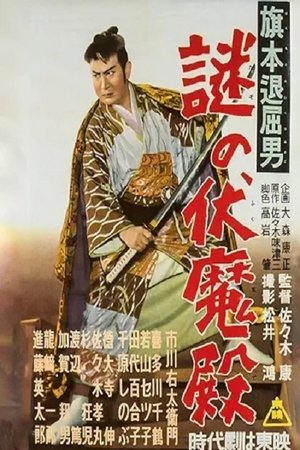
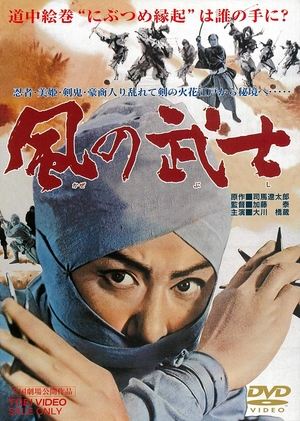
The second Bounty Hunter film, when master killer Shikoro Ichibei takes up the cause of a group of farmers being driven to despair by the vile Lord Ozeki. The villainous lord has driven them to mounting their last stand at a deserted fort against an army of attackers. Wakayama Tomisaburo is superb as an expert in killing and military tactics, who leaves his medical practice at a clinic for the poor in order to counter the vicious tactics of that vile lord.
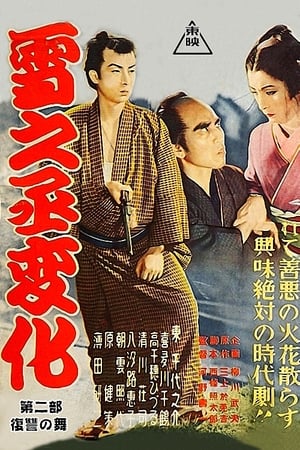
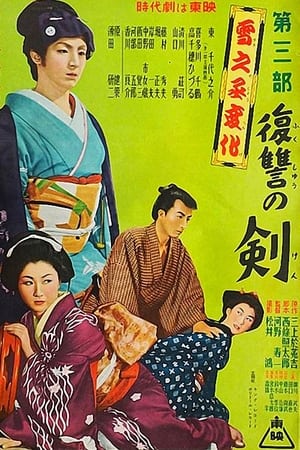
Takahashi Hideki stars as Muyonosuke, the one-eyed ronin who makes his living as a bounty hunter who is on a never-ending quest to find the man who murdered his father. The usually aloof Muyonosuke, who never would pause to help the common man winds up befriending an orphan boy and a mysterious woman, and getting involved in a feud between two families, but finds out there is a high power behind the curtain who pulls their strings.
Blind traveler Zatoichi is a master swordsman and a masseur with a fondness for gambling on dice games. When he arrives in a village torn apart by warring gangs, he sets out to protect the townspeople.
A samurai answers a village's request for protection after he falls on hard times. The town needs protection from bandits, so the samurai gathers six others to help him teach the people how to defend themselves, and the villagers provide the soldiers with food.
A nameless ronin, or samurai with no master, enters a small village in feudal Japan where two rival businessmen are struggling for control of the local gambling trade. Taking the name Sanjuro Kuwabatake, the ronin convinces both silk merchant Tazaemon and sake merchant Tokuemon to hire him as a personal bodyguard, then artfully sets in motion a full-scale gang war between the two ambitious and unscrupulous men.
Akira Kurosawa's lauded feudal epic presents the tale of a petty thief who is recruited to impersonate Shingen, an aging warlord, in order to avoid attacks by competing clans. When Shingen dies, his generals reluctantly agree to have the impostor take over as the powerful ruler. He soon begins to appreciate life as Shingen, but his commitment to the role is tested when he must lead his troops into battle against the forces of a rival warlord.
Ikemen Sengoku live-action adaptation
Kakunoshin, renowned for his skills with a sword and in the game of go, embodies the samurai code. Falsely accused of a theft, he is forced to become a lowly ronin. Years later, when a case of missing gold pulls him into a new web of intrigue, Kakunoshin uncovers the truth behind his downfall. With the real culprit exposed, the go board flips, and a hellstorm of righteous vengeance follows.
Comedy directed by Torajiro Saito about swordsmen in the era of feudal Japan.
When Nizaemon Kumogiri, a major thief quits his job as a thief, he has two more big jobs planned in order to obtain a huge sum of money to enable his many subordinates scattered all over the country to live out the rest of their lives. First, he targets Matsuya, a medicine wholesaler in Nagoya and seduces the master of the shop by using his female subordinate, Nanakake. He then calls upon Sanji, a skilled locksmith to Nagoya, but the bandit Yagura no Fukuemon who is plotting to intercept the thief plots to extract Sanji for a large sum of money. Furthermore, Abe Shikibu, the chief of the firebrand bandit reformatory who is obsessed with Nizaemon's arrest, sends his men to Nagoya.
Toshiro Mifune swaggers and snarls to brilliant comic effect in Kurosawa's tightly paced, beautifully composed "Sanjuro." In this companion piece and sequel to "Yojimbo," jaded samurai Sanjuro helps an idealistic group of young warriors weed out their clan's evil influences, and in the process turns their image of a proper samurai on its ear.
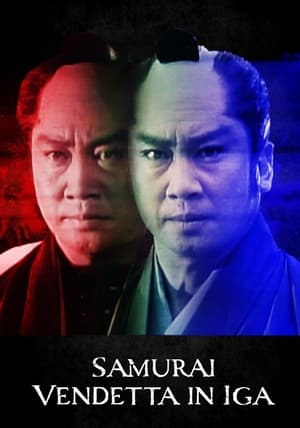
Even though Gennosuke and Oboro are from rival ninja villages, they are secretly in love. At an annual conference with the Lord, it is dictated that a competition--a fight to the death--will take place between the five best shinobi from each village. Gennosuke and Oboro's love is made even more impossible when they each got picked as the leader of the five to represent their respective villages.
In the last days of the Tokugawa shogunate, there was a cute warrior, Souji Okita, who belonged to the armed police of the shogunate in Kyoto. Very few knew that Souji was not a boy, but a woman. Souji loved the vice-leader of the armed police, Toshizou Hijikata. Souji suffered from pulmonary tuberculosis and coughed up blood during a battle. Toshizou helped her but said that he did not care for the girl with a smell of blood. Souji had a real talent for swordsmanship and no one but Ryouma Sakamoto could compete with her. Ryouma was a liberal intellectual and tried to carry out a revolution without blood. However, the bloody Meiji Restoration broke out and Souji killed Ryouma who lost his dream. Because a friendship had sprung up between Toshizou and Ryouma, Toshizou got angry and slashed at Souji with a sword. Unwillingly, she unsheathed her sword and thought that she might get love if she was killed by the man she loved.
Momotaro carries this sword into battle against injustice in shogunate Japan. Aided by ninja he must now wage a furious battle against the terrible “Ran” clan, villains in league with Ohara Ukon, a bitter samurai nursing a grudge against the shogunate. Together the ruthless conspirators will threaten the foundations of shogunate rule over Japan. Only the relentless slashing sword of Momotaro may save the nation from the Ran clan's army of killers.
The story of Ryoma Sakamoto, considered to be the architect behind the downfall of the Tokugawa shogunate. He was considered an outlaw by his own clan, hunted by his government, and was despised by supporters of the Shogun as well as the Loyalists for desiring the opening of Japan to the West in order to learn its technology, in the hopes of one day defeating the West with a modern army and navy.
A thrilling and entertaining piece in which Jirokichi, portrayed by Morio Kazama, tackles a major event involving an attempt to assassinate the shogun. This production features historical figures such as Toyama Kagemoto, Oshio Heihachiro, Utagawa Hiroshige, and Watanabe Kanzan in their youth, depicting their exploits before they became famous. It becomes a lively portrayal of youthful vigor, with scenes of Jirokichi leaping using trampolines, creating a light and lively action.
A period mystery in which an unconventional priest exposes the truth behind the bizarre death of a maid in the shogun's harem. Kinuyo Tanaka stylishly plays a constantly intoxicated geisha in this all-star entertainment film.
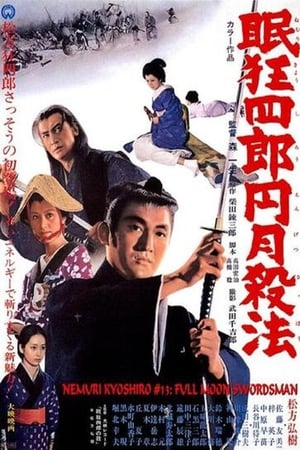
Getting an opportunity to meet with another half-Caucasian swordsman, Kyoshiro finds himself involved in a series of dangerous encounters.
Onihei Crime Files: The Final Zenpen - Gonenme no Kyaku
Onihei Crime Files: The Final Kohen - Unryu Ken