In his delirium from his return from war, Francesco Bernardone goes back in his memories to the days when he lived for parties and carnal pleasures. He slowly recovers, but after the illness he is no longer the Francesco that everybody knew. Instead of spending hours in taverns, he meditates on the beauty of God's creatures, soon renouncing his riches and his family with plans to rebuild an abandoned church and his life.
Devout Christians Töre and Märeta send their only daughter, the virginal Karin, and their foster daughter, the unrepentant Ingeri, to deliver candles to a distant church. On their way through the woods, the girls encounter a group of savage goat herders who brutally rape and murder Karin as Ingeri remains hidden. When the killers unwittingly seek refuge in the farmhouse of Töre and Märeta, Töre plots a fitting revenge.
During the 13th century, a small village fights for freedom in the frontier landscape of the Carpathian Mountains against Mongolian invaders.
In the early 1200s, Dogen brought Chinese Zen philosophy to Japan, and established the Japanese Zen school of Buddhism. He taught that a person was capable of realizing Buddhahood within himself, by way of Zazen. Zazen is extended hours of sitting and meditating to achieve a state of “Mu” (nothingness, or empty existence).
Mikolás and his brother Adam end up with a young German hostage of noble blood during a robbery. While their clan prepares for the wrath of the German king, Mikolás is sent to pressure his neighbor Lazar into a defense pact. Persuasion fails and he abducts Lazar's daughter Marketa on the eve of her initiation as a nun in an act of vengeance.
Cast out by his father, young Ondrej joins the Order of the Teutonic Knights, where he is raised by strict monk Armin. After years of hardship, Ondrej escapes from the Order when he is wrongly punished, and sets out for his former home. Arriving to discover his father to be dead, Ondrej now not only assumes control of his father's properties, but seeks to marry his former stepmother.
A samurai warrior attempts to stop Kublai Khan's Mongol hordes from overrunning Japan in the 13th century.
13th century France. To live, to survive, requires weapons. Which do you choose? Weapons of war, which give the power to punish and kill? Or the sword of knowledge, which gives the power to read and heal? Two brothers, separated long ago, must do battle. Alongside, and coming between them, a woman... Thomas, the mercenary, his body marked by scars of varying degrees of valor, left the family farm many years ago. When he returns, his mother, the local healer, is dead. She passed on her skills to her younger son, Arnaud. But he has lost his memory after a beating from a gang of ruthless outlaws. And so, Arnaud's young and defiantly resourceful wife, Guillemette, must persuade Thomas to help her in the quest for lost knowledge.
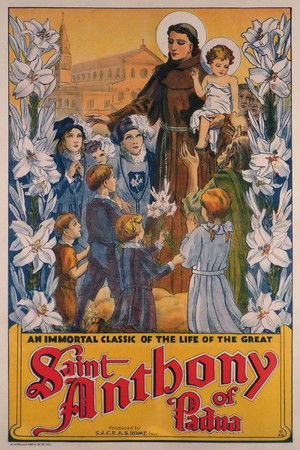
Born Fernando de Bulhões, he was a precocious Portuguese youth, concerned with the suffering of the poor. Grown into a contemplative young man he renounces the world to join first the Augustinian Order and then the Franciscans order (where he takes the name Anthony) in his dedicated service to the faith.
A dramatised documentary about the life of Rumi, a Persian mystical poet whose images of universal love and divine mystery continue to be celebrated more than 700 years after his death.
At the end of 13th and the beginning of the 14th century twenty-four-years old, Prince Svetoslav Terter takes the helm of the state. The young Prince engages in a intricate political game, into getting his way by means of court intrigues, and is forced by circumstances. Svetoslav Terter is remarkably shrewd and consistent. He is perhaps the only head of state at this time to take the liberty of impeaching the primate of the country's church. He tries to rally the neighboring Slav people to a joint resistance to the Turkish conquest. Terter lives through a great personal tragedy. He becomes estranged from his dearest person, Mariya, who is too weak to join him on the difficult road of his choice. (written by Georgi Djulgerov)
In 13th century Ireland a group of monks must escort a sacred relic across a landscape fraught with peril.
Puglia, southern Italy, around 1400. A convent is invaded by the Tarantula cult, whose fanatical and crazed members desecrate the sacred place by committing obscene and bloody acts.
The High Royal Chamberlain is accused of treason and imprisoned. Even if the suspicion proves to be unfounded, the prisoner finds his life in danger, because the royal majesty must not admit error. If the unfortunate man had confessed, he could have been pardoned, but the Vice-Chamberlain refuses such a solution as a matter of principle... This historical story, which aspires to the dimension of a parable, takes place at the dawn of the reign of John of Luxembourg.
A comedy about the love of the Czech nobleman Záviš of Falkenštejn for the Hungarian princess Kunhuta, who later married Přemysl Otakar II and became the Czech queen.
In 1244, during a time of religious persecution, Pope Innocent IV and King Louis IX of France sought to eradicate a pacifist Christian group known as Cathars. The last of the Cathar heretics found protection at the Castle of Montsegur. Here a dedicated group of about 100 defending knights, under the Leadership of Lord Raymond and his family, held a crusading army of over 10,000 mercenaries at bay for 9 months. To this day, many people believe that the Cathars were the guardians of a treasure of great significance, possibly even the Holy Grail. It is rumoured that in the last days of the siege a small group managed to slip away in the dead of night to retrieve this hidden treasure and get it safely away from the clutches of the Catholic Church. This is their story.
The life of St. Francis of Assisi (1181-1226) as related by followers who gather after his death to tell stories so that Leone can record them: a privileged and virile youth, a prisoner of war, an heir who turns away from his father and gives all to the poor, a beggar for others, and an inspiration to friends who accept the Gospels' life of poverty.
This story is set in the 13th century, in Britain, where Lancelot, who was raised by Vivian, the Lady of the Lake, becomes one the Knight of the Round Tables and falls secretly in love with Guinevere, the wife of King Arthur, for whom he wants to accomplish many deeds.
The historical television play was written based on Vančura's Pictures from the History of the Czech Nation and takes place against the backdrop of the European situation at the beginning of the thirteenth century. Přemysl Otakar I., father of Agnes of Přemyslid, sought recognition of the Czech lands as a hereditary kingdom. And what about his love and fickleness? The story will answer this, in which poetry and truth diverge only in the degree of emotional movements, in the tremors of souls, which lead to love as well as to hatred.
The life story of Blessed Zdislava of Lemberk, about whom legends rather than sparse historical references tell us that she was a deeply religious woman with healing powers who devoted herself entirely to the humble service of her sick and suffering neighbors.