Ashley Smith was a troubled 19-year-old when she choked herself to death at Ontario's Grand Valley Institution for Women. Her death made national headlines and led to a scathing report by Canada’s federal prison ombudsman. Incarceration for Ashley began at a youth detention centre in New Brunswick. Her crime: she had tossed crabapples at a mailman. Her one-month sentence stretched to almost four years, served in five provinces. With the prison videotapes and exclusive access to Smith’s parents, along with a fellow inmate, this documentary exposes a system that fails the many Ashley Smiths still incarcerated in Canadian institutions.
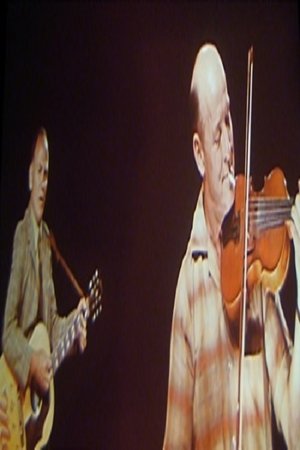
A portrait film of Eastern Ontario directed by Peter Pearson who’s films include the award winner’s like “The Best Damn Fiddler from Calabogie to Kaladar" (1968) and the classic Canadian feature film, "Paperback Hero" (1973). "Seasons in the Mind" includes a talent show section set in Arnprior, Ontario.
Shot in Southern England over the course of six weeks by a crew of three American filmmakers, CircleSpeak offers a nuanced look at the passions and beliefs of the people immersed in the crop circle phenomenon during the season of 2001. This feature-length documentary presents interviews with serious “researchers”, self-proclaimed “hoaxers”, local farmers and villagers who are all, in one way or another, involved in this strange and compelling summer spectacle taking place year after year.
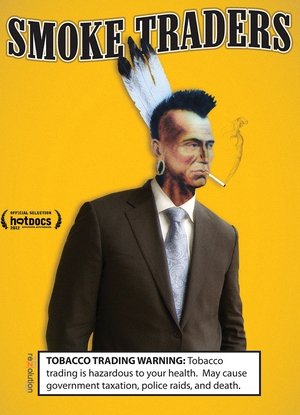
Smoke Traders is an inside look at the world of the Mohawk tobacco trade.
When Jennifer Pan calls 911 to report that her parents have been shot, she becomes the primary focus of a captivating criminal case.
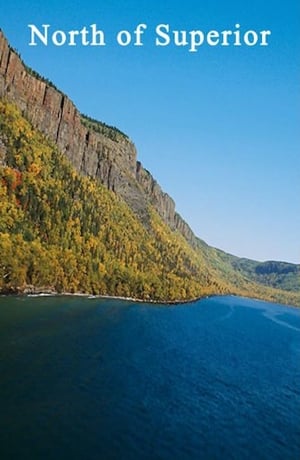
The second IMAX film made, commissioned by the Ontario Government, and produced by MultiScreen Corporation, later to become IMAX corporation. North of Superior is a Northern Ontario travelogue, and was the first short feature to be shown at the newly created Ontario government theme park, Ontario Place, in it's state of the art cinema, Cinesphere, the first permanent IMAX installation.
Summer unveils a new blueberry season in northern Canada. The fields are covered in blue and workers from all over scramble before the frost puts an end to the harvest. And yet this time of year is much more than just picking: it's a time of music and connection.
2020 marks 100 years since the birth of Federico Fellini, the most prominent Italian director and one of the symbols of the insuperable cinematic heyday of mid-20th century. Fellini had always been a mysterious director, not only in his cryptic symbolism but also in his idiosyncratic, excessive mixture of psychoanalysis, Catholicism and faith in the mysterious. In this documentary, his relationship with the paranormal, luck and fate, alongside the coexistence of organized discourse and transcendence to the imaginary, is examined via friends, collaborators and distinguished fans (Friedkin, Gilliam, Chazelle). A great testimony to why rationalists and ideologists have a hard time with his work, ‘Fellini and the Spirits’ is an appropriate yet unexpected tribute.
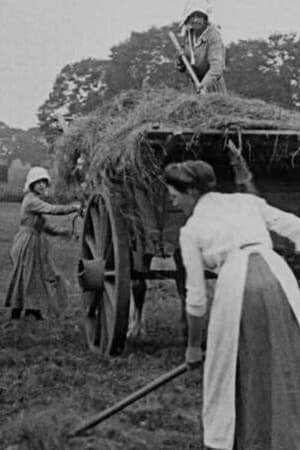
Picturesque scenes of land girls gathering hay on an Essex farm during WWI.
Varda focuses her eye on gleaners: those who scour already-reaped fields for the odd potato or turnip. Her investigation leads from forgotten corners of the French countryside to off-hours at the green markets of Paris, following those who insist on finding a use for that which society has cast off, whether out of necessity or activism.
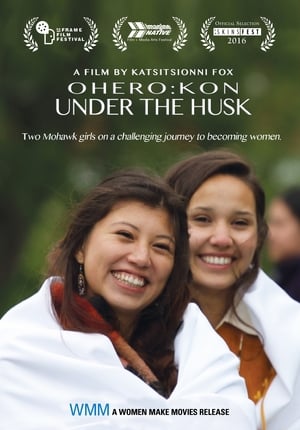
This documentary follows two Mohawk girls on their journey to become Mohawk women. Friends since childhood, Kaienkwinehtha and Kasennakohe are members of the traditional community of Akwesasne on the U.S./Canada border. Together, they undertake a four-year rite of passage for adolescents, called Oheró:kon, or "under the husk." The ceremony had been nearly extinct, a casualty of colonialism and intergenerational trauma; revived in the past decade by two traditional leaders, it has since flourished. Filmmaker Katsitsionni Fox has served as a mentor, or "auntie," to many youth going through the passage rites.
Documentary about the last four seasons on the farm run by the director's parents. The film starts on 1 January 1992, at 6 am and ends in a misty landscape at the end of that year. Het is een schone dag geweest (It's been a beautiful day) shows the end of a farm venture for which no successor has been found, but also the disappearance of a traditional way of life. Modern agriculture is ruled by new regulations, largely made in Brussels. Lonely work on a noisy machine replaces hard but communal work on the land. In a disciplined style, the film shows the disappearance of a traditional lifestyle in part of Holland. Het is een schone dag geweest was ïn 2007 admitted to the "Canon van de Nederlandse Film", a list of the most important Dutch films. (filmcommission.nl)
The rhythms of a typical day during the summer wheat harvest in Kansas.
Terry Wilson is a 70-year-old lifelong resident of Meadowvale Village, Ontario's first heritage district. As development looms and begins to destroy Terry's favourite place in the world, he recreates pieces of history in his backyard, crafting an oasis where it feels like nothing has changed. A beautiful tribute to his childhood, his mother, and his town, Terry passionately fights to preserve history in a world that's too anxious for change.
Produced in 1967, this black and white film is an inmate's view of Daytop, a drug treatment centre on Staten Island, New York, where addicts learn to get along without drugs. Uncompromising, often brutal group therapy sessions are designed to shake loose the excuses a victim makes for himself. The people and situations shown are authentic; only one actor was employed. The results obtained at Daytop are regarded by some psychiatrists as a breakthrough.
For the past 40 years, Bruce Beach has been preparing for a nuclear disaster. A bunker of 42 school buses is buried on his property, designed to save humanity. Curious onlookers and interested preppers regularly visit the site named Ark Two, but it's clear that the creator of this decaying shelter is the only one truly convinced of its practicality in the event of an apocalypse. Now that Bruce is in his 80s, he and his wife Jean need to spend more time taking care of their immediate needs than worrying about the future. What could easily be dismissed as evangelical paranoia becomes a tragic yet uplifting story about a risk-taking inventor who has lived without regrets. Sometimes outside-the-box thinkers become millionaires and are recognized for their genius ability to guide us into the future, while others are pushed to the margins. There’s a lot to be learned from both
Set in the rural town of Marmora; the home of Punkfest, arsenic poisoning, radioactive pollution, and visions of the Virgin Mary.
A documentary that looks at systemic sexism faced by women scientists in STEM fields.
A study of life at Christmastime in Moose Factory, an old settlement mainly composed of Cree families on the shore of James Bay, composed entirely of children's crayon drawings and narrated by children.
A journey through valleys, living rocks and the culture of the Valtellina hillsides.