Just as Galeen and Wegener's Der Golem (1915) can be seen as a testament to early German film artistry, The Story of the Kelly Gang (1906) symbolizes both the birth of the Australian film industry and the emergence of an Australian cinema identity. Even more significantly, it heralds the emergence of the feature film format. However, only fragments of the original production of more than one hour are known to exist, preserved at the National Film and Sound Archive, Canberra; Efforts at reconstruction have made the film available to modern audiences.
A fisherman and a rising lawyer who grew up together as brothers fall in love with the same woman.
In 15th century France, a gypsy girl is framed for murder by the infatuated Chief Justice, and only the deformed bellringer of Notre Dame Cathedral can save her.
The young Anselmus Aselmeyer fulfilled a long cherished dream: He travels to Venice, the city of his dreams. Once there, the porter Pipistrello directs him immediately to the hotel of his boss, and Anselmus lands in the middle of a wedding party. Mestre Mangiabene, a wealthy oilman, marries the beautiful but completely depleted Marchesina dei Bisognosi. But the secretly loves an officer.
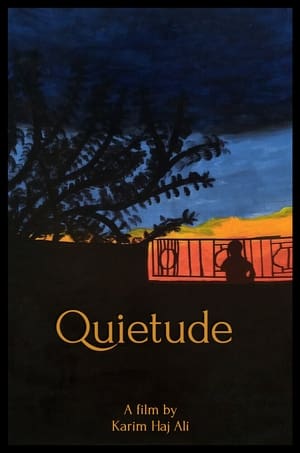
Nina, mid 20’s, is a visual artist whose art depicts the feminine beauty of all women but struggles with self-identity as a multicultural millennial woman. While flipping through social media her frustration leads her to brood over old photos of complex stages in her life. She’s inspired to create a portrait that represents her personal voyage to self confidence and finally see her beautiful self.
Karin, a young girl, gets an hour free from school. She spends it across the street from the school, in the apartment of an older photographer.
The timid youngest son of the most important family in town must use his wits to win the respect of his strong father and the love of a beautiful new woman in town.
The film tells the story of a man and woman who don't know each other. After being matched by a matchmaker, after going through a series of red tape, they were sent to the bridal chamber and began a difficult life as a couple. Despite the primitive shooting methods and lack of training of the actors, the film has a very important place in the history of Chinese film.
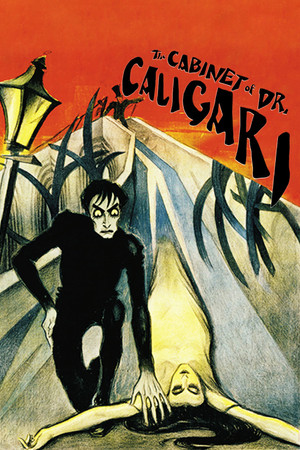
Francis, a young man, recalls in his memory the horrible experiences he and his fiancée Jane recently went through. Francis and his friend Alan visit The Cabinet of Dr. Caligari, an exhibit where the mysterious doctor shows the somnambulist Cesare, and awakens him for some moments from his death-like sleep.
A semi-documentary experimental 1930 German silent film created by amateurs with a small budget. With authentic scenes of the metropolis city of Berlin, it's the first film from the later famous screenwriters/directors Billy Wilder and Fred Zinnemann.
Joe Ryan, a veteran train engineer, is demoted to a flagman position after a disastrous crash-- one caused by his cowardly and opportunistic partner. Though Ryan's failing eyesight is named as the cause of the crash, he's undeterred as he designs an automatic braking invention.
During an annual celebration in which English peasants and aristocrats mingle, the Duke of Loame is thrown from his horse and saved by Ivis Benson, the daughter of a tenant farmer. Both injured, they fall in love, to the dismay of his mother and Lady Eileen, his intended bride.
Else Riedel (Lissy Arna), locked out by her authoritarian father, seeks refuge with her boyfriend Hans. Complications threaten when Hans's roommate Max falls in love with her, but the situation is resolved: the three remain friends, and decide to form a music hall act. They want to ascend, but how? A way out beckons when a theatrical agent named Nevin enters Else’s life. He is played by Hubert von Meyerinck as a slick and oily villain, who oozes refinement; his experience behind bars is waved away with a silk scarf. He is cunning to the point of perfidiousness, but is not completely unsympathetic. He also embodies a new type - the scrounger.
Children's Souls Accuse You is a 1927 German silent drama film directed by Curtis Bernhardt and starring Albert Steinrück, Nathalie Lissenko and Walter Rilla. It was made with an anti-abortion theme.
A London actress collapses on stage and is sent by her doctor to stay in the country with a farmer and his wife. But when she starts an affair with the farmer, the idyllic life at "Crooning Water" is threatened with tragedy.
Professional forger Bill Butters realizes one day that the police are closing in on him, and convinces his daughter Peggy to flee.
Two families, abolitionist Northerners the Stonemans and Southern landowners the Camerons, intertwine. When Confederate colonel Ben Cameron is captured in battle, nurse Elsie Stoneman petitions for his pardon. In Reconstruction-era South Carolina, Cameron founds the Ku Klux Klan, battling Elsie's congressman father and his African-American protégé, Silas Lynch.
This pioneering documentary film depicts the lives of the indigenous Inuit people of Canada's northern Quebec region. Although the production contains some fictional elements, it vividly shows how its resourceful subjects survive in such a harsh climate, revealing how they construct their igloo homes and find food by hunting and fishing. The film also captures the beautiful, if unforgiving, frozen landscape of the Great White North, far removed from conventional civilization.
A married farmer falls under the spell of a slatternly woman from the city, who tries to convince him to drown his wife.
A dramatized account of a great Russian naval mutiny and a resultant public demonstration, showing support, which brought on a police massacre.