El amor no es como lo pintan is a Mexican telenovela produced by Juan David Burns and Elisa Salinas for TV Azteca. It was broadcast on Azteca 13 from November 6, 2000 to April 27, 2001 for 165 episodes.
Mentir para vivir is a Mexican telenovela produced by Rosy Ocampo for Televisa. The telenovela is written by Maria Zarattini, who last wrote La Fuerza del Destino. Mayrín Villanueva and David Zepeda star as the protagonists, while Altair Jarabo, Leticia Perdigón and Diego Olivera star as the antagonists.
Guerra de mujeres is a telenovela produced by Venevisión in 2001. Gaby Espino and Jorge Reyes starred as the main protagonists.
An engineer who works in a large construction company and a poor worker without aspirations both share a love that dared to go beyond all prejudices and differences. Based on the Chilean TV series of the same name.
A man's budding romance with a beautiful woman is sabotaged by his evil twin, but they get another chance at love when they're reunited years later.
Géminis, venganza de amor
20 tantos
In the early 20th century, the Montes de Oca family—comprising two sisters and a cousin—finds itself entangled in an intense love triangle. Matilde is in love with her cousin Rodrigo, who loves the other sister, Branca Flor; she, in turn, loves a humble fisherman. Upon discovering this, Rodrigo accuses the fisherman of theft, leading to his arrest. The lovestruck cousin’s malice knows no bounds; learning that Branca Flor is carrying the fisherman's child, he waits for the baby to be born so he can make it disappear.
Triángulo is a Mexican telenovela produced by Ernesto Alonso for Televisa and originally broadcast on Canal de las Estrellas from August 3 to November 20, 1992. Created by María Zarattini and adapted by Irma Ramos, the telenovela stars Daniela Castro and Eduardo Palomo. The story follows Sara Granados, a kind-hearted young woman who is constantly mistreated by her stepmother and stepsister. After being deceived by the ambitious David and becoming pregnant, Sara finds support in his brother Iván, who falls in love with her. As David returns determined to reclaim her, the three become entangled in a love triangle marked by family conflicts, betrayal, and the search for happiness.
La casa al final de la calle
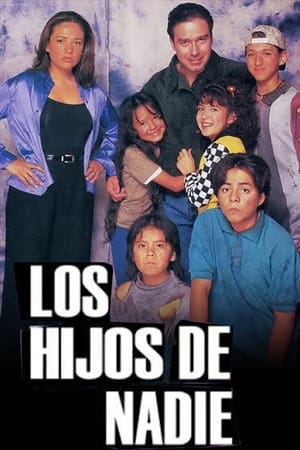
Los hijos de nadie is a Mexican social drama telenovela produced by Miguel Sabido and Irene Sabido for Televisa and originally broadcast on Canal de las Estrellas from February 24 to June 20, 1997. Created by Miguel Sabido, with adaptation by Miguel Sabido, Verónica Suárez, Andrea Ordóñez, Rosa Ana Curiel, and Kary Fajer, the telenovela was supported by UNICEF to raise awareness about the situation of homeless children in Mexico. The story follows Doña Leonor, an elderly woman who loses her daughter and granddaughter in a tragic accident. Seeking to overcome her loneliness, she dedicates herself to helping a group of children living on the streets of Mexico City. Alongside Verónica, a young woman who brings hope to the children through her puppet shows, Leonor faces the challenges of poverty, abandonment, and the people who seek to exploit those most vulnerable.
Pasión Morena
La viuda de Blanco
Lejana como el viento
Ciudad Bendita
La vida entera
Amor de Papel
Camaleona (2007) is a teen telenovela that follows the life of Natalia, an intelligent but insecure girl who, in order to fit in and deal with personal problems, adopts different “personalities” or ways of being—hence the name Camaleona. Along the way, she meets Sebastián, and they develop a relationship marked by secrets, shifting identities, and emotional conflicts. The story revolves around the search for identity, self-acceptance, and love, showing how Natalia learns to be herself without masks.
Pobre Millonaria
A poor young woman, unhappy with her inevitable destiny as a suburban housewife, gets a job as a nanny for a wealthy family and falls in love with her employer's brother, using every trick to win him over and ultimately become the lady of the mansion. .