Shudra: The Rising is a Hindi language film with a storyline based on the caste system in ancient India, and more specifically the Hindu Varna system. It is directed by Sanjiv Jaiswal and dedicated to Bhim Rao Ambedkar. The film depicts the four basic units of the caste system - the Brahmins, Kshatriyas, Vaishyas and the Shudras. The film shows various rules imposed on the Shudras such as waking with a bell around their ankles and a long leaf behind their back,and a pot hanging around their neck.
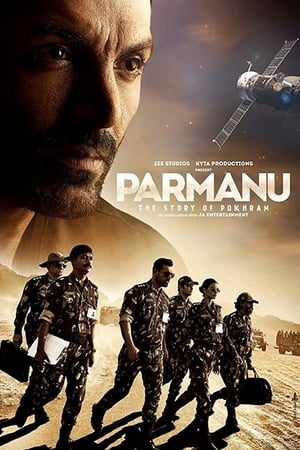
Set in the 1970s, an undercover Indian spy takes on a deadly mission to expose a covert nuclear weapons program in the heart of Pakistan.
In the 1965 Indo-Pak War, India faces a devastating surprise attack. Wing Commander Ahuja leads a retaliatory strike, but Squadron Leader Vijaya goes missing after a heroic solo engagement against a superior enemy jet. Ahuja spends 23 years seeking the truth and uncovering a cover-up.
A young Sardar Udham Singh left deeply scarred by the Jallianwala Bagh massacre, escaped into the mountains of Afghanistan, reaching London in 1933-34. Carrying an unhealed wound for 21 years, the revolutionary assassinated Michael O’Dwyer on 13th March, 1940, the man at the helm of affairs in Punjab, April 1919 to avenge the lost lives of his beloved brethren.
A young Prince Asoka works to perfect his skills in battle and also deals with family conflict. During a struggle with one of his step-brothers, his mother urges Asoka to escape to stay alive. While away, Asoka meets Kaurwaki and falls in love, but must use his skills as a warrior to protect her. A dangerous and heartbreaking web of conspiracy follows, which leads Asoka to embrace a Buddhist path.
Based on a popular historical legend, Prince Salim has a passionate love affair with a beautiful, sassy commoner.
In 1948, a cross-fire erupts at an isolated stretch of Indo-Pak border, leaving only two soldiers alive. One is an Indian soldier of Pakistani origin while the other happens to be a Pakistani soldier of Indian origin. An ironic story of pride and survival begins when - in an attempt to evade danger, they bump into each other. And amidst continuous exchange of bullets, altercations and murkier situations, it evolves into a journey of human connection with an unforeseeable end.
Born a lower-caste girl in rural India's patriarchal society, "married" at 11, repeatedly raped and brutalized, Phoolan Devi finds freedom only as an avenging warrior, the eponymous Bandit Queen. Devi becomes a kind a bloody Robin Hood; this extraordinary biographical film offers both a vivid portrait of a driven woman and a savage critique of the society that made her.
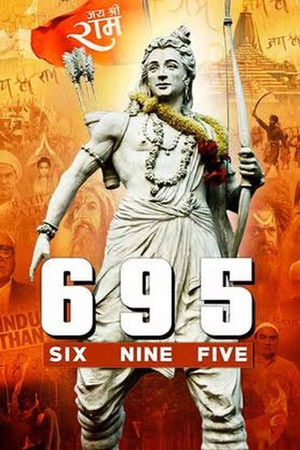
Queen Kaikeyi exiles Rama and demands Bharat be king. Bharat, devoted to Rama, refuses the throne and goes to the forest, urging Rama to return. Rama insists on upholding his father's vow. Bharat then rules Ayodhya as Rama's regent, placing Rama's sandals on the throne until his return.
Zubeidaa, an aspiring Muslim actress, marries a Hindu prince to become his second wife. Her tumultuous relationship with her husband, and her inner demons lead her to a decision which has fatal consequences for them all.
During the Japanese invasion of China, a young Indian doctor joins the Chinese resistance, meets and courts a Chinese girl, cures a virulent plague, and is captured by a Japanese platoon...
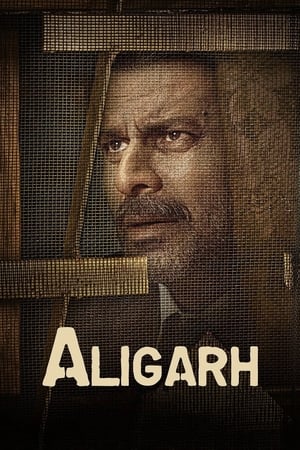
Based on real events, Honey Trehan’s second feature tells the story of human rights activist Jaswant Singh Khalra’s courageous campaign to uncover murderous corruption during the nadir of Punjab’s period of insurgency.
The story is about King Karma Dev who gives a lot of importance to physical beauty. His mother, the Rajmata requests Mahamantri Munjal to find him a nice wife. Karma Dev often dreams of marrying an unknown beautiful woman he had once seen in the Somnath temple. Meanwhile, Mrinalla is the princess of Karnataka, who also dreams of marrying a king she had once seen in the Somnath temple. When Munjal happens to see the beautiful woman Mrinalla, he shows the King's portrait to her and she is happy to finally find the man of her dreams. So she runs away from the palace and searches for Karma Dev to marry him. Soon after, Munjal shows Mrinalla's painting to Karma Dev, who agrees to marry her. On the day of the marriage, the King finds out she is dark and refuses to marry her. After several incidents, Karma Dev realizes his mistake and at last he happily accepts Mrinalla as his Patrani.
Chitralekha is a 1964 historical-philosophical Hindi film, directed by Kidar Sharma, starring Ashok Kumar, Meena Kumari and Pradeep Kumar. It was based on 1934 Hindi novel by the same name by Bhagwati Charan Verma about Bijgupta serving under the Maurya Empire and the king Chandragupta Maurya (340 BCE – 298 BCE) and his love for courtesan Chitralekha. Set in the back drop of the middle age society. The portrayal of the three tools wisdom, knowledge and power become superfluous in the absence of strength of character.
The story of Shah Jahan...the love of his life...the life of his love...and his monument to love, the Taj Mahal.
Born in British India, Bhagat Singh witnesses numerous atrocities during his childhood and grows up to become one of the most fearless freedom fighters in the country.
A team of Indian scientists at ISRO (Indian Space Research Organisation) take on the extraordinary task of successfully sending a satellite into the orbit of planet Mars in a country's maiden attempt.
The true story of legendary Hindu warrior king "Prithviraj Chauhan" including his early military successes, love story with Sanyogita & clashes with Muhammad of Ghor, a ruler of the Ghurid dynasty who led the foundation of Muslim rule in the Indian subcontinent.
Set in 1961 Goa, this is a story of a rich and influential Goan family and what happens to them over a period of time. The movie is narrated in past-tense by one of the friends of the family.
This is the gritty and sensational true story of Arun Gulab Gawli, a mill worker’s son who grew up in Mumbai’s impoverished Dagdi Chawl, to become an infamous don, politician and chief rival of the most powerful crime boss of the day, Dawood Ibrahim. Daddy realistically charts Mumbai’s true crime history from the 1970s and 1980s until 2012, when Gawli was finally sentenced to life imprisonment.