A nuanced portrait of a new generation, Dear Thirteen is a cinematic time capsule of coming of age in today’s world. Through the eyes of nine thirteen-year-olds, we see how pressing social, geographical and political challenges are shaping, and being shaped by, young people: rising anti-Semitism in Europe, guns in America, gender identity and racial divisions across Australia and Asia. With no adult commentary outside the filmmaker, Dear Thirteen offers an intimate view into the universal uncertainty inherent in growing up.
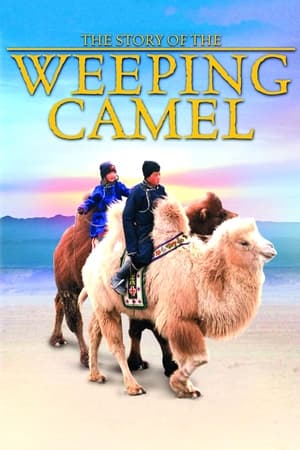
When a Mongolian nomadic family's newest camel colt is rejected by its mother, a musician is needed for a ritual to change her mind.
I left Lebanon in 2006. For the past 10 years I lived in 7 countries, 10 cities, and 21 homes. I slept in 21 beds, cooked in 21 kitchens, cleaned 21 bathrooms, stared at 21 windows, wrote on 21 desks, and locked 21 doors behind me. I packed all of my life into two suitcases and a backpack. The rest stayed behind. Somebody somewhere uses my bed, somebody somewhere has my shoes. I was there. But now I am here.
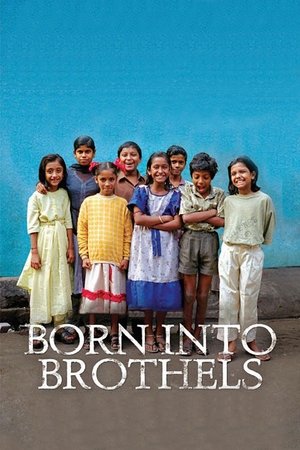
Documentary depicting the lives of child prostitutes in the red light district of Songachi, Calcutta. Director Zana Briski went to photograph the prostitutes when she met and became friends with their children. Briski began giving photography lessons to the children and became aware that their photography might be a way for them to lead better lives.
A dual portrait of young drifters on the streets of Odessa, where every day seems the same and the future keeps getting further away.
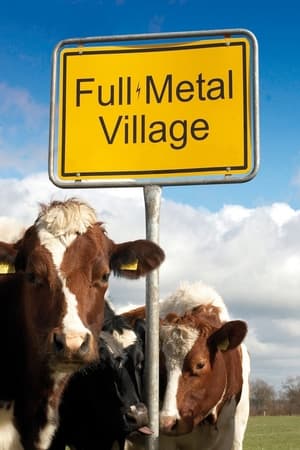
The film describes the microcosmos of the small village Wacken and shows the clash of the cultures, before and during the biggest heavy metal festival in Europe.
Crazy cat lady or world-class musician? You decide. Dorian Rence smashes our notions of what matters and who counts in "Feral Love." Dorian was the seventh woman to join the New York Philharmonic. In her 40-year career she has performed with all the greats: Leonard Bernstein, Pierre Boulez, Zubin Mehta, Yo Yo Ma to name a few. And she cares for a feral cat colony in the tunnels of New York City.
The inner world of the great painter Max Ernst is the subject of this film. One of the principal founders of Surrealism, Max Ernst explores the nature of materials and the emotional significance of shapes to combine with his collages and netherworld canvases. The director and Ernst together use the film creatively as a medium to explain the artist's own development.
With moving stories from a range of characters from her Kahnawake Reserve, Mohawk filmmaker, Tracey Deer, reveals the divisive legacy of more than a hundred years of discriminatory and sexist government policy to expose the lingering "blood quantum" ideals, snobby attitudes and outright racism that threaten to destroy the fabric of her community.
Singapore GaGa is a 55-minute paean to the quirkiness of the Singaporean aural landscape. It reveals Singapore's past and present with a delight and humour that makes it a necessary film for all Singaporeans. We hear buskers, street vendors, school cheerleaders sing hymns to themselves and to their communities. From these vocabularies (including Arabic, Latin, Hainanese), a sense of what it might mean to be a modern Singaporean emerges. This is Singapore's first documentary to have a cinema release. With English and Chinese subtitles.
In the crystal clear waters off the coast of Borneo, a unique way of life threatens to disappear forever. For generations, the Badjao were oceanic nomads, living in harmony with the sea as fishermen and free divers. Nowadays, however, only a few Badjao remain, like Alexan, who still remembers the old ways. He hopes to pass his knowledge along to his ten-year-old nephew Sari, but time and opportunities are running out. Sari loves the sea, but it can only offer a hard life of subsistence fishing, while the nearby tourist resort sings a siren song of easy money.
A documentary that resurrects the buried history of the outrageous, often brilliant women who founded the modern women's movement from 1966 to 1971.
A poetic documentation of the Long Beach Island, NJ community as they battle local politics, cope with personal tragedy, and band together after Hurricane Sandy.
After the Kyrgyzstan Independence in 1991, the ancient practice of Ala-Kachuu ("grab and run") returned. Some women escape the men that kidnap them, but many remain married because of tradition and the fear of scandal.
"Plastic Paradise" is an independent documentary film that chronicles Angela Sun's personal journey of discovery to one of the most remote places on Earth, Midway Atoll, to uncover the truth behind the mystery of the Great Pacific Garbage Patch. Along the way she encounters scientists, celebrities, legislators and activists who shed light on what our society's vast consumption of disposable plastic is doing to our oceans -- and what it may be doing to our health.
This film is an album of Native womanhood, portraying a proud matriarchal society that for centuries has been pressured to adopt different standards and customs. All of the women featured share a belief in the importance of tradition as a source of strength in the face of change.
"This film explores how freedom of speech — including dissent — is afforded to all Americans, and shows freedom of expression in art, music, dance, architecture, and science. The film also emphasizes the importance of the individual’s contribution to the whole of society and demonstrates how a productive and creative society is formed by the open and respectful exchange of ideas. The film was written, produced, and directed by William Greaves" (National Archives).
The space of the junkyard allows various ‘crash’ narratives to unfold, with the stories of actual crashes and the remnants and afterlife of these machines becoming metaphors for economic decline. This is an investigation of planes as they are parked during the economic downturn, stored and recycled, revealing unexpected connections between economy, violence and spectacle, finding perfect example in the form of the Boeing 4X-JYI, an aircraft first acquired by film director Howard Hughes for TWA, which was subsequently flown by the Israeli Airforce before finding its way to the Californian desert to be blown up for the Hollywood blockbuster Speed. Through intertwined narratives of people, planes and places Steyerl reveals cycles of capitalism incorporating and adapting to the changing status of the commodity, but also points at a horizon beyond this endless repetition.
A chronicle of the production problems — including bad weather, actors' health, war near the filming locations, and more — which plagued the filming of Apocalypse Now, increasing costs and nearly destroying the life and career of Francis Ford Coppola.
In a fascinating geopolitical drama, Danish filmmaker Mik-Meyer closely follows Ravalomanana as he attempts to return from exile in South Africa to Madagascar, under the threat of arrest and bodily harm.