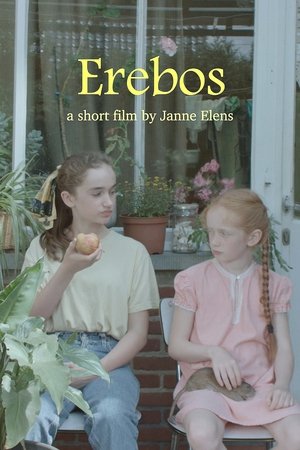
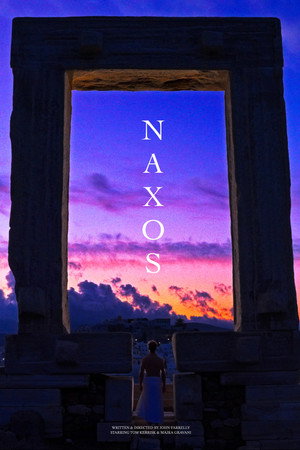
A reframing of the classic tale of Narcissus, the director draws on snippets of conversation with a trusted friend to muse on gender and identity. Just as shimmers are difficult to grasp as knowable entities, so does the concept of a gendered self feel unknowable except through reflection. Is it Narcissus that Echo truly longs for, or simply the Knowing he possesses when gazing upon himself?
In a world where Greek mythology is reality, Ben, a lonely reporter, finds his morals swayed by his desperation for affection.
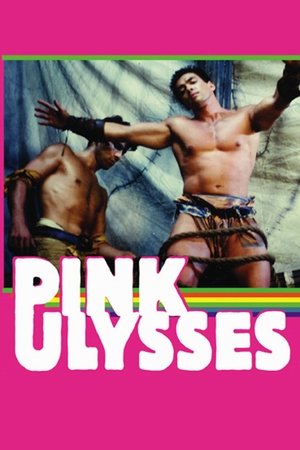
A homoerotic exploration of the Odyssey mixing black and white, color, and old film clips.
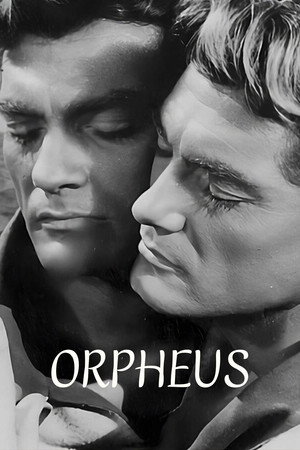
A famous poet in postwar Paris, scorned by the Left Bank youth, is in love with both his wife Eurydice and a mysterious princess. Seeking inspiration, the poet becomes obsessed and follows the princess from the world of the living to the land of the dead.
A talented ensemble cast bring Euripides masterpiece to life. The Bacchae (also called The Bacchants or Bakchai in Greek) tells the story of the god Dionysus who comes to the city of Thebes disguised as a charismatic young man accompanied by a throng of erotic female maenads. The immortal play is a study in fanatical religions and confronts the personal balance that we all must find between order and spontaneity.
Ulysse est revenu
When an elderly man and his caretaker plant a sapling, a ghost of long-forgotten grief stirs. As the silence deepens between them, what’s left unspoken threatens to shatter the peace.
The young teacher Marelle goes in search of her husband who mysteriously disappeared while attending the funeral of a childhood friend.
Johnny Minotaur is a lyrical explosion of taboos: incest, intergenerational desire, pansexuality and autoeroticism are a few of the issues Charles Henri Ford grapples with through mythopoeic, sensual imagery, recitations of his diaries and a philosophical debate featuring an impressive narration by such artists as Salvador Dali, Allen Ginsberg, Warren Sonbert and Lynne Tillman.
Prometheus, on an Odyssean journey, crosses the Brooklyn Bridge in search of the characters of his imagination. After meeting the Muse, he proceeds to the "forest." There, under an apple tree, he communes with his selves, represented by celebrated personages from the New York "underground scene" who appear as modern correlatives to the figures of Greek mythology. The filmmaker, who narrates the situations with a translation of Aeschylus' Prometheus Bound, finds the personalities of his characters to have a timeless universality.
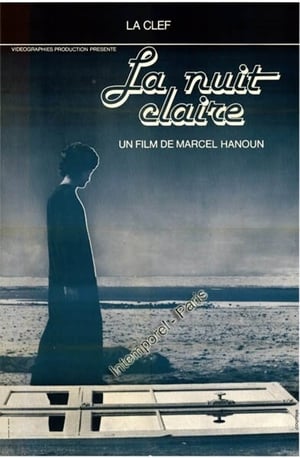
In a montage alternating with moments of Nigel Rogers' interpretation of the most beautiful passages from "Orpheus," the opera by Striggio and Monteverdi, La Nuit Claire is an evocation of the celebrated myth, within which images of the love between its two modern protagonists, Anne and Julien, are inscribed. - BAM/PFA
A young sailor finds himself trapped in the labyrinthine mansion of his occultist uncle, along with a number of eccentric and mysterious relatives who all seem to be harboring a dark secret.
A modern retelling of the Greek myth of Phaedra. The young and fiery second wife of an extremely wealthy shipping magnate meets her estranged stepson Alexis and sparks immediately fly. Their love seems doomed from the beginning when she convinces him to come to Paris to meet his father.
While on holiday in Rhodes, Athenian war hero Darios becomes involved in two different plots to overthrow the tyrannical king, one from Rhodian patriots and the other from sinister Phoenician agents.
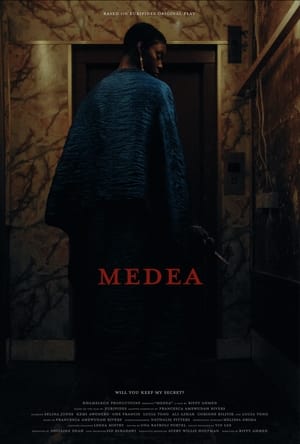
Based on the plot of Euripides' Medea. Medea centers on the barbarian protagonist as she finds her position in the Greek world threatened, and the revenge she takes against her husband Jason who has betrayed her for another woman.
After suffering a stroke that left her unable to speak, Cassandra takes refuge in poetry, where she discovers a dire prophecy. But when she tries to warn her brothers, she finds herself confronted with their overprotectiveness.
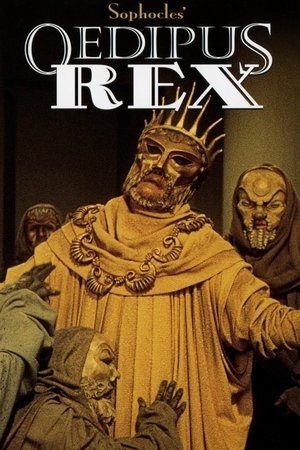
The story of Oedipus' gradual discovery of his primal crime, killing his father and marrying his mother, filmed by the famed British theatrical director Sir Tyrone Guthrie. This elegant version of Sophocles' play adds a brilliant stroke: the actors wear masks just as the Greeks did in the playwright's day.
While two theater groups rehearse plays by Aeschylus, two solitary individuals wander the Parisian streets hustling the populace for cash.
Filmed stageplay based on the ancient greek play The Bacchae written by Euripides. This play is performed by members of The Performance Group, an NYC experimental theater group who has made their own personal adaptation of this ancient text.
In Thebes in ancient Greece, King Oedipus kills his father and marries his mother Jocasta, having two sons - Eteocles and Polyneices - and two daughters - Ismene and Antigone. King Oedipus dies a beggar in the exile after gouging out his own eye, and Eteocle agrees to reign in Thebes in alternating years with Polynices. However, he refuses to resign after the first year and Polynieces raises an army and attacks Thebes, and they kill each other. The ruler of Thebes Creon decrees that Eleocles should have an honorable burial while the body of the traitor Polyneices should be left on the battlefield to be eaten by the jackals and vultures. However, Antigone, who was betrothed to Creon's surviving son Haemon, defies Creon's orders and buries her brother. When Creon is reported of the attitude of Antigone, he sentences her to be placed in a tomb alive. Antigone hangs herself in the tomb and Haemon tries to kill his father first and then he kills himself with his sword...