The life and work of the woman described as "The Rosa Parks of Gay Rights". During the repressive 1950's, Dr. Evelyn Hooker undertook ground breaking research that led to a radical discovery: homosexuals were not, by definition, "sick." Dr. Hooker's finding sent shock waves through the psychiatric community and culminated in a major victory for gay rights: in 1974 the weight of her studies, along with gay activism, forced the American Psychiatric Association to remove homosexuality from its official manual of mental disorders. Startling archival footage of the medical procedure used to "cure" homosexuality, images from the underground gay world of the McCarthy era, and home movies of literary icon Christopher Isherwood bring to life history which we must never forget.
Art Johnston and Pepe Peña are civil rights leaders whose life and love is a force behind LGBTQ+ equality in the heart of the country. Their iconic gay bar, Sidetrack, has helped fuel movements and create community for decades in Chicago's queer enclave. But, behind the business and their historic activism exists a love unlike any other.
It’s the resilience and love that keeps this community marching to the beat of its own drum; each generation redefining what it means to be queer and to be seen.
But it is a devastating expose of party-n-play culture. It's hard to depict methamphetamine use with any sensitivity, but this movie's dry and frank style bring this plague into startling focus. It's very compassionate and gives a lot of context and insight into how Gay culture and drug culture meet. It is heartbreaking to know that the majority of the men interviewed for this movie are HIV-positive. This movie includes graphic sexual content and vivid depictions of drug use, but it serves a very valuable purpose. it is an eloquent call for social responsibility.
Seven years after completing an Israeli Defense Course for female combat soldiers, director Hen Lasker returns to take a deeper look at the place where she first fell in love with a woman. Over the course of 66 days and nights, Lasker shoots a fly-on-the-wall documentary that allows unprecedented intimacy into the lives of the trainees and commanders of the Israeli army. The dichotomy of the innocence of these baby-faced trainees with the heavy burden of military service is a central theme of the film, illustrated in a scene where they discuss losing their virginity while waiting their turn to fire a machine gun. But it is the director’s relationship with Smadar, a breathtaking commander struggling to mask her gentle soul with a strict military persona, which makes the film truly enchanting. The intersection of love, duty, and personal growth thrive through to the film’s surprisingly moving finish.
A look at the 1950s muscle men's magazines and the representative industry which were popular supposedly as health and fitness magazines, but were in reality primarily being purchased by the still-underground homosexual community. Chief among the purveyors of this literature was Bob Mizer, who maintained a magazine and developed sexually inexplicit men's films for over 40 years. Aided by his mother, the two maintained a stable of not so innocent studs.
Boys on Film presents ten encounters from across the globe, where the dangerous allure of a risky attraction yields emotional results — proving that the age-old adage of taking the plunge is as relevant — and sexy — as ever before. The 10 short films are: My Uncle's Friend [O Amigo do Meu Tio] (2021); Budapest, Closed City [Budapest, zárt város] (2021); Eden (2020); Chaperone (2022); Break Me [Knus meg] (2018); By His Will [שעשני כרצונו] (2021); Red Ants Bite (2019); Jim (2022); Hornbeam (2022); Too Rough (2022).
Over the course of a year, film follows Vancouver Pride Society president Ken Coolen to various international Pride events, including Poland, Hungary, Russia, Sri Lanka and others where there is great opposition to pride parades. In North America, Pride is complicated by commercialization and a sense that the festivals are turning away from their political roots toward tourism, party promotion and entertainment. Christie documents the ways larger, more mainstream Pride events have supported the global Pride movement and how human rights components are being added to more established events. In the New York sequence, leaders organize an alternative Pride parade, the Drag March, set up to protest the corporatization of New York Pride. A parade in São Paulo, the world's largest Pride festival, itself includes a completely empty float, meant to symbolize all those lost to HIV and to anti-gay violence.
The film is a portrayal of Zanele Muholi, a lesbian photographer working in the South African GLBT community. This thin, combative woman is already a world-wide famous artist. She defines herself as a "visual activist" in order to highlight her commitment to politics, to communicating ideas and to art. Her work includes: provocative nudes (like a female Mapplethorpe); young Zulu couples, dressed in traditional costumes, embracing each other; a homeless socially excluded lesbian couple; a dignified portrait of Victor Mukasa, the gay human rights leader from Uganda; wonderful shots of Zanele with her white partner. Beautiful and poetic pictures which are "militant" in nature since they condemn homophobia, poverty, and the public and private conflicts of a country divided between tradition and modernity.
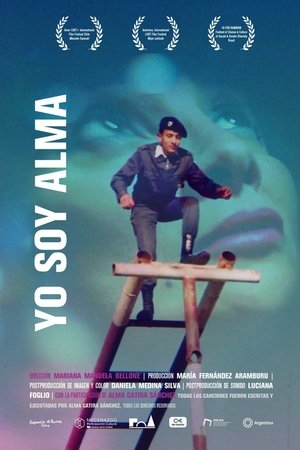
Luciano lives with his mother and younger sister in a low-income neighborhood in the Argentine city of Rosario. He studies and helps with the housework. Since money is always short, he takes any temporary work he can get to support his family, while he looks for a steady job. After years of spending long hours at the gym, he has managed to see himself in the body he longed for. Life, however, imposes new challenges on him in his relentless journey to pursue his identity.
In this witty monologue, Quentin Crisp advises and opines about personal style (with a few digressions).
In a warehouse in the heart of Los Angeles, a dwindling handful of devoted craftspeople maintain more than 80,000 student musical instruments, the largest remaining workshop in America of its kind. Meet four unforgettable characters whose broken-and-repaired lives have been dedicated to bringing so much more than music to the schoolchildren of this city.
It often happens that at the moment of death, transgender individuals are shorn of their identity. Their families are ashamed, the funeral takes place in secret, and on the tomb appears the name the deceased had before their transition, in one stroke nullifying the entire life path they had chosen. The same thing happened to Antonia. Her girlfriends gather to honor her memory and give her back her identity denied. In telling her story, the film’s stars, all drawn from the variegated transgender world, interweave the narrative with tales of their own lives, experiences, and memories.
Tamara, Desirée, and Victoria are Venezuelan women who live in Caracas and at first glance have little in common. However, all three share much more than the city they live in: they carry an ID that shows a name that is not theirs. They are transgender women. In Venezuela, you cannot legally change the name you were born with. The women unite and through a series of legal actions and tireless activism for equality, these women will test the willingness of Venezuelan institutions to ensure the basic right of its citizens: the right to identity.
Quearborn & Perversion: An Early History of Lesbian & Gay Chicago (2009, 109 min) is a documentary on LGBTQ life in Chicago from 1934 to 1974. Moving from the speakeasys and Henry Gerber’s founding of the Society for Human Rights in the 1930s, to the underground social structure of the 1940s and 1950s, to the dawn of consciousness-raising entities such as the Daughters of Bilitis and Mattachine Midwest in the 1960’s, and concluding with the emergence of the gay liberation movement with the first Pride March and opening of the first community center in the early 1970s.
We are faced with a cultural and moral battle. Human sexuality is sitting on the bench. Have homosexuals the right to validate their sexuality? Are the religious rights of millions of Americans being violated? LGBT Experience is a documentary that shares the perspective, impressions and conflicts from different points of view in this new chapter in the human experience. For some this is the beginning of the end, for others this is the end of injustice.
Just after Isidore moves to France to study filmmaking, his best friend dies back in the US. Through documentary, performance, and animation, a ghostly portrait emerges, prompting Isidore to question his relationships with his parents and his boyfriend in Paris.
Eulália, a conservative Portuguese mother, found out that her son who emigrated to Germany has become Fostter Riviera, the internationally awarded first Portuguese gay porn actor. She suffers with the distance, sometimes toned down through the computer that has become her main source of information and communication with her son. This documentary focuses on the long journey of this mother towards acceptance and endeavour to get closer to her son.
A legendary entertainer and a pioneer of gay activism, Miwa was born Akihiro Maruyama. As a young singer, Miwa popularized androgyny as a fashion statement, fusing the masculine and the feminine into a signal of a new generation of aesthetics. This evolved into performing as a woman and living off-stage as a man. With glitter, wit, evening gowns, and enchanting storytelling, Miwa looks back over a 50-year career and a fascinating life in music, film, and television.
In this funny and erotic mockumentary, director Toby Ross takes an out of the box look at homosexuals - dividing them into two major groups: those who are into it for the sex and those who are looking for relationships. The live reenactments are an eyeful and it goes through all the levels and strands of gay guys. Out and proud, fringe homos, closet cases by design, country fags, and more.