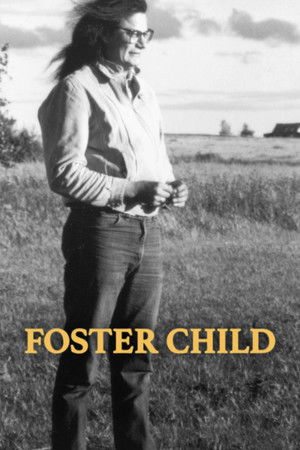
Gwen van de Pas returns to her hometown in search of answers about the man who sexually abused her as a child.
Featuring new, previously unseen footage documenting the bizarre and unsettling things that happened to filmmakers David Farrier and Dylan Reeve as Tickled premiered at film festivals and theaters in 2016. Lawsuits, private investigators, disrupted screenings and surprise appearances are just part of what they encounter along the way. Amidst new threats, the duo begins to answer questions that remained once the credits rolled on Tickled, including whether the disturbing behavior they uncovered will ever come to an end.
An insight into the creative process of photographer Brigitte Lacombe, exploring her obsession with taking pictures and how her lens defines her relationship with her subjects and the world.
A shocking BBC investigation into serious sexual abuse allegations by Mohamed al Fayed, the former owner of luxury department store Harrods. The Egyptian billionaire businessman, who died last year aged 94, is accused of multiple counts of rape and attempted rape by the women who worked for him. At the time of many of the alleged attacks, Al Fayed was the owner of London’s luxury department store Harrods, the iconic Ritz Paris hotel and English football club Fulham FC. The BBC has heard testimony from over 20 survivors, with 13 featured in the film. With horrifying accounts of abuse that spanned Al Fayed’s 25-year reign at Harrods, for the first time the scale and seriousness of these allegations are exposed, as well as the system that helped cover it up. A web of corruption and fear that extended from the shop floors to the highest levels of the organization is revealed. Brave survivors now break their silence.
Why wouldn't you? Is there any reason not to? We've got so much at our disposal, so, why don't you? Won't you tell me? Won't you please tell me? To have you down is simply unacceptable. Just look at this; or this; at all these hallmarks to guide you and convey to you the prime ways to feel lovely. Just follow them and you'll be set. So, I ask you again... Don't you feel lovely today?
He's hungry, and chances are you're also hungry, so tag along. Who knows, you might learn a thing or two.
In 1928, as the talkies threw the film industry and film language into turmoil, Chaplin decided that his Tramp character would not be heard. City Lights would not be a talking picture, but it would have a soundtrack. Chaplin personally composed a musical score and sound effects for the picture. With Peter Lord, the famous co-creator of Chicken Run and Wallace & Gromit, we see how Chaplin became the king of slapstick comedy and the superstar of the movies.
An in-depth look at Dirty Harry (1971), featuring interviews with such film artists as Michael Madsen, 'Hal Holbrook', John Milius, 'Shane Black' and John Badham.
Rosa is from Croatia and lives in Switzerland, with her husband who depends on her care. She takes care of everything. Her children have grown up and want to leave home. Rosa stays behind alone.
The earliest surviving motion-picture film, and believed to be one of the very first moving images ever created, was shot by Louis Aimé Augustin Le Prince using the LPCCP Type-1 MkII single-lens camera. It was taken on paper-based photographic film in the garden of Oakwood Grange, the Whitley family house in Roundhay, Leeds, West Riding of Yorkshire (UK), on 14 October 1888. The film shows Adolphe Le Prince (Le Prince’s son), Mrs. Sarah Whitley (Le Prince’s mother-in-law), Joseph Whitley, and Miss Harriet Hartley walking around in circles, laughing to themselves, and staying within the area framed by the camera. Roundhay Garden Scene is often associated with a recording speed of around 12 frames per second and runs for about 2 to 3 seconds.
A film by Louis Aimé Augustin Le Prince, shot in late October 1888, showing pedestrians and carriages crossing Leeds Bridge.
The first woman to appear in front of an Edison motion picture camera and possibly the first woman to appear in a motion picture within the United States. In the film, Carmencita is recorded going through a routine she had been performing at Koster & Bial's in New York since February 1890.
The city of Madrid as it appears in the Spanish films of the 1950s. A small tribute to all those who filmed and portrayed Madrid despite the dictatorship, censorship and the critical situation of industry and society.
The Bokelberg photographic collection brings to life the Paris of the Belle Époque (1871-1914), an exhibition of workshops and stores with extremely beautiful shop windows before which the owners and their employees proudly pose, hiding behind their eyes the secret history of a great era.
A short film made with the film end rolls of 'Du côté de la côte'.
This short film served as an invitation to the World's Fair that was held in Montreal in 1967. It was largely considered to be the most successful World's Fair of the 20th century with over 50 million visitors. The film presents impressions of the event and of Montreal at its liveliest and most exciting moment in history.
Delphine Seyrig reads passages from a Valerie Solanas’s SCUM manifesto.
To the city come men, women, fruits, flowers, vegetables, goats and sheep – all ready for consumption. It is the process of consumption/exploitation that forms the core of the film.
A paraphrase on Eric M. Nilsson's film Djurgårdsfärjan from the early 1960s.
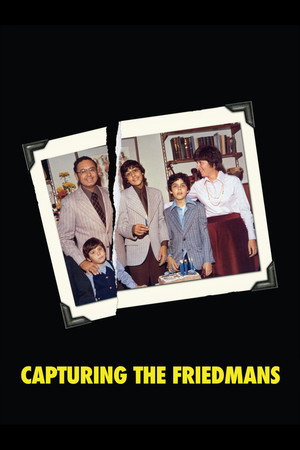
An Oscar nominated documentary about a middle-class American family who is torn apart when the father Arnold and son Jesse are accused of sexually abusing numerous children. Director Jarecki interviews people from different sides of this tragic story and raises the question of whether they were rightfully tried when they claim they were innocent and there was never any evidence against them.