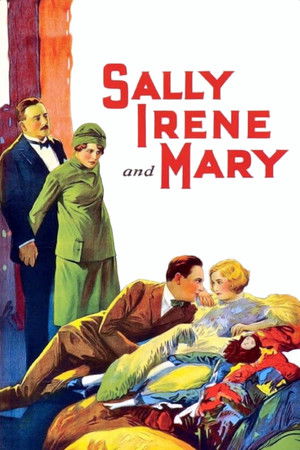
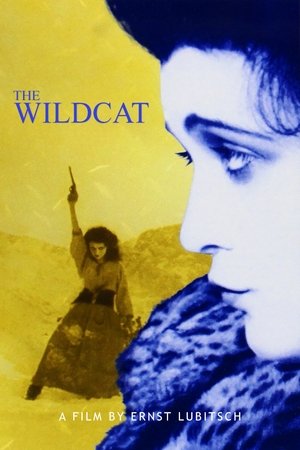
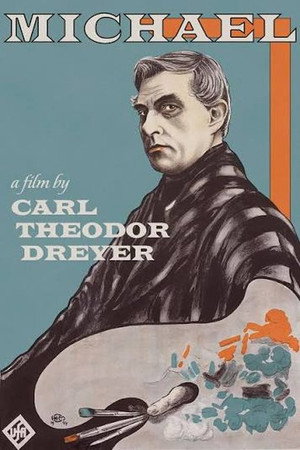
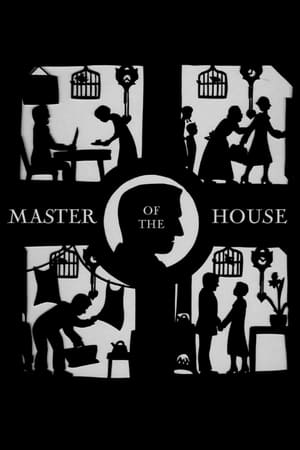
A girl marries a wealthy pawnbroker in order to get money for her poor lover, who is an artist. When the pawnbroker dies, his son forces the girl to marry him, but he is killed and she marries the artist. Various problems arise after their marriage, but eventually they are happy together.
In a futuristic city sharply divided between the rich and the poor, the son of the city's mastermind meets a prophet who predicts the coming of a savior to mediate their differences.
A group of people are standing along the platform of a railway station in La Ciotat, waiting for a train. One is seen coming, at some distance, and eventually stops at the platform. Doors of the railway-cars open and attendants help passengers off and on. Popular legend has it that, when this film was shown, the first-night audience fled the café in terror, fearing being run over by the "approaching" train. This legend has since been identified as promotional embellishment, though there is evidence to suggest that people were astounded at the capabilities of the Lumières' cinématographe.
Francis, a young man, recalls in his memory the horrible experiences he and his fiancée Jane recently went through. Francis and his friend Alan visit The Cabinet of Dr. Caligari, an exhibit where the mysterious doctor shows the somnambulist Cesare, and awakens him for some moments from his death-like sleep.
After the death of Emperor Marcus Aurelius, his devious son takes power and demotes Maximus, one of Rome's most capable generals who Marcus preferred. Eventually, Maximus is forced to become a gladiator and battle to the death against other men for the amusement of paying audiences.
Two families, abolitionist Northerners the Stonemans and Southern landowners the Camerons, intertwine. When Confederate colonel Ben Cameron is captured in battle, nurse Elsie Stoneman petitions for his pardon. In Reconstruction-era South Carolina, Cameron founds the Ku Klux Klan, battling Elsie's congressman father and his African-American protégé, Silas Lynch.
A dramatized account of a great Russian naval mutiny and a resultant public demonstration, showing support, which brought on a police massacre.
Sergei M. Eisenstein's docu-drama about the 1917 October Revolution in Russia. Made ten years after the events and edited in Eisenstein's 'Soviet Montage' style, it re-enacts in celebratory terms several key scenes from the revolution.
The Moon Beauty
A semi-documentary experimental 1930 German silent film created by amateurs with a small budget. With authentic scenes of the metropolis city of Berlin, it's the first film from the later famous screenwriters/directors Billy Wilder and Fred Zinnemann.
The film tells the back story about the characters and events leading up to the explosive oil truck heist in Fast & Furious.
Mo Geum-san is a barber living in the rural area, who once aspired to be an actor. He starts to have doubts about his humdrum life after the village health center advises him to be examined at a larger hospital. He comes up with a plan to give a gift to his beloved ones in the coming Christmas. The plan is to invite everyone to the local culture center and to screen his self-made comedy movie based on his own tragic life.
A London actress collapses on stage and is sent by her doctor to stay in the country with a farmer and his wife. But when she starts an affair with the farmer, the idyllic life at "Crooning Water" is threatened with tragedy.
In the first century, after the death of Herod the Great, Judea goes through a long period of turbulence due to the actions of the corrupt Roman governors and the internal struggles, both religious and political, between Jewish factions, events that soon lead to the uprising of the population and a cruel war that lasts several years and causes thousands of deaths, a catastrophe described in detail by the Romanized Jewish historian Titus Flavius Josephus.
An aging doorman, after being fired from his prestigious job at a luxurious hotel, is forced to face the scorn of his friends, neighbours and society.
Este Silêncio Pode Significar Muita Coisa
Cameo Kirby is a 1914 American drama silent film directed by Oscar Apfel and written by Clara Beranger and William C. deMille. The film stars Dustin Farnum, Fred Montague, James Neill, Jode Mullally, Winifred Kingston and Dick La Reno. It is based on the play Cameo Kirby by Booth Tarkington and Harry Leon Wilson. The film was released on December 24, 1914, by Paramount Pictures.
During an annual celebration in which English peasants and aristocrats mingle, the Duke of Loame is thrown from his horse and saved by Ivis Benson, the daughter of a tenant farmer. Both injured, they fall in love, to the dismay of his mother and Lady Eileen, his intended bride.
Set in Spanish colonial Philippines. Pedro is tasked to wed a wife whilst his activist friend is considering him to join the revolution. Through a raunchy and campy path of winning the love of his life, Pedro is met with a daunting revelation.
Treacherous Roman senator Lucius Quintilius plans a secret journey into Thrace to recover a legendary treasure. He is accompanied by his daughter Livia posing as a Christian slave girl, his cruel henchman Commodio, and Terenzius, an ex-gladiator and Nero look-alike who fools the local Thracians into believing he is the real Emperor. But Lucius's plans are thwarted by Spartacus and his band of rebels who succeed in capturing the treasure for Thrace. When news arrives from Rome that the real Nero has died, local Roman governor Consul Metellus joins forces with Spartacus to defeat the traitors.