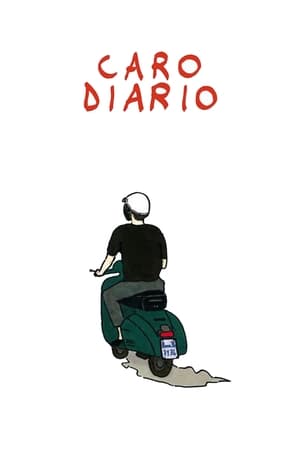
Nanni Moretti recalls in his diary three slice of life stories characterized by a sharply ironic look: in the first one he wanders through a deserted Rome, in the second he visits a reclusive friend on an island, and in the last he has to grapple with an unknown illness.
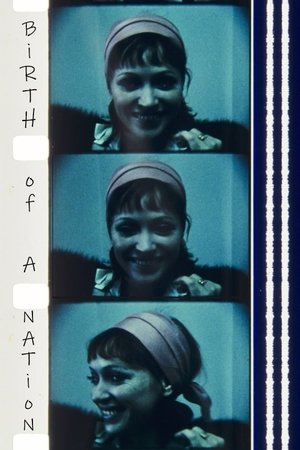
Jonas Mekas assembles 160 portraits, appearances, and fleeting sketches of underground and independent filmmakers captured between 1955 and 1996. Fast-paced and archival in spirit, the film celebrates the avant-garde as its own “nation of cinema,” a vital community existing outside the dominance of commercial film.
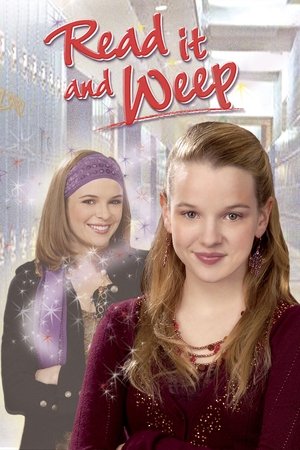
A young girl turns into an A-List celebrity over night when her private journal is accidently published and becomes a best-seller.
Drawn from footage shot between 1949 and 1963, Jonas Mekas’s autobiographical diary film chronicles his early years in exile, capturing the struggle to build a new life in New York and his gradual discovery of a vibrant artistic community.
On January 1st, 1999, Caveh Zahedi started a one-year video diary. The idea was to shoot one minute each day. This is the result.
Also known as Walden, Jonas Mekas’s first diary film is a six-reel chronicle of his life in 1960s New York, interweaving moments with family, friends, lovers, and artistic idols. Blending everyday encounters with portraits of the avant-garde art scene, it forms an epic, personal meditation on community, creativity, and the passage of time.
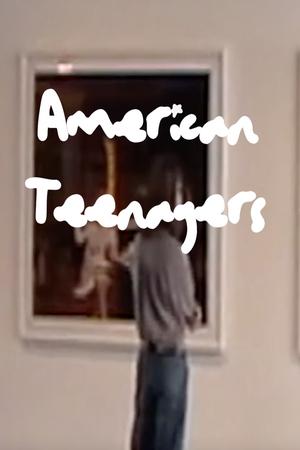
A short documentary project that attempts to encapsulate what it looks and feels like to be an American Teenager in 2022.
A compilation of over 30 years of private home movie footage shot by Lithuanian-American avant-garde director Jonas Mekas, assembled by Mekas "purely by chance", without concern for chronological order.
A film collage tracing the story of the lives, loves, and deaths within the artistic community surrounding Jonas Mekas.
Homeo is a mental construction made from visual reality, just as music is made from auditive reality. I put in this film no personal intentions. All my intentions are personal. I’ve made this film thinking of what the audience would have liked to see, not something specific that I wanted to say: what the film depicts is above all reality, not fiction. Homeo is, for me, the search for an autonomous cinematographic language, which doesn't owe anything to traditional narrative, or maybe everything. Cinema is, above all, part of a way of life which will become more and more self-assured in the years and century to come. We are part of this change, and that’s why I tried in Homeo to establish a series of perpetual changes, in constant evolution or regress, which tries, above all, to focus on things.
Over the course of more than fifteen years, Clémenti films a series of intimate diaries, starting from daily encounters. In La deuxième femme, we see Bulle Ogier and Viva, Nico and Tina Aumont, Philippe Garrel and Udo Kier, a performance by Béjart, a piece by Marc’O, concerts by Bob Marley and Patti Smith (not always recognisable)... It’s like a maelstrom of psychedelic images that are passed through a particle accelerator.
An enigmatic glimpse of life through precarious vignettes, propelling a narrative through a nebulous and opaque structure that sutures the filmmaker's home movie footage to archival material—from Hollywood narrative films to political selfie videos. A handmade impression of a time suspended between past and present and the ghosts and places occupying it, contemplating the nature and meaning of vision, memory and image making.
Somewhere between a diary and a filmed letter made while Caroline Champetier was shooting Benoît Jacquot's film L'Intouchable in India.
A short documentary by Jim McBride.
While attempting to record life as it was, Arthur unintentionally documents his family’s unraveling.
Blending candid interviews, experimental moments, and reflective narration, this 55-minute personal doc explores what it means to grow up when the people who love you also struggle to accept who you are. Through screen-recorded calls with friends, street interviews, and distant footage of everyday life, I examine my upbringing as a queer non-binary trans person—where love, expectation, and shame often coexisted—among a sea of other stories about adolescence. Anchored by a conversation with a close friend and fellow artist, the film sits in the tension between care and rejection, asking if anyone is even really special—or maybe all of us are.
One of the very few films made by Etienne O'Leary, all of which emerged from the French underground circa 1968 and can be very loosely designated 'diary films.' Like the contemporaneous films by O'Leary's more famous friend Pierre Clementi, they trippily document the drug-drenched hedonism of that era's dandies. O'Leary worked with an intoxicating style that foregrounded rapid and even subliminal cutting, dense layering of superimposed images and a spontaneous notebook type shooting style. Yet even if much of O'Leary's material was initially 'diaristic,' depicting the friends, lovers, and places that he encountered in his private life, the metamorphoses it underwent during editing transformed it into a series of ambiguously fictionalized, sometimes darkly sexual fantasias. - Experimental Film Club
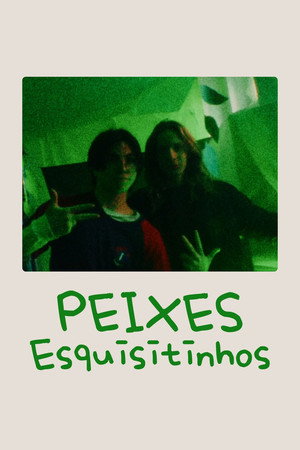
Two teen boys living in an isolated house in the mountains contemplate their existence while maintaining a video diary of their daily lives.
A Different point from the eyss of Yuval Shamshins's life, in the modern days of the Covid-19. The movie is built upon the small moments of life, full of Metaphors and Images in order to built a cinemathic perspective.
A twentysomething spends a year closer and further from friends. A unique look at the Philly scene in the year 2021.