The fate of Tokugawa’s world hangs in the balance as Yagyu Jubei is sent on a mission to discover what happened to 10 of the shogun’s spies that never returned. Matsukata Hiroki, one of the last surviving members of the Golden Age of Japanese Cinema proves that he has not lost a step as he portrays an older and wiser Yagyu Jubei in a movie that brings the best of samurai filmmaking into the 21st century. Summoned from semi-retirement by Shogun Iemitsu, Jubei is asked to take to the road and investigate a clan rumored to be preparing explosives for a rebellion. With help from a beautiful female ninja they head into the Shirakawa domain where the fighting skills of both are tested time and again as they strive to destroy a conspiracy that could bring a new Warring States Era. In the 1960's Yagyu Jubei was the signature role of the great Konoe Jushiro, father of Matsukata Hiroki. This brings the character full circle.
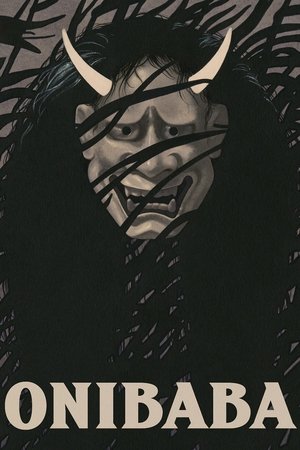
While her son, Kichi, is away at war, a woman and her daughter-in-law survive by killing samurai who stray into their swamp, then selling whatever valuables they find. Both are devastated when they learn that Kichi has died, but his wife soon begins an affair with a neighbor who survived the war, Hachi. The mother disapproves and, when she can't steal Hachi for herself, tries to scare her daughter-in-law with a mysterious mask from a dead samurai.
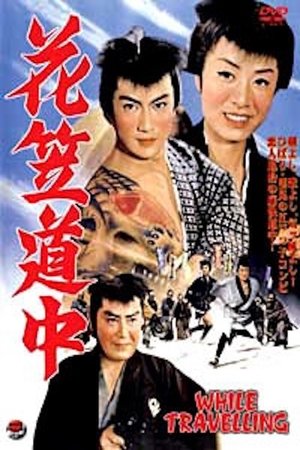
In this film, Hibari plays a dual role as brother and sister. The story involves a journey to Hanagasa for an incognito Lord (Kotaro Satomi) to overthrow an attempted usurpation of his domain, while being harassed by vassals of the usurper (Kensaku Hara). There's also a mysterious ronin played by Jushiro Konoe. The songs are seamlessly woven into the narrative and don't overwhelm the action. While the plot is derivative it is good example of its type and quite enjoyable. Note that there are some flashback sequences in black and white.
A thrilling and entertaining piece in which Jirokichi, portrayed by Morio Kazama, tackles a major event involving an attempt to assassinate the shogun. This production features historical figures such as Toyama Kagemoto, Oshio Heihachiro, Utagawa Hiroshige, and Watanabe Kanzan in their youth, depicting their exploits before they became famous. It becomes a lively portrayal of youthful vigor, with scenes of Jirokichi leaping using trampolines, creating a light and lively action.
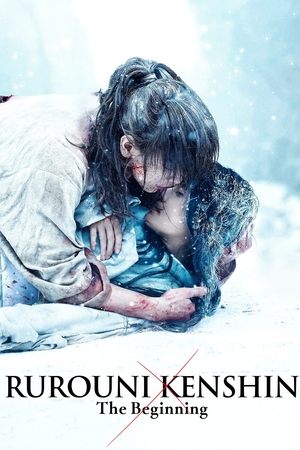
Before he was a protector, Kenshin was a fearsome assassin known as Battosai. But when he meets gentle Tomoe Yukishiro, a beautiful young woman who carries a huge burden in her heart, his life will change forever.
On the day his mother dies, young gambler Jirocho swears in front of her grave that he'll never gamble again. But, that night, Jirocho heads to a gambling den, where he bets the condolence money for his mother's funeral. No surprise to learn he loses the lot. Not the hard-boiled yakuza story it seems, this is a comedy featuring many new artists who were making a name for themselves at the time.
When his mother's untimely death quickly follows his father's, a doctor begins to believe a killer may be targeting him and his amnesiac wife.
A remake of High Noon (1952) as a Japanese jidai-geki sword-fighting movie.
During the reign of the eighth shogun of the Tokugawa shogunate, the Yunagaya Domain in the Tohoku region is a small han. But at the han, there is a gold mine. Suddenly, Masaatsu Naito of Yunagaya Domain receives an order to perform Sankin-kotai within 5 days. Sankin-kotai is a custom that requires the daimyo to visit the shogun in Edo. Unfortunately, the time needed to visit the shogun in Edo for Masaatsu Naito is 8 days. Masaatsu Naito also learns he received the order because a high ranking government official wants the gold mine. Also, the expense for Sankin-kotai is high and the Yunagaya Domain is such a small han that it seems impossible to complete. Nevertheless, Masaatsu Naito begins an unexpected operation to complete Sankin-kotai in 5 days.
As Part I opens, Jubei (Denjiro Okochi), the best of sea skippers, is unable to overcome the stormy seas of Luzon. All hands on board the Kannonmaru were lost except for Shinkei, who alone made his way to land & eventually home to inform his grandson Jiromaru (Kinnosuke Nakamura) that his father Jubei met with disaster. Young Jiromaru tells his grandfather that he doesn't want to be a skipper like his father, but wants to go to Kyoto and become a samurai…
In the last days of the Tokugawa shogunate, there was a cute warrior, Souji Okita, who belonged to the armed police of the shogunate in Kyoto. Very few knew that Souji was not a boy, but a woman. Souji loved the vice-leader of the armed police, Toshizou Hijikata. Souji suffered from pulmonary tuberculosis and coughed up blood during a battle. Toshizou helped her but said that he did not care for the girl with a smell of blood. Souji had a real talent for swordsmanship and no one but Ryouma Sakamoto could compete with her. Ryouma was a liberal intellectual and tried to carry out a revolution without blood. However, the bloody Meiji Restoration broke out and Souji killed Ryouma who lost his dream. Because a friendship had sprung up between Toshizou and Ryouma, Toshizou got angry and slashed at Souji with a sword. Unwillingly, she unsheathed her sword and thought that she might get love if she was killed by the man she loved.
Two rogue vagrants make their living as "manure men", turning the waste from the tenement toilets into fertiliser sold to local farmers. Enter Okiku, the only daughter of a fallen samurai, and amongst the overflowing piles of excrement, a well-nourished love story unfolds.
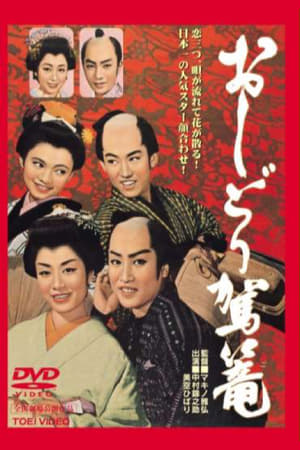
A story about a tomboy, Otoshi, who is good at singing, dancing and fencing.
In a poor district of Edo lives a young samurai named Soza. He has been sent by his clan to avenge the death of his father. He isn't an accomplished swordsman however, and he prefers sharing the life of the residents, teaching the kids how to write etc. When he finally finds the man he is looking for, he will have to decide whether he follows the way of the samurai or chooses peace and reconciliation.
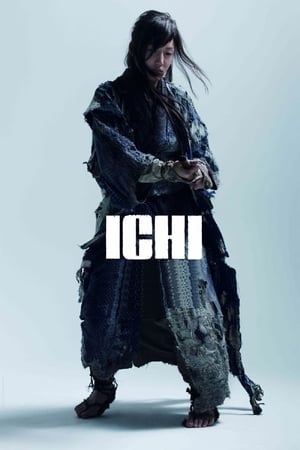
Ichi is a blind entertainer that travels the countryside with her traditional Japanese guitar and walking stick. She’s in search for the kind man that brought her up as a child, but because of her beauty she encounters problems every step of the way. Fortunately for Ichi, she is also a gifted swordswoman and carries a lethal blade within her walking stick.
The story of Ryoma Sakamoto, considered to be the architect behind the downfall of the Tokugawa shogunate. He was considered an outlaw by his own clan, hunted by his government, and was despised by supporters of the Shogun as well as the Loyalists for desiring the opening of Japan to the West in order to learn its technology, in the hopes of one day defeating the West with a modern army and navy.
A village samurai with money, power and great masculinity goes to the flourishing city of Edo to have some fun and practice. And here he is attacked by a beautiful thief... A light comedy historical drama.
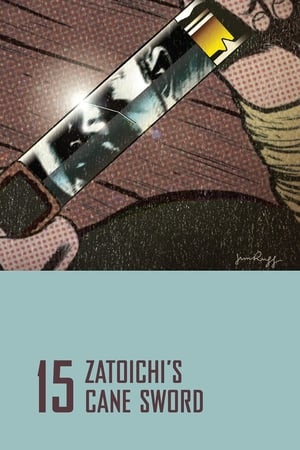
Zatoichi is sworn to protect the life of a young girl and without any real allies finds himself in the middle of a bloody turf war.
Ogami Itto battles a group of female ninja in the employ of the Yagyu clan and must eliminate a traitor who plans to sell his clan's secrets to the Shogunate.
A period comedy set at the end of the Sengoku Period about Sasuke Saruhi, a middle-aged ninja.