When Harvard PhD student Jennifer Brea is struck down at 28 by a fever that leaves her bedridden, doctors tell her it’s "all in her head." Determined to live, she sets out on a virtual journey to document her story—and four other families' stories—fighting a disease medicine forgot.
Michael Grade tells a tale of television skullduggery and dirty dealings in the battle to win the Saturday night ratings crown.
Follows the plight of real-life dancers as they struggle through auditions for the Broadway revival of A Chorus Line and also investigates the history of the show and the creative minds behind the original and current incarnations.
Zombies are part of pop culture, but what are they? Where do they come from? To find real zombies we visit Haiti where Zombies are an integral part of the island's cultural and religious roots.
In the 1920s, former coal miner Harry Hoxsey claimed to have an herbal cure for cancer. Although scoffed at and ultimately banned by the medical establishment, by the 1950s, Hoxsey's formula had been used to treat thousands of patients, who testified to its efficacy. Was Hoxsey's recipe the work of a snake-oil charlatan or a legitimate treatment? Ken Ausubel directs this keen look into the forces that shape the policies of organized medicine.
Storror Supertramps - Thailand is the first film of its kind. Seven friends take you on a thrilling feature length adventure, documenting their wild journey around South East Asia. Join some of the worlds favourite athletes on an incredible exploration into their world of fun, freedom and adventure. The boys push the limits of their comfort zone as they endure twenty-eight days with no plans, accommodation or money. What could possibly go wrong ?
The life and work of stage designer ADOLPHE APPIA, originator of the most profound agitations in contemporary theatre. Through the dynamic alternation of animated drawings and choreographies specially conceived for the film, we discover the steps of his artistic evolution.
Hop on a Harley for this tour of the nation's highways and byways with other motorcycle enthusiasts by your side. This documentary examines the cult of Harley-Davidson and its followers, who traverse America free and unencumbered on their beloved "hogs." Viewers will make a side trip to South Dakota for the Sturgis Motorcycle Rally; celebrate Harley's 100th anniversary in Wisconsin; join the 9/11 Patriot Ride and the Love Ride; and more.
While California is going bankrupt, one business is booming. "How Weed Won the West" is the story of the growing medical cannabis / marijuana industry in the greater Los Angeles area, with over 700 dispensaries doling out the buds. As a treatment for a wide range of conditions, cannabis is quickly proving itself as a healthier natural alternative to many prescription drugs.
Georgian director Otar Iosseliani prepares his film Jardins en Automne. Nothing is conventional in the filmmaker's system: Julie Bertuccelli portrays the gestation and production of a film that seems to follow the freest and most unpredictable poetic intuitions of its creator. The constant and hilarious arguments with the producer, Martine Marignac, a Michel Piccoli transformed into an old woman, and the director's peculiar filming system, in which he signals his actors to start with a whistle, paint a picture of one of the most unclassifiable cinematic experiences in contemporary cinema.
This film speaks of archaic peoples, their customs and mores, in an attempt to make the last snapshots of their traditional lifestyles before they are gone for good.
Obesity rates in the United States have reached epidemic proportions in recent years. Killer at Large shows how little is being done and more importantly, what can be done to reverse it. Killer at Large also explores the human element of the problem with portions of the film that follow a 12-year old girl who has a controversial liposuction procedure to fix her weight gain and a number of others suffering from obesity, including filmmaker Neil Labute.
Nana
The events that took place at the beach of El Tarajal in Ceuta (Spain) in February 2014 - the killing by the border police of 15 people who were trying to reach the Spanish coast - are an example of how the police force can violate the laws of its own country and international conventions with total impunity. The worst part is that this violation of human rights is protected by the Spanish Ministry of Interior itself, which hinders any effective action by the prosecution. For this reason, the civil society plays a fundamental role in revealing the facts. This is where the figure of collective complaints (DESC Observatory and the association Coordinadora de Barrios) steps in.
On its surface, this is a film about a man returning to New York to finish the film he began in 1970, when he was a 22 year old film school hotshot. Along with his former lover and star of the film, they transfer the film, hire an editor, and get to work.
Following the 2002 HBO documentary "Journeys with George," Pelosi's irreverent account of George W. Bush on the campaign trail, she set out on the road again with a handful of distinguished men competing to see who could eat the most pies, raise the most money and get the most votes to become the Democratic Party nominee.
Each year in the United States, over 200,000 prisoners face a parole board that must make the difficult judgment of whether these convicted criminals are ready to gain their freedom and return to society. This documentary focuses on three inmates in Louisiana, Nevada, and Massachusetts with a range of chilling crimes - a father's murder by his troubled son, a crime of passion by a respected NASA scientist, and a shooting/robbery on the streets of Las Vegas. Incorporating interviews of key characters with extensive testimony footage and reenactment sequences that explore the life and crime of the inmate, the film vividly examines the conflicting needs of the victim, the criminal, and the community while testing our own notions of justice.
Iran, 2008. As President Mahmoud Ahmadinejad's motorcade creeps through the teeming streets of Qom Shrine, thousands of people jam hand-written letters into the hands of his handlers. Hearing their President deliver a speech is a thrill, but more promising to these men and women is the hope that their letters - expressing pleas for loans, medical attention, housing and jobs - will be answered. Since his 2005 election on a populist, "man of the people" platform, Ahmadinejad has encouraged Iranians to send him such letters; according to a staff member, he has received about 10 million of them, and has been able to respond to nearly 76 percent. In one letter, a 16-year-old boy says his family has no money and goes to bed hungry every night. According to the staff member, the boy will be helped. As other letters are read, the worker says that "In Islam, charity is a necessity."
This shocking documentary reveals the plight of young Nigerians branded as witches.
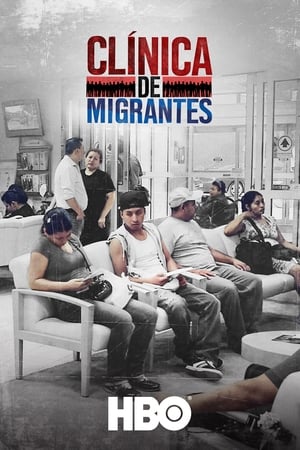
Puentes de Salud is a volunteer-run clinic that provides free medical care to undocumented immigrants in south Philadelphia. Here, doctors and nurses work for free to serve people who would otherwise fall through the cracks. Clinica de Migrantes, a potent film by Maxim Pozdorovkin, follows the workers and patients of Puentes through months of routine care and growth. Along the way, the film puts a face to the millions of people who exist on the margins of society: people displaced from their homelands, separated from their families, unfamiliar with the customs, unable to obtain health insurance and terrified to come forward to seek medical help. Along with revealing these patient stories, Clinica is also a look at the heroic doctors and nurses who work pro bono to ensure these people receive care, offering a deeply moving look at the limitless potential of humanity.