A man confronts his past during an experiment that attempts to find a solution to the problems of a post-apocalyptic world caused by a world war.
Starting with a long and lyrical overture, evoking the origins of the Olympic Games in ancient Greece, Riefenstahl covers twenty-one athletic events in the first half of this two-part love letter to the human body and spirit, culminating with the marathon, where Jesse Owens became the first track and field athlete to win four gold medals in a single Olympics.
Part two of Leni Riefenstahl's monumental examination of the 1938 Olympic Games, the cameras leave the main stadium and venture into the many halls and fields deployed for such sports as fencing, polo, cycling, and the modern pentathlon, which was won by American Glenn Morris.
A documentary on the massacre of Planas in the Colombian east plains in 1970. An Indigenous community formed a cooperative to defend their rights from settlers and colonists, but the government organized a military operation to protect the latter and foreign companies.
When an arranged marriage brings Ada and her spirited daughter to the wilderness of nineteenth-century New Zealand, she finds herself locked in a battle of wills with both her controlling husband and a rugged frontiersman to whom she develops a forbidden attraction.
A gifted singer, struggling with addiction on the streets of Skid Row, sets out on a journey to transform his life.
Slovenský žalmista Pavol Országh Hviezdoslav
Zvyky nezvykle
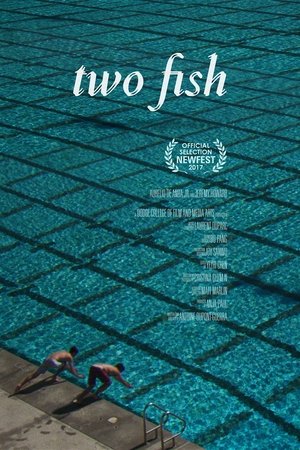
Two teenage couples are spending a weekend together in a house by the sea. When new feelings develop, the dynamic quickly changes.
The star of a team of teenage crime fighters falls for the alluring villainess she must bring to justice.
Funny collage of sea, sun and ice. A show from the beach with skiers, tigers, mermaids and much more.
A sad and troubled man finds a new job five years after the end of WWII, where he writes love letters for other people.
"The Role of Chance" ("La part du hasard") focuses exclusively on drawing and painting techniques used by the painter Henri Dimier. Shot over several weeks in the same artist's studio, the film shows works in their different phases, processes rarely explained or little known. It also addresses many practical issues (choice of paper, pigment grinding, reports drawings, put the tiles, cliches, etc) as well as broader questions of method and inspiration (use of space, the role of contours, power of suggestion perspectives, use of random processes). Patrick Bokanowski sought with this film to restore the spirit of this teaching, showing how to bend a note or sometimes revealing an essential mystery of creation.
A vibrant kaleidoscopic tribute to the guitar that meshes dance, mime, visual art, and virtuoso performances to create a spectacular yet intimate celebration of the instrument. For one exciting week the city of Toronto plays host to the International Guitar Festival. The streets echo with the sounds of the instrument as the great masters from every tradition gather to play for each other -- John Williams from England, Leo Brouwer from Cuba (classical), Turibio Santos from Brazil (folk), Vladimir Mikulka from Czechoslovakia (avant-garde), Rik Emmett and Kim Mitchell from Canada, Steve Morse from the USA (rock).
Bridget Jones is an average woman struggling against expectations. As a New Year's resolution, Bridget decides to take control of her life, starting by keeping a diary in which she will always tell the complete truth. Her charming boss takes an interest in her, and she cannot stop running into a rather disagreeable acquaintance whom Bridget cannot help finding quietly attractive.
Muhammad Yunus, Nobel Peace prize winner, is known in the whole world as the banker of the poor, because he pioneered and tested a funding system in Bangladesh: by lending little sums of money to the less well-off with no interest, and returning it by installments gained with their work, people are able to get free from extreme misery. Thus, what can happen if three boys, just graduated, who live in Naples, try to import this funding system that subverts every economic rule?
During a routine scan, a young couple navigating their first pregnancy discover a health condition that could gravely impact their baby, forcing them to re-examine their relationship and their future.
Working men and women leave through the main gate of the Lumière factory in Lyon, France. Filmed on 22 March 1895, it is often referred to as the first real motion picture ever made, although Louis Le Prince's 1888 Roundhay Garden Scene pre-dated it by seven years. Three separate versions of this film exist, which differ from one another in numerous ways. The first version features a carriage drawn by one horse, while in the second version the carriage is drawn by two horses, and there is no carriage at all in the third version. The clothing style is also different between the three versions, demonstrating the different seasons in which each was filmed. This film was made in the 35 mm format with an aspect ratio of 1.33:1, and at a speed of 16 frames per second. At that rate, the 17 meters of film length provided a duration of 46 seconds, holding a total of 800 frames.
A man goes out of his way to impress a woman who is already taken.
Vnuci Antoina de Saint-Exupéryho