The renowned orchestra presents the world's biggest annual classical open air concert live from their hometown Vienna, Austria on Thursday, May 29th, 2014. The Summer Night Concert with the Vienna Philharmonic is an annual open-air event that takes place in the magical setting of the Schönbrunn Palace Park in Vienna with the palace as a magnificent backdrop. Everyone is invited to come to this unique occasion with free admission. Each year up to 100,000 people can take up the invitation, or enjoy on radio and TV in over 60 countries.
For Peter and the Wolf, premiered in 1936, Prokofiev chose the form of a symphonic tale, featuring a narrator alongside the orchestra. A unique work in which each instrument embodies a character. Renaud Capuçon conducts the Orchestre de Chambre de Lausanne, while Jean Reno takes on the role of narrator.
For Mahler, symphonies always were a means of interpreting the most convoluted philosophical problems that couldn’t be resolved verbally. The ambitious structure of the five-part Fifth Symphony spans from the Funeral March to the roaring finale. It is a forthright attempt to resolve the tragic conflict with the surrounding world. The brilliant fourth part of the symphony, Adagietto, resembles a beautifully mysterious flower that every conductor reimagines in their own style. As one of the twentieth century’s most influential maestros, Mahler redefined the conductor’s role. For him, the conductor is just as integral to his own musical works as they are to the composer. When a maestro steps onto the podium and opens the score, he recreates musical universes from scratch. Teodor Currentzis and the musicAeterna orchestra have performed Mahler’s symphonies around the world for many years. The Fifth Symphony has earned its place as one of the highlights of the cycle.
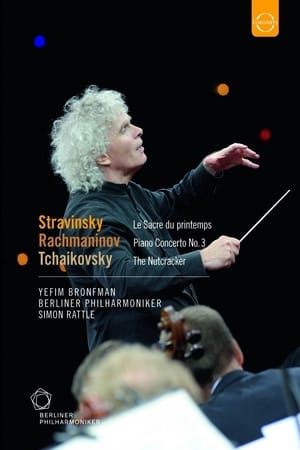
Every year, the Berliner Philharmoniker hold a kind of classical-music fête with a bright, cheerful concert to end the season. In 2009 about 22,000 people had come together at the Berlin Waldbühne to enjoy the traditional summer picnic concert. The theme of the evening was “Russian rhythms”, and star conductor Sir Simon Rattle, the Berliner Philharmoniker and Yefim Bronfman, one of the most famous pianists in the world today, presented a superb selection of Russian music. Repertoire Tchaikovsky: The Nutcracker, op. 71, Overture, The Christmas Tree, March, Pas de deux (Intrada) Rachmaninoff: Piano Concerto No.3 in D minor, op. 30 Stravinsky: Le Sacre du printemps Lincke: Berliner Luft
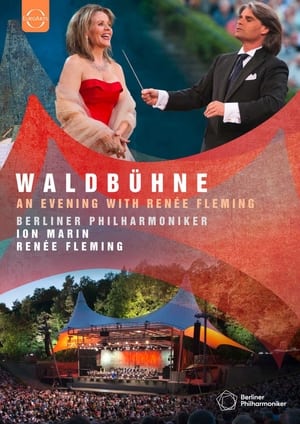
Repertoire Modest Mussorgsky: Night on Bald Mountain; Antonín Dvořák: Song to the Moon from “Rusalka”, Op. 114; Aram Chatschaturjan: Adagio from “Spartacus”; Richard Strauss: Final Scene from “Capriccio”, Op. 85; Richard Wagner: Overture to “Rienzi, der Letzte der Tribunen”; E. W. Korngold: Mariettas Lied from “Die tote Stadt”; Richard Strauss: Zueignung, Op. 10 No. 1; Sir Edward Elgar: Salut d’amour; Giacomo Puccini: Donde lieta uscì from “La bohème”; Tu che di gel sei cinta from “Turandot”; Ruggero Leoncavallo: Musette svaria sulla bocca viva from “La bohème”; Mimì Pinson, la biondinetta from “La bohème”; Piotr Tchaikovsky: “Romeo and Juliet” (Fantasy Overture)
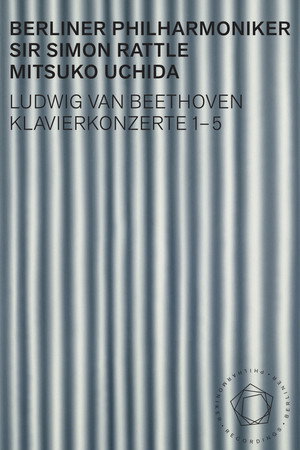
There is hardly a better way to approach Ludwig van Beethoven than through his piano concertos. Beethoven’s own instrument was the piano, and in his improvisations – which made him the darling of the Viennese salons – he merged virtuosity and unbridled expression. The piano concertos give a clear idea of these performances. At the same time, they are prime examples of Beethoven’s ability to create large orchestral works with seemingly endless arcs of tension. The complete recording of all five works with Mitsuko Uchida and Sir Simon Rattle was one of the most spectacular projects of the Berliner Philharmoniker during the Rattle era – and at the same time the highlight of the collaboration between the orchestra and the pianist, which began in 1984.
Surely Bach’s French Suites, which he composed during his years at Cöthen (1717–1723), are among the finest inducements to practise that any teacher has ever made to a pupil. In this case Bach wrote them for his young wife, Anna Magdalena. The over-riding impression left by these suites is one of endearing tunefulness. Clavier-Übung II is a later collection of didactic keyboard pieces. It comprises two greatly contrasted works: the Italian Concerto and the Overture in the French Style. These performances admirably demonstrate the thoughtful and persuasive approach that András Schiff adopts when performing Bach. Recorded live at the Bachfest 2010, Protestant Reformed Church of Leipzig, 11 June 2010 Repertoire J.S. Bach: French Suites Nos. 1–6, Overture in the French Style in B minor, Italian Concerto in F major, BWV 971
Utopia, the new orchestra of conductor Teodor Currentzis, can be experienced for the first time in Vienna on its inaugural tour with the 1945 version of Igor Stravinsky’s ‘The Firebird’ and Maurice Ravel’s Suite No. 2 of ‘Daphnis et Chloé’, ‘La Valse’ and ‘Boléro’.
It's Charlie Sheen's turn to step in to the celebrity hot seat for the latest installment of The Comedy Central Roast.
Carlin returns to the stage in his 13th live comedy stand-up special, performed at the Beacon Theatre in New York City for HBO®. His spot-on observations on the deterioration of human behavior include Americans’ obsession with their two favorite addictions - shopping and eating; his creative idea for The All-Suicide Channel, a new reality TV network; and the glorious rebirth of the planet to its original pristine condition - once the fires and floods destroy life as we know it.
Daniel Barenboim is an expert in exploiting the impact of cyclical performances of composers works: This time he focuses his sharp intellect on all six of Anton Bruckners mature symphonies. Der Tagesspiegel described Barenboim's performance of the works with the Staatskapelle Berlin on six nearly consecutive evenings in June 2010 as a superhuman accomplishment and went on to praise how: His Bruckner is conceived and performed very theatrically, like an opera without words. Bruckners famous Romantic Symphony No. 4 forms the prelude to a spectacular DVD series from Accentus Music and Unitel Classica, exploring Bruckners symphonic cosmos.
Between 1981 and 1984 Leonard Bernstein recorded nearly all of Brahmss orchestral works with the Wiener Philharmoniker to honor the 150th anniversary of the composer's birth in 1983. For the concertos, Bernstein enlisted the services of some of the finest Brahms interpreters of the time: the violoninst Gidon Kremer, the cellist Mischa Maisky and the pianist Krystian Zimerman. Leonard Bernstein, Krystian Zimerman, and the Wiener Philharmoniker, it's very hard to get a better group of musicians for these masterpieces. Mr. Zimerman and Mr. Wolfgang Herzer's piano cello duets in the third movement of Brahms' second is simply tearful.
With nearly 450 years of tradition, the Staatskapelle Berlin is one of the oldest orchestras in the world. Daniel Barenboim has served as its music director since 1992, and in 2000 the orchestra appointed him Chief Conductor for Life. Having already performed important cycles such as Beethoven, Brahms and Schumann together, Daniel Barenboim and the Staatskapelle turned their focus toward Anton Bruckner's last six Symphonies, performed in the Philharmonie Berlin in the course of only one week in June 2010. This music is more serious and more significant than one had thought, the Berliner Zeitung summarized in its review of Daniel Barenboims celebrated Bruckner cycle with the Staatskapelle Berlin. Bruckners unfinished Symphony No. 9 brought to an end, in a poignant manner, the work of one of the greatest symphonic composers of the Classic-Romantic era.
The Süddeutsche Zeitung summed up this highly acclaimed performance of Bruckner's monumental Fifth Symphony by saying: Both Bruckners belief in God, as it majestically wells up out of the chorale of the Fifth, and his deeply tragic world view, collide with one another in Barenboims interpretation. The operatic experience of the conductor was almost tangible, revealing the sheer dramatic instrumental battle between Bruckners God and the Devil between heaven and hell without betraying Bruckners unerring sense of striking proportions. The release of this contrapuntal masterpiece (as Bruckner, not without pride, referred to this work) is part of Daniel Barenboims Bruckner cycle with the renowned Staatskapelle Berlin.
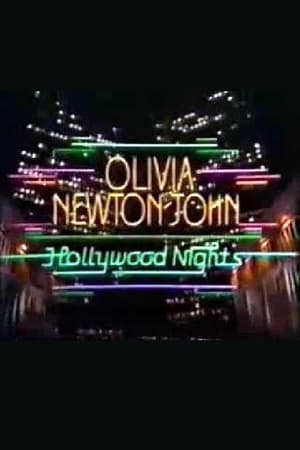
In this variety special, Olivia shares the evening with Andy Gibb, Elton John, Ted Knight, Gene Kelly and Toni Tennille. The special included songs from Grease and the Totally Hot album as well as some other artists' covers : the Eagles, Bob Seger, Elton John and Buddy Holly. Olivia also performed a parody of the jazz/blues classic Makin' Whoopee with Gene Kelly, changing the lyrics to Makin' Movies and dealing with Olivia's dream of producing a musical. The show was aired internationally and did very well in the ratings, as did her two previous US television specials on the same network. It is to be noted that Tina Turner's appearance on Olivia's special helped her sign a contract with then Olivia's manager Roger Davies, who ultimately helped her to go back into the spotlight.
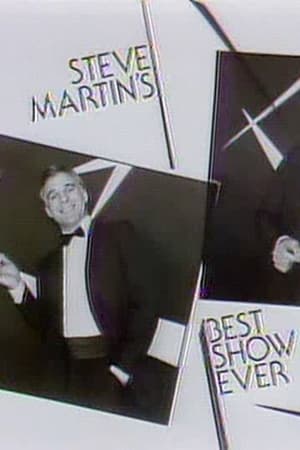
Steve Martin's fourth NBC special was in the spirit of his previous association with Saturday Night Live. It was broadcast live from Studio 8H, produced by Lorne Michaels and featured some original cast members of the show.
“Clarity was one thing that made this performance a marvel. Another was the flexibility of Barenboim’s speeds…. The flexibility of Barenboim’s tempi meant that Bruckner’s charm – an often overlooked aspect of his genius – shone through, especially in the genial Trio.” (The Telegraph) Bruckner’s 8th is the last symphony completed by the Austrian composer. Many of his contemporaries regarded the symphony as “the pinnacle of 19th century music”. Even today, this monumental work fascinates listeners with its virtuoso orchestral technique, its immensity of sound, and its inexhaustible richness of detail. Symphony No. 8 in C minor (second version 1887-90, Robert Haas Edition) Daniel Barenboim, Conductor Staatskapelle Berlin Recorded live at the Philharmonie Berlin, 26 June 2010
Anton Bruckner’s 6th Symphony was written between 1879 and 1881: a very happy time in his life. Unlike most of Bruckner’s symphonies, the 6th was not revised. Of all his works, this one seems to come from a single source of inspiration. Bruckner himself called it his “boldest” symphony – probably due to its extreme degree of motivic, rhythmic and harmonic originality. This live recording of the seldom-performed 6th Symphony is the next instalment of the acclaimed Bruckner cycle by the Staatskapelle Berlin and Daniel Barenboim. Anton Bruckner Symphony No. 6 in A major (original version) Daniel Barenboim, Conductor Staatskapelle Berlin Recorded live at the Philharmonie Berlin, 22 June 2010
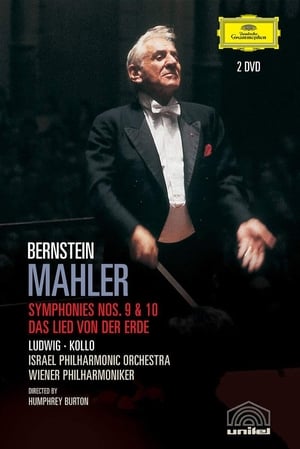
"Four Ways to Say Farewell" is a personal introduction to Mahler and his Ninth Symphony, during which Leonard Bernstein is seen and heard rehearsing the Vienna Philharmonic Orchestra. Filmed in 1971, this rehearsal was directed by Humphrey Burton,
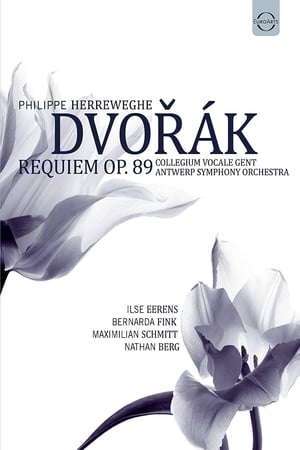
Philippe Herreweghe, principal conductor of the Royal Flemish Philharmonic, has devoted himself for over ten years to fresh and invigorating readings of the (pre-) Romantic repertoire. Together with the Collegium Vocale, founded in 1970 by Philippe Herreweghe himself, and superb soloists they perform Dvorak’s Requiem. A modern and stylistically flexible symphony orchestra, the Royal Flemish Philharmonic demonstrates an artistic flair which allows for a variety of styles and occupies a unique position in Flanders. Collegium Vocale Gent were one of the first ensembles to use new ideas about baroque performance practice in vocal music. Their authentic, text-oriented and rhetorical approach gave the ensemble the transparent sound with which it would acquire world fame and perform at the major concert venues and music festivals all over the world.