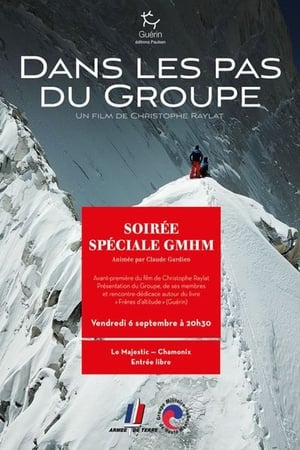
Portrait of Jean-Claude Droyer, a famous French climber and mountain guide. He is known for having participated in the rise of free climbing in France in the late 1970s. Trained at the climbing schools of Fontainebleau and Saussois, he distinguished himself in 1965 by solo climbing the Pentecôte route at Glandasse. He also made first ascents in the Verdon Gorges, winter ascents in the Prealps and the Mont Blanc massif, notably in 1971 the first solo ascent of the Directe Américaine on the west face of the Drus. The film was selected for the "Les Écrans Documentaires" festival in 2004.
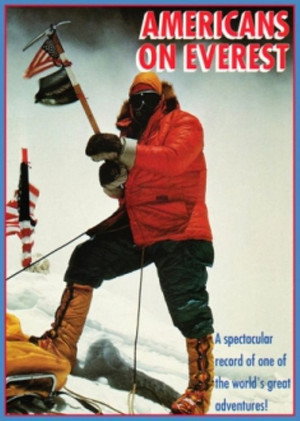
"In 1963, Swiss climber Norman Dyhrenfurth began 'a little war against a big mountain.' Leading 19 Americans, 32 Sherpas, and 909 porters carrying 27 tons of gear, Dyhrenfurth spearheaded the highly successful 1963 American Mount Everest Expedition for his adopted country. Jim Whittaker, accompanied by Nawang Gombu Sherpa made the first ascent by the Hillary-Tensing route. On May 22, Tom Hornbein and Willi Unsoeld made the first ascent by the unclimbed West Ridge. They descended by the South Col, making the first traverse of Everest. Orson Welles narrates the spectacular record, and the film includes the first ever filmed images from the summit."
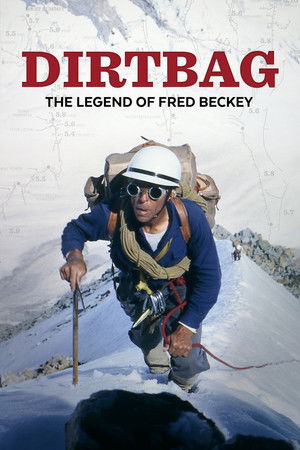
Fred Beckey is the legendary American "Dirtbag" mountaineer whose name is spoken in hushed tones around campfires. This rebel climber's pioneering ascents and lifestyle form an iconic legacy that continues to inspire generations.
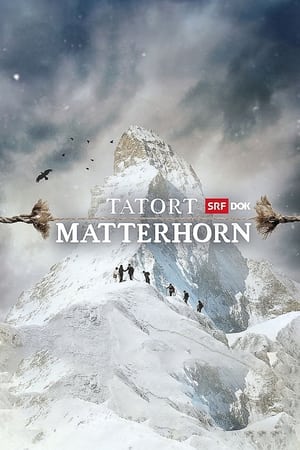
The first ascent of the Matterhorn was made on July 14, 1865 by Edward Whymper, Francis Douglas, Charles Hudson, Douglas Hadow, Michel Croz and two guides from Zermatt, Peter Taugwalder father and son. Douglas, Hudson, Hadow and Croz are killed on the descent after Hadow slips and drags the other three men down the north face. Whymper and the two Taugwalders, who survive, are later accused of having cut the rope that connected them to the rest of the group so as not to be dragged into the fall, but the ensuing investigation finds no evidence of their guilt and they are acquitted. The Matterhorn is the last great peak in the Alps to be conquered and its ascent marks the end of the golden age of mountaineering. One hundred and fifty years later, a team undertakes the same expedition in order to unravel the mystery.
We Are Still Here is a student-made documentary from the University of Puerto Rico, Mayagüez campus (UPRM) about the lives and experiences of the Peñolanos from Barrio Rucio and adjacent communities who have resisted generations of adversities due to their geographical location and at the hands of the Puerto Rican government. Centered on resistance and collective care among communities, this inaugural documentary produced by the Oral History Lab at UPRM and funded by the National Endowment for the Humanities showcases how community work by projects like Aula en la Montaña and organizations like Impacto Juventud GC Inc. demonstrate that strength lies in union and that true healing occurs through mutual accompaniment between community and volunteers.
Dans les pas du Groupe
Six blind Tibetan teenagers climb the Lhakpa-Ri peak of Mount Everest, led by seven-summit blind mountain-climber Erik Weihenmayer.
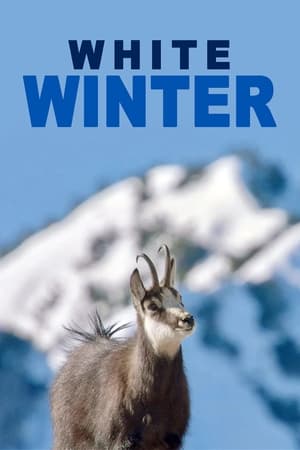
Liz Bonnin introduces a cast of charismatic animals to reveal the remarkable strategies they use to survive, and even thrive, through the winter.
Steep traces the legacy of extreme skiing from its early pioneers to the daredevils of today.
For nearly three years, director Dina Khreino interviewed world-class mountain climbing athletes, listening to what compels them to leave behind families, friends, and everyday comforts to risk everything for a fleeting glimpse into the unknown. What she found was a tribe, a diverse group of professional adventurers and amateur philosophers forged by the ultimate test of body, mind, and spirit. In the face of shifting winds, sheer granite cliffs, and impossible odds, they climb. Each for their own reason, but every one connected by the vertical world. In this rarefied air, these athletes are fundamentally changed, not just as climbers, but as human beings.
What do Daniel Webster, Dr. Seuss, C. Everett Koop, Robert Frost and 100+ Winter Olympians have in common? They all spent time at Dartmouth College, Hanover, NH where winters are long and snowy. Passion for Snow traces over 100 years of ski history in the United States with a focus on the many contributions of Dartmouth College and its alumni to the formation, growth and ongoing innovations in all aspects of snowsports. Passion for Snow combines firsthand accounts from early ski pioneers, veterans of the 10th Mountain Division, Olympians, members of the U.S. Ski Hall of Fame and top ski industry and resort executives, who explain how the most remotely located college in the Ivy League helped spawn a $25 billion industry, and continues to shape it today.
Documentary about a mountain range and surrounding area.
In southern Germany, winter can still be admired in all its glory every year. With its white coat of snow and icicles and myriads of small crystals that look like geometric works of art. In the valleys and on the slopes the snow is still so thick every year that the alpine huts are snowed in up to the windows. Cows and dairymen are safe in their farms at lower altitudes. But not the wild creatures of the mountains! They need strategies to survive the cold season and to defy snow masses, cold and ice. And some seem to do it so easily that they even raise their young in the middle of winter. But how do animals, plants and fungi cope with the annually recurring ice age, which from our perspective is a time of need? The many adaptations in nature prove that winter is an integral part of the natural cycle of the year and the living environment of species. They are adapted to cold and frost. That is why the animals and plants at the edge of the Alps suffer particularly from climate change!
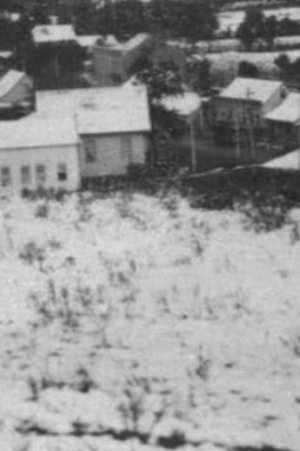
In 1928, the city of Curitiba went through a rare snowstorm. To this day, it is the harshest snowstorm to ever take place in the city. Everything was recorded by Alberto Botelho in this short documentary.
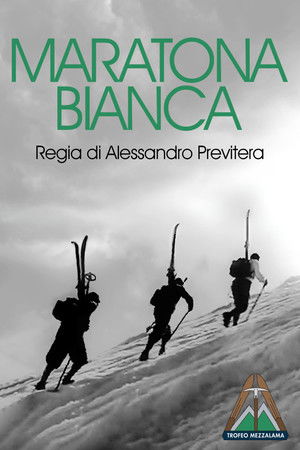
Documentary on one of the first editions of the Trofeo Mezzalama, the highest ski mountaineering race in Europe, at more than 4,200 meters above sea level, which takes place on the glaciers of Monte Rosa, from Breuil to Gressoney-La-Trinité, crossing the summits of Castor (4,199 meters) and Nez du Liskamm (4,100 meters). The film recounts the last hours of feverish preparation before the start, the teams preparing for the race linked in ropes, then follows the stages of the competition by following the groups of skiers from a plane. Created in 1933, the Trofeo Mezzalama was contested until 1938, before falling into oblivion during the war. A second version was organized from 1970 to 1973. A third biannual version has been organized since 1997.
Skiing Extreme I
Skiing Extreme II
Skiing Extreme III
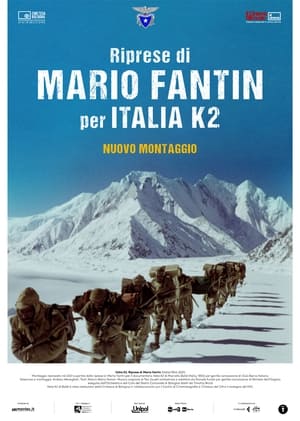
After the successful conquest of Everest in 1953, two Italians reach the summit of K2, the second highest mountain in the world, the next year,after careful preparation and the formation of the team of climbers, scientists, and porters.
Yûichirô Miura, the man who skied down Everest, journeys to an 8,000 foot mountain in the midst of a frozen antarctic wasteland to experience the incomparable thrill of skiing where no one has skied before.