The Hamburg Ballet was one of the first ballet companies internationally to return to its studios after the first lockdown. The ballet Ghost Light by John Neumeier deals with isolation and the feelings and fantasies an empty stage may evoke. Developed in fragments using small groups of dancers and under the constraints imposed by Covid-19, the choreography reflects situations, fears, relationships, memories, and emotions experienced during the pandemic.
The Royal Ballet presents the world premiere of Cathy Marston's first work for the Company on the Main Stage alongside a revival of Jerome Robbins’s timeless classic of pure dance. The Cellist is a one-act ballet about British cellist Jacqueline du Pré, from her discovery of the cello through her celebrity as one of the most extraordinary players of the instrument to her frustration and struggle with multiple sclerosis. Jerome Robbins's Dances at a Gathering is a fluid exercise in pure dance for five couples, set to piano music by Fryderyk Chopin.
County Durham, England, 1984. The miners' strike has started and the police have started coming up from Bethnal Green, starting a class war with the lower classes suffering. Caught in the middle of the conflict is 11-year old Billy Elliot, who, after leaving his boxing club for the day, stumbles upon a ballet class and finds out that he's naturally talented. He practices with his teacher Mrs. Wilkinson for an upcoming audition in Newcastle-upon Tyne for the royal Ballet school in London.
The wicked fairy Carabosse is furious she wasn’t invited to Princess Aurora’s christening. She gives the baby a spindle, saying that one day the Princess will prick her finger on it and die. The Lilac Fairy makes her own christening gift a softening of Carabosse’s curse: Aurora will not die, but will fall into a deep sleep, which only a prince’s kiss will break. The masterful 19th-century choreography of Marius Petipa is combined with sections created for The Royal Ballet by Frederick Ashton, Anthony Dowell and Christopher Wheeldon. Recorded live as part of the Royal Opera House Live Cinema Season 2019/20 with encore screenings broadcast online during the #OurHousetoYourHouse programme.
Pohádka o Honzovi
An old timbal performer in a puppet theater has a secret past.
From The Royal Ballet’s classical origins in the works of Petipa, to the home-grown choreographers who put British ballet on the world stage, this mixed programme highlights the versatility of the Company. Petipa’s Raymonda Act III is Russian classical ballet summarized in one act, full of sparkle and precise technique, while Ashton’s Enigma Variations is quintessentially British in every way – from its score by Elgar and period designs by Julia Trevelyan Oman, to Ashton’s signature style, the essence of British ballet. Concerto, MacMillan’s fusion of classical technique with a contemporary mind, completes a programme that shows the breadth of the Company’s heritage.
To speak of that ballet is very difficult because the theme is so popular as a fairy tale, adapted by Perrault from German folklore and then recuperated from the same folklore by the Grimm brothers, and what's more turned into an unforgettable film by Walt Disney. Angelin Preljocaj was thus trying to break a mould in which that character and her story had been cast seemingly for ever. And it is a success. Because first the setting, the stage direction are very interesting and rich. Rich are the costumes. Rich are the main ideas of the setting like the enormous magic mirror coming down from the sky, or like the deep underground mine turned into a vertical surface on which the seven dwarfs are dancing like dragon-flies on their strings.
An elegant, powerful and sometimes provocative look at life and death presented in BalletBoyz’s inimitable style.
Fourteen Days is a thought-provoking exploration about the methods artists employ to create their work. Given just fourteen days, 4 internationally acclaimed choreographers worked with 4 world-renowned composers to make 4 new commissions that challenge and stimulate both the audience and the dancers. Highlighting the diversity of styles and approaches, the show plays with the concept of balance and imbalance and proves to be an exciting, varied programme of dance and music.
Sergei Prokofiev's eighth and last ballet, written between 1948 and 1953. It is based on the Russian Ural folk tale The Stone Flower by Pavel Bazhov and is also the last of the trilogy of ballets Prokofiev wrote in the Russian ballet tradition. It was premiered posthumously in 1954, conducted by Yuri Fayer.
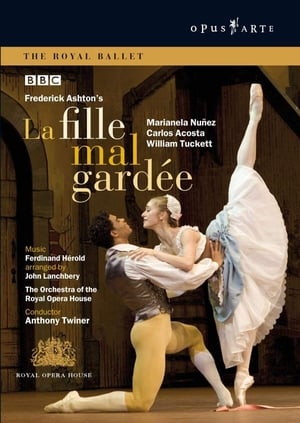
La Fille Mal Gardée (The Wayward Daughter) is a highly acclaimed comedy ballet that appeals to audiences of all generations. Some of the finest dancers have appeared in this work by Sir Frederick Ashton, which has been staged at theatres around the world, including at the Paris Opera, Bolshoi Theatre, American Ballet Theatre, Boston Ballet and National Ballet of Canada. Audiences are captivated by the storyline: will the wild young Lise fight for her love despite her desperately overprotective mother? Will she marry her beloved Colas? Or will she listen to her mother’s words and accept Alain, who is wealthy but a little bit “out of his head”? This ballet celebrates the joy of life and, above all, love. It is colourful and full of humour, with dancers who simply make audiences smile.
Going to see Nutcracker with the whole family has been a tradition in other countries for many years. Now it is a tradition in the Netherlands as well. It became apparent that the Netherlands had also adopted this tradition in 1996, when the Dutch National Ballet presented its own version of the famous fairytale ballet. It is a magical production that has won the hearts of more than 250,000 people to date. Choreographers Toer van Schayk and Wayne Eagling created a Nutcracker for the children and adults of today. It is more dynamic and exciting, and less sweet than usual. They also chose to give a Dutch twist to their interpretation of the story, with skaters on the canals and a living room that transforms into a snowy forest. Unlike the original story, the production by Eagling and Van Schayk (who also designed the delightful sets and costumes) does not take place on Christmas Eve in a German town, but during St. Nicholas celebrations in Amsterdam, around 1810.
Ain't Misbehavin' is the televised version of the 1978 Tony Award-winning Broadway sensation celebrating the music, life and times of Thomas "Fats" Waller — featuring 29 songs written or inspired by him. The telecast won Emmy Awards for Nell Carter and André De Shields.
Olympic gold medalist Peggy Fleming and six-time U.S. national champion Todd Eldredge star in this performance of the Tchaikovsky Christmas classic.
The stage musical Peter Pan starring Cathy Rigby has toured the world to great acclaim. An adaptation of the famous 1954 musical directed by Jerome Robbins and starring Mary Martin, this new version is lasting proof that J.M. Barrie's tale of the boy who would never grow up is one of the kingpins of family entertainment. All the elements are in good form for this video production shot at the Mirada Theater in 2000 for the A&E Network. Some new songs have been added to the fabulous Moose Charlap-Carolyn Leigh score (which includes "Tender Shepherd," "I Gotta Crow," "I'm Flying," and "I Won't Grow Up"). But the biggest asset to this production are the spectacular flying sequences: Peter even soars over the audience at times. Martin was a stronger actress in a close-up, but Rigby is magical with her athleticism and spark, most notably in a percussion-filled song and dance number "Ugh-a-Wug.".
Mauro Bigonzetti's ballet based on Franz Kafka, performed by the National Theatre Ballet. Choreographer Mauro Bigonzetti, fascinated by the irresistible language of Prague native Franz Kafka and the enduring relevance of his novel "The Trial," was drawn into the dark world of Josef K and created a modern dance production depicting the world of the protagonist and his hopeless struggle with a cold and heartless modern society. Bigonzatti used music by a number of composers from different historical periods, from D. Buxtehude to H. Górecki, C. Monteverdi, and M. P. Mussorgsky. This selection is remarkably balanced and surprisingly contemporary.
In 1931 Shostakovich wrote a full-length score for the Leningrad Music Hall, for a show that involved many of the leading entertainers of the day, as well as dancing girls, a jazz band, a dancing dog, sequences of silent film, simulated air-raids and gas attacks, a lorry, a storm, waiters and waitresses in a luxury restaurant, river nymphs and even a scene in Heaven with the Devil, the Twelve Apostles, the Archangel Gabriel and all the other angels doing a blasphemous knees-up. The show was naturally a momentary scandal and the score soon disappeared. In 1991 Gerard McBurney reconstructed from the surviving sketches a sequence of 21 of the orchestral numbers to make a hilarious sequence of gallops, saucy polkas, marches and schmoozy waltzes.
Christopher Wheeldon's acclaimed new Cinderella for the Dutch National Ballet is an imaginative interpretation of a much-loved classic. Inspired by the original Brothers Grimm fairy tale, Wheeldon gives the characters renewed depth and complexity, complementing Prokofiev's celebrated and colorful score. With sets and costumes by the renowned designer Julian Crouch, supported by stunning stage effects, this world premiere production is a truly magical experience, bringing an age-old fairy tale into the 21st century.
A performance film following the young ballerinas of Na Ponta dos Pés, an art school founded by Tuany Nascimento in Rio de Janeiro.