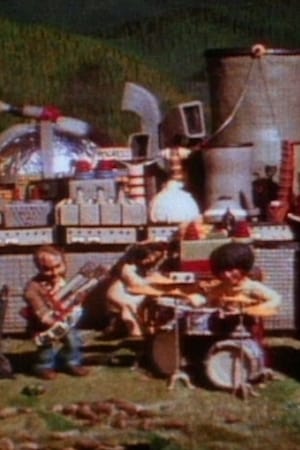
Mountain Music illustrates what happens when technology gets too advanced too soon. Preserved by the Academy Film Archive in 2012.
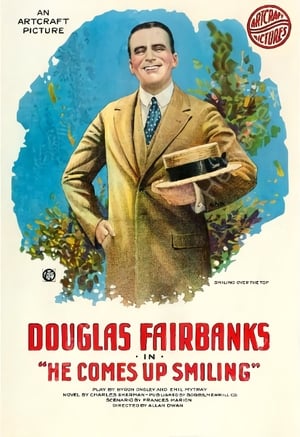
Jerry Martin quits his dull job as a bank clerk and falls in with a band of hobos. He takes on the guise of Bachelor, the "king of the market," and finds himself pursued by dangerous men who are after the real Bachelor. *Only fragments are known to exist. Preserved by the Academy Film Archive in 2010.
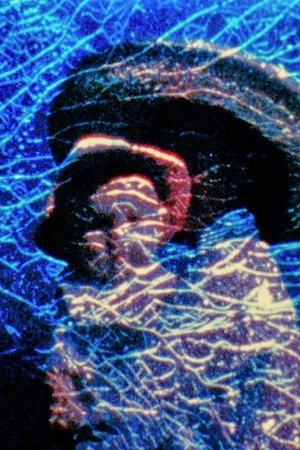
"Color/form, light/shadow, flatness/depth, figuration/abstraction, landscape/paint, all collaging and colliding in an exploratory, arrhythmic, kinetic dance constructed a frame at a time by Fred Worden on his optical printer. This early film now reveals itself as a revelatory early warning sign of Worden's filmmaking to come, comprising ten minutes extrapolated from only four frames of source imagery." (Mark Toscano) Preserved by the Academy Film Archive in 2009.
Produced by the Army Pictorial Service, Signal Corps, with the cooperation of the Army Air Forces and the United States Navy, and released by Warner Bros. for the War Activities Committee shortly after the surrender of Japan. Follow General Douglas MacArthur and his men from their exile from the Philippines in early 1942, through the signing of the instrument of surrender on the USS Missouri on September 1, 1945. Preserved by the Academy Film Archive in 2013.
Musing on the past and the present, on roads not taken and the road I was already on. For Jeanine Hayden and her son Jeff, wherever you are. Preserved by the Academy Film Archive in 2012.
A virtuosic study of sync-sound cinema, Cagean organizational strategies, and montage. Preserved by the Academy Film Archive in 2009.
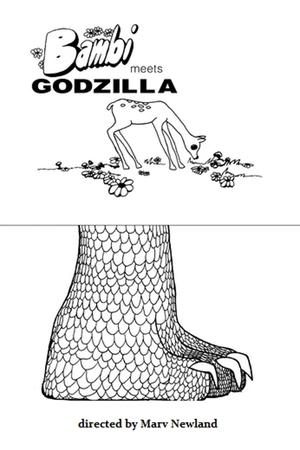
A deer, disillusioned by the consumerism that defines his life. A lizard, ostracized from society, forever wandering. A chance meeting in the middle of a field. Who will survive? And who will transcend existence? Preserved by the Academy Film Archive in 2009.
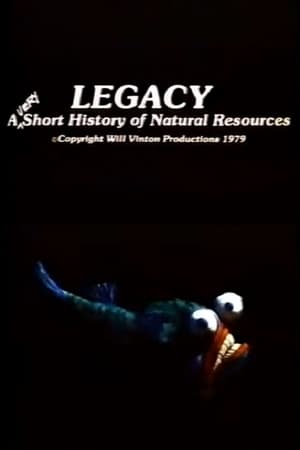
Legacy takes the audience on a rapid-fire journey through the evolution of the world, starting with a cosmic bang, evolving through billions of years of plants, animals and the creation of natural resources, ending with man and his bounty – “sitting on his world contemplating his coconut”. Preserved by the Academy Film Archive in 2012.
Impoverished priest Harihar Ray, dreaming of a better life for himself and his family, leaves his rural Bengal village in search of work. Alone, his wife, Sarbojaya, looks after her rebellious daughter, Durga, and her young son, Apu, as well as Harihar's elderly aunt Indir. The children enjoy the small pleasures of their difficult life, while their parents suffer the daily indignities heaped upon them.
The animation, music, and optical printing of Kitsch in Synch was produced by Beckett and the students in two classes he was teaching at CalArts. Although a group project, it is clear that Beckett was the director. The playful, catchy soundtrack is used to create a cycle of building tension and release. The brightly colored shapes create approximate symmetrical formations and become more densely layered, with glimpses of iconographic objects and even live footage near the end. Preserved by the Academy Film Archive, in partnership with the iotaCenter, in 2007.
A description and enactment of the discovery of gold by James Marshall, and the role played by John Sutter. Preserved by the Academy Film Archive.
"Taken between September 1970 and May 1971, with the unmoving camera apparently bolted to the window ledge, this film, a ten-minute eternity, chronicles what takes place within view of the lens. The backdrop is a typical New York pizza stand, the actors are selected New Yorkers who happened to be there during the half year, the plot is the somewhat sinister aimlessness of life itself." - Donald Ritchie, Museum of Modern Art, NY. Preserved by the Academy Film Archive in 2014.
A lyrical recreation of Lightnin’ Hopkins’ decision at age eight to stop chopping cotton and start singing for a living. Preserved by the Academy Film Archive in 2013.
An mutoscope motion picture installation commissioned for the 86th anniversary of the Guggenheim museum. Later preserved and turned into a short film. Preserved by the Academy Film Archive in 2000.
‘A beautiful, mysterious yet satisfying optical illusion…celebrates the early passing of a steam on the Thames. Using freeze-frame techniques, elaborate dissolves, and most of the resources on the optical table, this picture is, amongst other things, a Turner come to life. Rimmer’s concern with the surface nature of the film is most evident in this work which, in spite of its filmic complexity, is incredibly simple.’ — Donald Richie. Preserved by the Academy Film Archive in partnership with Pacific Cinematheque in 2013.
Adopting its title from a poem by Edna St. Vincent Millay, What’s Out Tonight Is Lost is an elegiac film sifting through the unrecoverable. The film is a reflecting pool where vision breaks up. Preserved by the Academy Film Archive in 2010.
Is it happening in the screening room or on the screen; in a snowstorm or inside; what isn't surrounding and what is? From filming Ann sewing, on a grey winter day. Preserved by the Academy Film Archive in 2016.
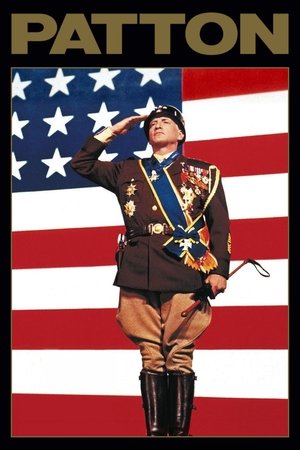
"Patton" tells the tale of General George S. Patton, famous tank commander of World War II. The film begins with Patton's career in North Africa and progresses through the invasion of Germany and the fall of the Third Reich. Side plots also speak of Patton's numerous faults such his temper and habit towards insubordination.
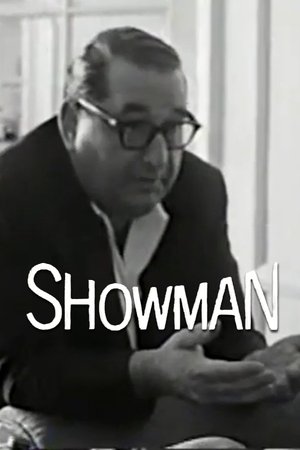
Albert and David Maysles (Gimme Shelter) directed this 53-minute documentary about movie tycoon Joseph E. Levine (1963).
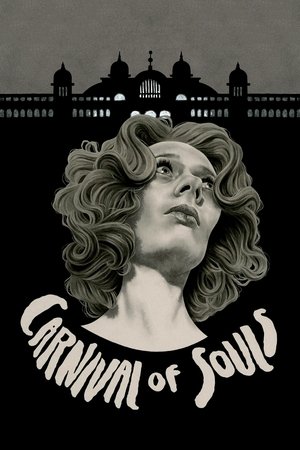
Mary Henry ends up the sole survivor of a fatal car accident through mysterious circumstances. Trying to put the incident behind her, she moves to Utah and takes a job as a church organist. But her fresh start is interrupted by visions of a fiendish man. As the visions begin to occur more frequently, Mary finds herself drawn to the deserted carnival on the outskirts of town. The strangely alluring carnival may hold the secret to her tragic past.