A political drama with elements of a thriller discusses politics, electoral fraud, and the decay of moral values, taking place in the fictional town of Rovte under the idyllic Alps. Franta, a corrupt mayor, is about to lose the election. After a TV debate, where he fails utterly, Franta calls his mistress Jozica in desperation. She advises him to seek the aid of Fleischmann, a criminal who is the only one capable of solving the problem on such short notice. After all, there are only four days left until the elections.
Depicted on the backdrop of 1651 when the emperor was Shahjahan and the subadar of Bengal was Shajada Suja. Amidst the conspiracies of the royalty, a young man decides to expose the schemes and reunite with his lover after the Nasimpur territory of Bengal gets occupied by a Mughal prince.
In 1973, when Frank Bledsoe and his 18-year-old niece Beth take a road trip from Manhattan to Creekville, South Carolina for the family patriarch's funeral, they're unexpectedly joined by Frank's lover Walid.
Three 11-year-old kids Scotty, Macon, and Tamika arrive at the Super Space Station. The station has been built to help save humanity. But not everyone wants the station to succeed, and there are competing corporations that will stop at nothing to see this.
The Boat People is a psychological thriller. Jared is taken to the coast by his new girlfriend, Alice. They stay in the seaside cottage she's owed all her life with her sister, Cleo. As soon as he gets there, Jared begins to have haunting dreams.
In ancient Egypt, Queen Neco Tokris angers the high priest by falling in love with a minor cleric. The high priest arranges for his rival to be stoned to death, and the queen, rather than submit, allows herself to be buried alive with her lover's body. Many centuries later, a ship steams toward Cairo, Egypt. Among its passengers are wealthy playboy Reginald Stanhope; vaudeville dancer Celia Thaxter and her manager, Gregory Gallup, who together are maneuvering Reginald into marrying her. Also aboard are Herbert Boone, a shell-shocked drug addict, and his nagging wife, Adele; Kelim Pasha, an Egyptian prince who attracts Adele Boone's affections; and Mahmud, an Egyptian mystic who insists that Celia Thaxter and Herbert Boone are the reincarnations of an ancient Egyptian queen and a priest who sacrificed themselves for their love.
Richard Boyd, a wealthy idler who has inherited the Boyd Shipping Company, decides to prove himself to his fiancée, Pauline. A fleet of ships on which the company has an option is coveted by Oriental merchant-tycoon J. Young. Aided by Andrew Dunn, general manager of the Boyd concern, Young has Boyd and Pauline shanghaied; and Sam, his Negro valet, follows. Following a spectacular shipwreck, the couple are rescued; there is a race between a hydroplane and a motorboat; but after a series of exploits in Young's stronghold, Richard, aided by Sam, gets the ships and the girl.
An LGBTQ+ Love Story Like No Other
Golpe Fantasma
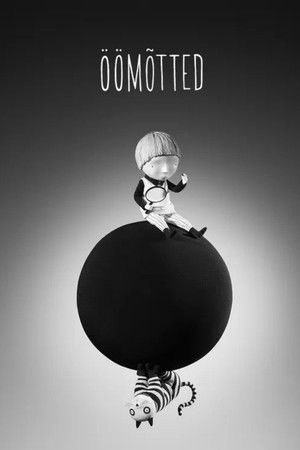
"Miserable me. Two plates are screwed to my temples", Franz thought, closing his eyes. A dark abyss, the mad court, the sentence to be served in the form of everlasting insomnia.
After 20 years of living together, Carine, Fabrice and their son have a well-ordered daily life. While Carine is restricted to household chores, Fabrice watches TV all the time, each in their own space, their eyes no longer meet.
Mr Lam is an old man, losing his memory since his wife died. The last day of "the insects' hibernation", he receives an unexpected visit from Ms. Meng, Taoist exorcist determined to chase demons out of his head.
Part three of the trilogy, centred on the Swiss tenor August Schram, is now located in an opera house during a running performance of Donizetti's humorous melodrama "L'elisir d'amore" and furnished with a memorable cast of characters.
Works inspired by artists Basquiat, Banksy, Haring, and Ai Weiwei represent Bukowski's poem's theme of self-invention.
A dancer as filmmaker refrains from superfluous movement in a villa in Brittany, giving way to an individual as well as social state described by the French philosopher Paul Virilio as "polar inertia".
Japanese trains. Non-places. An intense travel experience through time and space. From Matsuo Bashō's haikus to images of a vanishing world created by Hokusai in Manga catalogues.
Inspired by William Greaves' 1968 experimental documentary Symbiopsychotaxiplasm, Camp Sasi attempts to make a version of his own.
'Why Don't You Dance?' is a short film adaptation of a story by American writer Raymond Carver from his collection 'What We Talk About When We Talk About Love'. The film explores just that: what it means to talk about love, to find love in unexpected places and to let love change you in ways you would never predict it could. The film follows three people as they search for answers about themselves, the world around them and each other. It's a portrait of self-knowledge, love and independence.
To an attentive passer-by, the activities of some painters seem very suspicious. As a result of their artistic efforts, the anti-occupier slogan AMI GO HOME appears to have appeared on the wall. The outraged citizen does not succeed in persuading the craftsmen to remove the writing - he only receives amusement. The police, who were finally alerted, and the representatives of the occupying power were unable to find anything offensive about the lettering, as the full company name "Armin Gotzschomer" had developed from the letters in the meantime. In the evening, however, the lettering does convey the presumed message AMI GO HOME, as the painters have highlighted some of the letters with fluorescent paint.