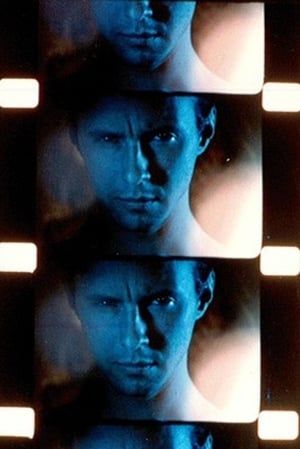
“Faust Part 2” reveals the modern Faust in a romantic interlude, an idyll (from the Greek idein, "to see"); also, a journey of the id. A sense of story is inferred through the complex interweaving of human gesture, expression, and bodily movement within vibrantly shifting colours and rhythmic development, creating multiple levels of metaphorical meaning. A collaborative work with paintings by Emily Ripley and soundtrack by Joel Haertling.
Produced in association with the Academy of Motion Pictures Arts and Sciences as part of a twelve part series called The Industry Film Project, meant to inform the public about specific facets of production and industry life. Movie theaters are located in most towns. They bring to the public not only one of the most affordable forms of mass entertainment but many other aspects of life through the films shown and through the theater's other uses. As a business, the theater is a vital part of the economic community, employing people, but also dependent on the public for its livelihood. The theater manager is the key person who ensures that every aspect of the theater runs smoothly. As the key business person for the establishment, he is also usually an integral part of business and community organizations in the town. He also ensures that the theater shows what the public wants to see, which can be a difficult task. Preserved by the Academy Film Archive in 2012.
On the day they move apartments, a couple struggles to get everything in order before the landlord arrives for a final inspection.
The making of Cleopatra (1934), showing pre-production, DeMille directing a scene, and the addition of music to the soundtrack.
A promotional film for United States Savings Bonds
An anatomy of violence. Four young men and two young women are on a drive. There's a rivalry between two guys for one of the girls. On a remote road, the car stalls. The driver hitchhikes for help. Led by the intrepid girl, the others walk toward abandoned buildings, perhaps a mining operation. One of the three guys sits and reads. The intrepid one explores the building and sees something that scares her. She screams; the two rivals and the second girl run to find her. Something she says starts a fight between her two suitors. The one reading a book walks away in disgust. After stopping the fight, the two young women follow. How can this end? Preserved by the Academy Film Archive in 2005.
Combines airplane trips and fashion. Heavy on the fashion.
Promotional film about Lockheed aircraft using test pilots and speed records to show how Lockheed was at the forefront of aviation technology during the 1930's and 1940's. Famous pilots including the Wright Brothers, Amelia Earhart, Mr. and Mrs. Charles Lindbergh and Howard Hughes are shown along with the latest aircraft designs such as the P-38 fighter.
"Everything You Ever Wanted in a 16mm Projector" is an RCA promotional film made for the RCA 1600, probably in the mid-1960s. Yes, everything . . . brilliant pictures, superb sound, simple operation, smooth, safe film handling, instant performance, good looks, light weight, ruggedness — even an automatic threader that never touches the film !
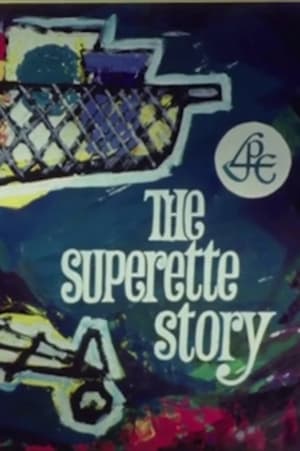
A look at the sales practices employed at the LPE Superette run by John Beasley on Berwick Street market.
Céline Dion – Céline Parle D'elle(s)
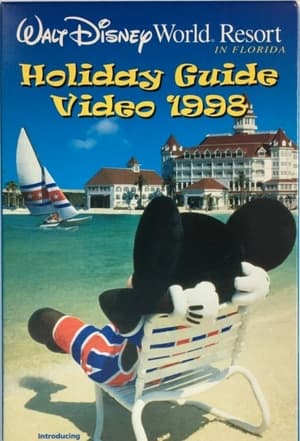
Presenter Andrea Boardman adventures through all of the Disney theme parks, dining options, Water parks, Downtown Disney area and hotel resorts that were available at the Walt Disney World resort in 1998.
A behind-the-scenes look at the creation of Walt Disney Animation Studios' MOANA, as aided by the Oceanic Story Trust.
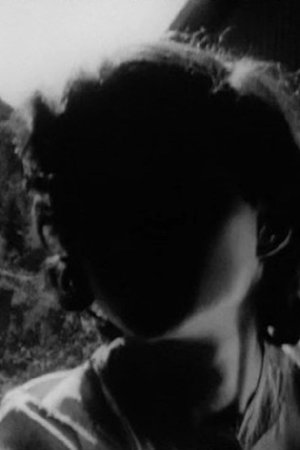
This, then, finishes eleven years of editing drawing on 30-some years of photography. I will surely work autobiographically again, but the modes of SINCERITY and DUPLICITY seem completed with this film which on the one hand is as simple in its integrity-of-light as those follow-the-ball "sing-along" early silent movies and on the other as complicated as teen-age metamorphosis. Childhood dissolves in flame, struck from the hearth.
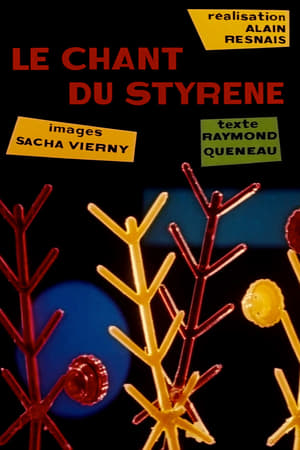
Le chant du Styrène is a 1958 French documentary film directed by Alain Resnais. The film was an order by French industrial group Pechiney to highlight the merits of plastics.
At the dedication of a new road sign, Dan McGurk tells the story of his forebears and how they helped transform rutted dirt roads into the modern highways of today. He speaks of the benefits of the trucking industry and how it depends on the nation's roadways, and he rails against regulations that make the industry less efficient and profitable. After recounting the amounts the trucking industry pays in taxes, he watches the unveiling of the sign naming the highway The McGurk Way.
In this "Romance of Celluloid", MGM showcases performers whose careers are just starting. Excerpts from their recently released films are included. The narrator says that moviegoers will have to decide whether these fledgling actors and actresses have that certain quality that made superstars out of MGM players Clark Gable, Spencer Tracy, and Lana Turner.
This is a film made in Toronto, in memoriam, so to speak - a memory piece, a "piecing-together" of the experience of living there. The consciousness of the maker comes to sharply focused visual music - not to arrive at snapshots, as such, but rather to "sing" the city as remembered from daily living...complementary, then, to an earlier film, "Unconscious London Strata." Preserved by the Academy Film Archive in 2015.
"Firstly, I revealed in salutary confession the secret filth of my misdeed, which had long been festering in stagnant silence; and I made it my custom to confess often, and thus to display the wounds of my blinded soul..." (Petrarch, 1352, in a letter to his brother). I wish to avoid any "classical" misunderstandings of the above quote by stating clearly here that any sacrifice of love is, yes, "filth" or at the very least "misdeed." An academic reading of Petrarch tends to bias thought that there are kinds of love which might be wrong: I do not believe this. (SB)
Dating to 1957, "Men Mail and Machines" is a film presentation of the new electronic and automatic devices being installed in some of the major post offices of the nation in that era. This film shows the U.S. Postal Service and its efforts to handle the massive volume of mail efficiently. It highlights the challenges faced by the Postal Service due to the high volume of mail and the outdated methods previously used. Postmaster General, Arthur E. Summerfield explains the introduction of modern technologies and systems to improve mail handling, such as automated sorting machines and new vehicles for mail carriers. The film also discusses the need for better working conditions for postal workers and the financial challenges in implementing these improvements. Overall, it emphasizes the importance of modernization to provide better mail service to the public.