Hiroshima: The Race Toward the Apocalypse
A German Documentary about the “village of friendship” that was created by American Veteran George Mizo to help the Vietnamese kids suffering from the Vietnam War.
The destruction of the traditional legal system is probably one of the lesser-known yet essential goals of the Nazi state. The aim was to establish the supremacy of the "people's community" over the individual by subjugating the judicial system. The documentary looks at the careers of four people who were actively involved or became victims.
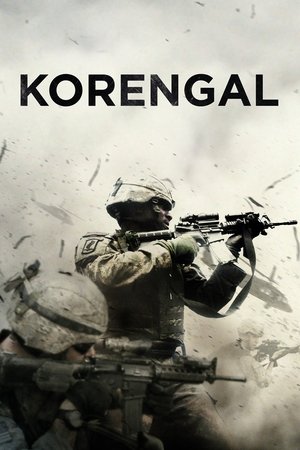
Korengal picks up where Restrepo left off; the same men, the same valley, the same commanders, but a very different look at the experience of war.
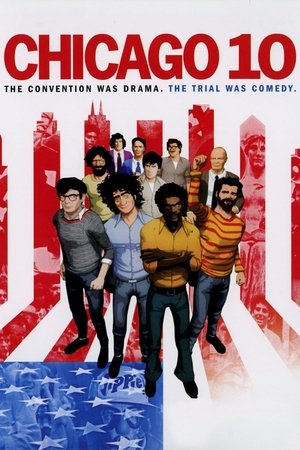
Archival footage, animation and music are used to look back at the eight anti-war protesters who were put on trial following the 1968 Democratic National Convention.
Michael Franti, winner of the San Francisco Foundation 2009 Community Leadership Awards (the Helen Crocker Russell Award) - artist, activist, founder of Spearhead, for embodying a social movement of justice and activism and being a voice for the vulnerable. By founding the music groups Spearhead and the Disposable Heroes of Hiphoprisy, as well as the Power to the Peaceful festival, Michael built an underground movement to spread a message of social justice and advocated for underrepresented people. His recent film, I Know I'm Not Alone, highlights the human cost of war and empowers people to utilize their vote and recognize their collective power to impact American foreign policy.
This deeply affecting documentary follows a small number of Israelis and Gazans through the most dramatic and tragic year of their lives. Using personal and previously unseen footage, it tells the story of the war in Gaza and the October 7 attacks through deeply emotional stories from both sides of the conflict. In Gaza, the film follows three individuals from reaction to the October 7th attacks to the start of the bombing by the Israeli military and to the loss of family members that all three suffer. In Israel, we witness footage of the Israeli characters, as they and their family members are attacked by Hamas on October 7th and then follow their stories through the year.
Errol Morris examines the incidents of abuse and torture of suspected terrorists at the hands of U.S. forces at the Abu Ghraib prison.
Jean Moulin lived several lives: unifier of the French Resistance, martyr tortured by the Gestapo, forgotten after the war, and then hero. From obscurity to prominence, Jean Moulin's name has remained linked for 70 years to that of his executioner, Klaus Barbie. This historical connection has contributed to the Resistance fighter's enduring legacy. The film retraces the paths of Jean Moulin and Klaus Barbie, head of the Gestapo in Lyon, from November 11, 1942, to June 21, 1943, the date of Jean Moulin's arrest.
Since the defeat, the Nazis, who were the masters of the occupied zone, and the French State, which had been ruling the so-called free zone since Vichy, ordered the Jews to take a census. From the spring of 1941, whether they had been French for several generations or naturalized for a few years, foreigners who had taken refuge in France or stateless people who had been driven out of their country, they were put on file, arrested or threatened at any time. Some wrote to the administration, or directly to Marshal Pétain, who seemed to them to be the last resort. These requests are called Suppliques. Men, women, sometimes children, tried as best they could, by all means, to loosen the trap. They address themselves to their executioners, but they do not know it.
In the year following the 9/11 terrorist attacks, young journalist Claude Baechtold finds himself in the war zone of Afghanistan. Not entirely voluntarily, the avowed anti-militarist is dragged by two fearless reporters on a round trip through the entire country.
Five young Ukrainians discuss life following the Maidan Revolution of 2014. Not all fought in the Russian-Ukrainian war, but it, regardless, shattered their life plans. Representing 'Generation Maidan', they face the question of how to cope with experiences of violence, how to go on. A local theatre director produces Hamlet, wherein they can use Shakespeare’s tragic character as a mirror and face their traumas onstage. For them, 'to be or not to be' is not simply text but an existential dilemma with no clear answer.
In 1992, the Yugoslav army and Serbian paramilitary forces captured one-third of Croatia as the country was engulfed in a state of war. A squad of fighters is defending their position in the small but strategically significant village of Sunja, where the invaders have surrounded them on three sides. Ivan Salaj, a young and gifted director who was still enrolled in film school at the time, chooses to use their story as the subject of his student film. Considered one of the most important films from a period when Croatian independence was still at stake, it provides an accurate portrayal of life on the front lines. What makes Hotel Sunja even more special is that it was made by a group of students who risked their lives to make the movie.
Made refugees by the war in Ukraine, Olga and her granddaughter Milana travel to a summer camp in the Austrian Alps to test the limits of their own bravery, and to strengthen their growing bond.
During the Syrian civil war, the district of Yarmouk, home to thousands of Palestinians, became the scene of dramatic and ferocious fighting. The film follows the destiny of civilians during the brutal sieges, imposed by the Syrian regime, that took place in the wake of the battles. With his camera, Abdallah Al-Khatib composes a love song to a place that proudly resists the atrocities of war.
Personal stories from civilians, children, soldiers, doctors, the country’s elderly, journalists, religious leaders, and international volunteers - a handful of the millions of people whose lives have been turned upside-down by nine years (and counting) of Russian aggression against Ukraine.
September 3rd, 1939. Britain and France declare war on Nazi Germany, only two days after the Wehrmacht invades Poland. This day, the sad date when the fate of the world changed forever, the Phoney War began: eight months of uncertainty, preparations, evacuations and skirmishes.
Belgique nazie
By invading this "state fiction" that is, according to him, Ukraine, Vladimir Putin takes up the motto of the tsars: "sovereign of all Russia, the great, the small and the white". The first would have Moscow as its capital, the second, kyiv, and the last, Minsk.
As the war wages on, Ukrainians under everyday threat find ways to live. A soldier returns home, a chaplain grapples with the weight of responsibility, and a mother grieves the loss of her family. These stories, amidst others, are a testament of Ukraine’s history, perseverance and plea to be remembered.