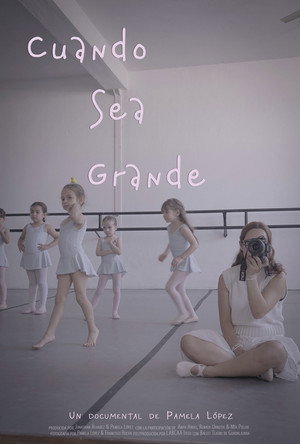
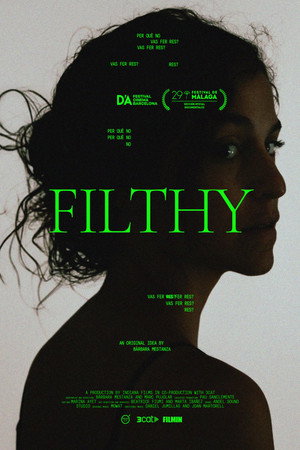
The reunion of a childhood friendship. Lis, a current fashion designer, meets with Caterina, a filmmaker, to jointly create the documentary and a costume for the premiere.
When one thinks of the American Deep South, the image of veiled Muslim students strolling the University of Alabama campus is the last thing that comes to mind. VOICES OF MUSLIM WOMEN FROM THE US SOUTH is a documentary that explores the Muslim culture through the lens of five University of Alabama Muslim students. The film tackles how Muslim women carve a space for self-expression in the Deep South and how they negotiate their identities in a predominantly Christian society that often has unflattering views about Islam and Muslims. Through interviews with students and faculty at Alabama, this film examines representations and issues of agency by asking: How do Muslim female students carve a space in a culture that thinks of Muslims as terrorists and Muslim women as backward?
An intimate portrait of Alabama public interest attorney Bryan Stevenson, founder and executive director of the Equal Justice Initiative, who for more than three decades has advocated on behalf of the poor, the incarcerated and the condemned, seeking to eradicate racial discrimination in the criminal justice system.
Whether famous or anonymous, stars or prisoners, models or sex workers, women have always been at the center of Bettina Rheims' photographic work since her debut in 1978. Both subversive and glamorous, trashy and sophisticated, her photographs mark and bear witness to the upheavals of the era, which this leading photographer both anticipated and accompanied.
Women are sexually insulted and threatened by men every day. Experts around the world are registering an anti-feminist backlash that seems to be on the verge of becoming socially acceptable. Particularly affected: women in publicly visible positions – such as politicians, actresses or entrepreneurs. Who is behind the attacks and what are the motives?
After their mother's femicide, three siblings are separated and forced to live in different places. Years later they gather to raise their voices and fight to be made visible in a country where orphans for femicide are ignored by the state and invisible to society. It's up to them to tell their story.
This short documentary is the portrait of an 88-year-old woman who lives alone in a log cabin without running water or electricity in the Williams Lake area of British Columbia. The daughter of a Shuswap chief, Augusta lost her Indian status as the result of a marriage to a white man. She recalls past times, but lives very much in the present. Self-sufficient, dedicated to her people, she spreads warmth wherever she moves, with her songs and her harmonica.
A state of secrets and a ruthless hunt for whistleblowers – this is the story of 25-year-old Reality Winner who disclosed a document about Russian election interference to the media and became the number one leak target of the Trump administration.
In rural Nepal, Bishnumaya Gurung, 48 and Palhamu Sherpa, 66 go to primary school everyday and make space for learning in their lives as single women.
The modern criminal justice system is hindered by the fact that countless rape kits remain untested in police evidence storage facilities across the United States. Only eight states currently have laws requiring mandatory testing of rape kits.
A 90-minute special reuniting the main cast of the American sitcom, "The Golden Girls", where they share their favorite moments from the show, behind-the-scenes footage, and plenty of laughs
In Russia, criticizing the war in Ukraine or Vladimir Putin’s regime has become a crime. Thousands of ordinary citizens are being arrested, tried, and imprisoned. They are called “Politzek”: political prisoners. Filmed clandestinely over the course of more than a year, Politzek gives a platform to those who, despite the fear, continue to speak out against Putin’s repressive Russia. Through the intersecting stories of a teenager sentenced to five years in prison for criticizing the government on social media, a young artist jailed for placing anti-war stickers, a human rights activist, and two theater directors facing Kafkaesque trials, the film unveils the machinery of state repression in Russia. With rare footage, broken yet unyielding voices, this is a story of silenced resistance.
This documentary by Léa Clermont-Dion and Guylaine Maroist plunges us into the vortex of online misogyny and documents hatred towards women. This bleak opus, reminiscent of a psychological thriller, follows four women across two continents: former President of the Italian parliament Laura Boldrini, former Democratic representative Kiah Morris, French actor and YouTuber Marion Séclin, and Donna Zuckerberg, a specialist in online violence against women and the sister of Facebook’s founder. This tour de force reveals the devastating effects such unapologetic hatred has on victims, and brings to light the singular objective of cyber-misogyny: to silence women who shine. Some targets of cyber-violence will crumble under the crystallizing force of the click. Others, proud warriors, will stand tall and refuse to be silenced.
Between 1979 and 1987, a far-left group wreaked havoc across France. Robberies, bombings, assassinations. They struck hard and disappeared in a cloud of explosives, leaflets scattered in the wind, and relentless ideological demands. Their name? Action Directe. More than 80 attacks, 26 wounded, and 12 dead in less than ten years. Stunned French citizens discovered posters plastered everywhere showing portraits of these young women and men who looked like everyone else and whom nothing seemed to be able to stop. A long and intense manhunt began, culminating in the arrest of the group's leadership.
In this evocative meditation, a disturbing link is made between the resource extraction industries’ exploitation of the land and violence inflicted on Indigenous women and girls. Or, as one young woman testifies, “Just as the land is being used, these women are being used.”
On the evening of March 11, 1950, Annabella Bracci, a 12-year-old girl, was brutally killed and thrown into a pit on the outskirts of Rome, near the village of Primavalle. A brief and poetic account of the events and their impact on an impoverished community. A handful of wild flowers and a painful catch in the voices.
The cinema of Pernambuco is considered one of the most complex components of Brazilian cinema, particularly for its potency and creative style. The presence of women in filmmaking seldom holds the same historical notoriety as that of men, and the Pernambuco scene is no exception. In the context of "Amor, Plástico e Barulho" (Love, Plastic, and Noise), we find a film that serves as a testament to the marginalization of women in the creative industry, intertwining themes of consumption and the production of brega music. Hence, we use "Feminino e Barulho" (Feminine and Noise) as a means to share what we've learned. Renata Pinheiro has inspired us to craft a narrative that gives voice to those who need to be heard. We are here to showcase a glimpse of them and what they represent. "Feminino e Barulho" is a short film about love, femininity, sisterhood, and empowerment.
Punk music icons, Lunachicks, reunite after 20 years in an unfiltered, hilarious, and electric documentary. Packed with rare archival footage, the film traces their rise from gritty NYC teens to feminist trailblazers of the 90s grunge era. Fans and newcomers alike will thrill as the band recounts old antics, rekindles bonds, and embarks on their long-awaited journey back to the stage.
Anita Chitaya has a gift: she can help bring abundant food from dead soil, she can make men fight for gender equality, and maybe she can end child hunger in her village. Now, to save her home in Malawi from extreme weather, she faces her greatest challenge: persuading Americans that climate change is real. Traveling from Malawi to California to the White House, she meets climate sceptics and despairing farmers. Her journey takes her across all the divisions that shape the USA: from the rural-urban divide, to schisms of race, class and gender, and to the American exceptionalism that remains a part of the culture. It will take all her skill and experience to help Americans recognise, and free themselves from, a logic that is already destroying the Earth.
Three women share their experience of navigating the app-world in the metro city. The sharings reveal gendered battles as platform workers and the tiresome reality of gig-workers' identities against the absent bosses, masked behind their apps. Filmed in the streets of New Delhi, the protagonists share about their door-to-door gigs, the surveillance at their workplaces and the absence of accountability in the urban landscape.