In 1910, the Parisian Albert Chapon and the Genevan Louis Arlaud filmed the ascent of Portjengrat (3,654 m) in the Penine Alps. The resulting film was a short 172 meters long produced by the Société Française des Films et Cinématographe Eclair. The film was released in UK by the Tyler Film Company under the title of 'Ascent of Portjengrat'.
The Alps – wild mountains, extreme lives, but also a magical world. This majestic mountain range connects eight countries and reaches heights of up to 4,000 metres above sea level. At a length of 1,200 kilometres, the Alps form both a connecting bridge between western and eastern Europe and a high barrier between southern and central Europe. The mountains act as a mighty water reservoir and continental watershed, feeding innumerable rivers that flow into three different oceans. Their highest peak, Mont Blanc, is surrounded by long, soaring mountains with ice-covered slopes. These great summits are just one reason the so-called “Roof of Europe” continues to fascinate – across the continent and around the world. The incredible diversity of landscapes, flora and fauna makes the Alps a unique natural treasure at the heart of Europe.
The Kurdish Iraqi poet and actor Zeravan Khalil travels with his dog through an Alpine gorge after fleeing from IS war and genocide. As he remembers the abomination, he writes a poem with the title “You drive me mad” in Kurmanji Kurdish. In his home country, Yazidic Kurds are forbidden to work in his profession. Then he eats his apple and wanders through Europe’s middle with more hope.
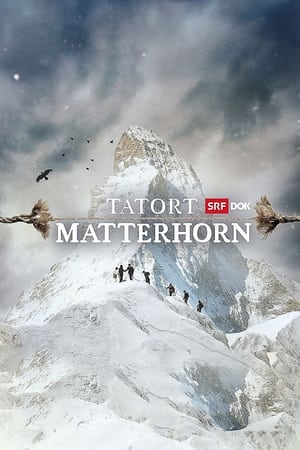
The first ascent of the Matterhorn was made on July 14, 1865 by Edward Whymper, Francis Douglas, Charles Hudson, Douglas Hadow, Michel Croz and two guides from Zermatt, Peter Taugwalder father and son. Douglas, Hudson, Hadow and Croz are killed on the descent after Hadow slips and drags the other three men down the north face. Whymper and the two Taugwalders, who survive, are later accused of having cut the rope that connected them to the rest of the group so as not to be dragged into the fall, but the ensuing investigation finds no evidence of their guilt and they are acquitted. The Matterhorn is the last great peak in the Alps to be conquered and its ascent marks the end of the golden age of mountaineering. One hundred and fifty years later, a team undertakes the same expedition in order to unravel the mystery.
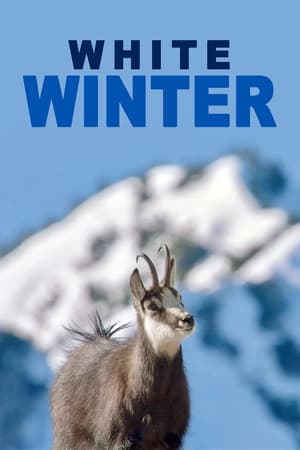
In southern Germany, winter can still be admired in all its glory every year. With its white coat of snow and icicles and myriads of small crystals that look like geometric works of art. In the valleys and on the slopes the snow is still so thick every year that the alpine huts are snowed in up to the windows. Cows and dairymen are safe in their farms at lower altitudes. But not the wild creatures of the mountains! They need strategies to survive the cold season and to defy snow masses, cold and ice. And some seem to do it so easily that they even raise their young in the middle of winter. But how do animals, plants and fungi cope with the annually recurring ice age, which from our perspective is a time of need? The many adaptations in nature prove that winter is an integral part of the natural cycle of the year and the living environment of species. They are adapted to cold and frost. That is why the animals and plants at the edge of the Alps suffer particularly from climate change!
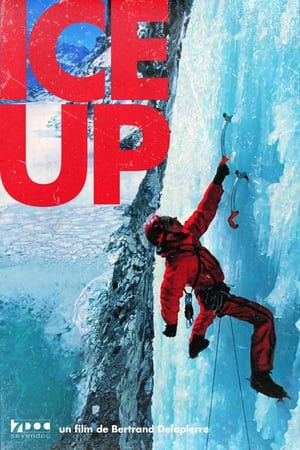
Unique shapes, no two the same, formed by the action of water and frost. The water that once ran from the summits in torrents and waterfalls is immobilized for a few weeks. The thing is to be there, in time, just at the moment when they become solid, just before they return to water. A question of balance. Around seven top-level climbers who represent all the richness of the activity, these images will highlight different techniques and different approaches. Although the athletic performance is impressive, it is there only to emphasize the dazzling shapes, the warmth of friendships, the stories of teamwork.
The Tyrolean David Lama has climbed an 8a route already at the age of ten, and he has become several times Youth World Champion and European Youth Champion in bouldering and lead climbing. In 2010, at the age of 20 years, David decided to leave the indoor climbing and competition world behind him. Since then, he is focusing on Alpinism, the most difficult routes and first ascents in the Alps, but as well in India and America. This documentary portrays David Lama from his first climbing attempts as a little boy to his big adventures in present time. We see famous locations, such as the climbing paradise on Lake Garda, the notorious Sagwand Face in the Zillertal Alps, and the 7.821m high Masherbrum in the Karakorum with its still untouched north east face.
A climatologist, a physicist, and a volcanologist set out to conquer the highest peak in the Alps. Through exceptional images, the film recounts their odyssey and reveals the immense wealth of this natural laboratory. Straddling France, Italy, and Switzerland, the Mont Blanc massif was formed 240 million years ago. Four times the size of Paris, it covers 400 km2. Its summit, the highest in Western Europe, rises to 4,810 meters. Three scientists begin its ascent: Martine Rebetez, a Swiss climatologist; Étienne Klein, a philosopher and physicist at the French Atomic Energy Commission; and Jacques-Marie Bardintzeff, a geologist and volcanologist. Advancing in two roped teams, they are accompanied by Jean-Franck Charlet and François-Régis Thévenet, mountain guides, as well as physiologist Hugo Nespoulet.
PURE is 19 extraordinary climbers in six countries on three continents; Nalle Hukkataival: This young climber from Finland spent his time on the World Cup circuit and now focuses on climbing some of the toughest rocks on the planet. Kevin Jorgeson: Exclusive footage of his first solo ascents in California. A unique perspective on the mental control needed to solo and the re-education needed when making a mistake. Kilian Fischhuber: Winner of the 2008 Men's Bouldering World Cup. Anna Stoehr: Aged 20, she won the 2008 Women's Bouldering World Cup. Fred Nicole: The legend of bouldering, author of achievements in hardest boulders in the world. The leader and grandmaster of the sport. Cody Roth: Enthusiastic about climbing just about anything, he achieves breathtaking first ascents here from Rocklands to Europe.
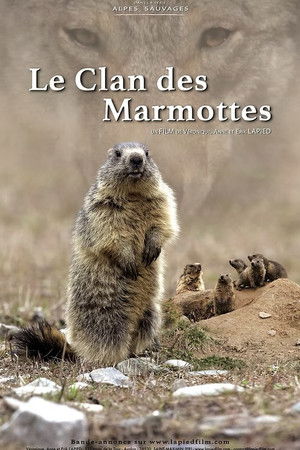
The marmot is a beloved and iconic animal of the Alps, known for its chubby figure and entertaining demeanor. In the film, we follow the life of Mox, a young male who emerges from his burrow at 6500 feet altitude for the first time after four weeks of being born. He has a limited window of time to build up enough fat reserves to survive his six-month hibernation underground. During this period, Mox engages in playful activities with his peers, mutual grooming, and feasts on succulent plants. He also learns to identify the scent of each colony member, the peaceful presence of chamois and ibex, and the dangers that lurk above. When Mox wakes up the following year from hibernation, he is exhausted, emaciated, and vulnerable to predators such as eagles, foxes, and wolves that still roam the snow and avalanche-covered slopes.
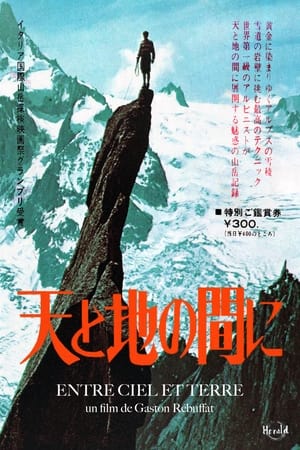
This is Gaston Rebuffat's fourth film, in which, with several close friends, he discovers the sublime landscapes of the Alps. “Mont-Blanc is beautiful. I climbed it several times depending on the time, the color of the sky and the shape of the cornices and ridges. Because of the weather and also because of this feeling of altitude, Mont-Blanc provides great pleasure. For the guide, Mont Blanc is his garden, but the garden becomes more beautiful when shown to a friend. Personally, I really like the bivouacs; only there one penetrates a little the mystery of the altitude. That's why I immediately accepted when Tazieff expressed the desire to spend the night at the top of Mont Blanc in an igloo. The film won the Grand Prix at the Trento Film Festival in 1961.
La Montagna di Ilio
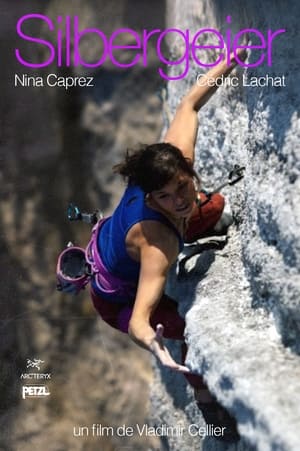
Silbergeier is a long pitch route (8b+ max) built by Pietro del Pra in 1993 and organized by Beat Kammerlander. In this film, Nina Caprez achieves the first female ascent with her then partner Cédric Lachat. A beautiful production by Vladimir Cellier, carried by essential music.
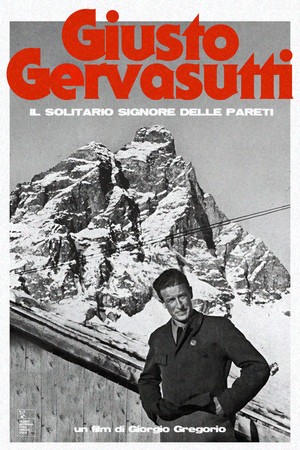
Giusto Gervasutti (1909-1946) was an Italian mountaineer, considered by many to be the best mountaineer of his generation and one of the greatest of the post-war era. He achieved his first feats in 1930 and revolutionized mountaineering in the Western Alps by repeating and opening routes of extreme difficulty that are still considered absolute routes today: the east face of the Grandes Jorasses (with his friend Boccalatte), the northeast spur of the Aiguille Noire de Peuterey, the north face of the Grandes Jorasses, the Gervasutti route on the Gugliermina, the east face of Mont Blanc du Tacul (where he died in 1946), among an incredible list of climbs. The film, made to mark the centenary of Giusto Gervasutti's birth, portrays a solitary and tormented mountaineer, endowed with an impeccable moral sense, an advocate of light and ethical mountaineering, always in search of an unattainable happiness.
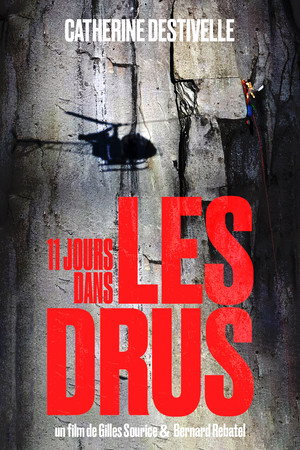
At 31, and with four world climbing championship titles to her name, Catherine Destivelle had already amassed numerous mountaineering achievements, notably the ascent of the Trango Tower in the Karakoram and the Bonatti Pillar on the Drus. On June 24 and July 4, 1991, she attempted to open a new route on the notoriously difficult west face of the Drus: alone, unsupported, and carrying 80 kilos of equipment. After 11 days and 11 nights battling the cold and the rock, on July 4, 1991, Catherine Destivelle reached the summit of the Drus. Following this solitary odyssey on one of the most beautiful faces in the Alps, the climbing star became a renowned mountaineer. Today, despite this line having disappeared in the major collapses of the Drus in the 2000s, Catherine Destivelle will become the first woman to have climbed the three great north faces of the Alps: the Grandes Jorasses, the Matterhorn and the Eiger – solo.
In 1910, Arrigo Frusta and the operator Giovanni B. Vitrotti took the camera up to the 4000 meters high of the Mont Blanc chain to make three short mountaineering films for the Società Anonima Ambrosio. They were the first in Italy to realize documentaries in the high mountains. In this first film, a party of three mountaineers, including Arrigo Frusta make a mountaineering traverse in the Mont Blanc Massif. The purpose of the film is not to show a concret ascent, but to show the beauty and spectacularity of the high mountain landscapes and the the fascination of those who venture to conquer the high peaks. The other two films of the series are: 'Da Courmayeur al Colle del Gigante' and 'Sulle dentate scintillanti'.
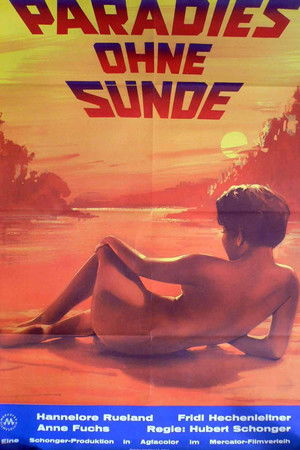
Documentary about the plants, animals and nude women of the alps.
A fascinating chronology of 100 years of mountain film history in the Alps. This documentary focuses primarily on films shot on the Matterhorn, the Eiger, and the Grandes Jorasses, considered until the 1930s as the "last problems of the Alps," and shows the evolution of mountain filmmaking through numerous excerpts from documentaries and feature films – notably on the Matterhorn in 1901. The genre, appropriated as a means of mass exaltation by "fascist" regimes during the Second World War, was reinvented in the 1950s by Gaston Rebuffat, Marcel Ichac, and Lionel Terray in the Mont Blanc massif, avant-garde figures of French mountain cinema, who reintroduced, beyond performance, the values of the mountains – and in color – poetry, humor, and sharing among people from all walks of life.
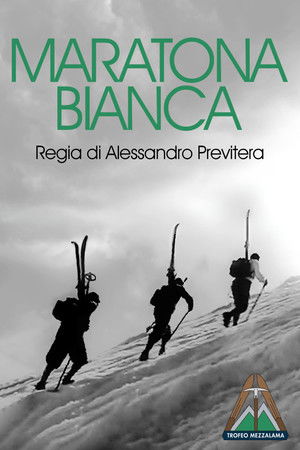
Documentary on one of the first editions of the Trofeo Mezzalama, the highest ski mountaineering race in Europe, at more than 4,200 meters above sea level, which takes place on the glaciers of Monte Rosa, from Breuil to Gressoney-La-Trinité, crossing the summits of Castor (4,199 meters) and Nez du Liskamm (4,100 meters). The film recounts the last hours of feverish preparation before the start, the teams preparing for the race linked in ropes, then follows the stages of the competition by following the groups of skiers from a plane. Created in 1933, the Trofeo Mezzalama was contested until 1938, before falling into oblivion during the war. A second version was organized from 1970 to 1973. A third biannual version has been organized since 1997.
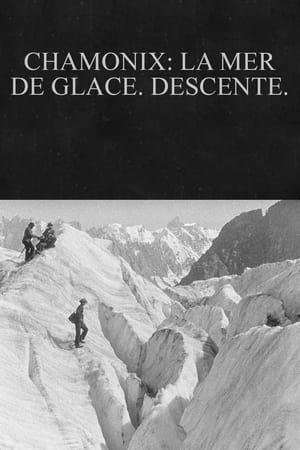
Four roped men descend through the seracs of the Mer de Glace. One of them falls and has to be hoisted. The shot belongs to a collection of scenes that were presented together as a kind of travelogue film under the title of 'Voyages animés' in a diorama pavilion in the Universal Exhibition of Paris of 1900. The mountaineering scenes in this series include four scenes in the Mer de Glace and one in the Meije glacier. These five scenes, under a minute long, are the first mountaineering images ever filmed. Several of the 'Voyages animés' scenes were included in the Lumière catalog in 1901 under the title of 'À travers la France'.