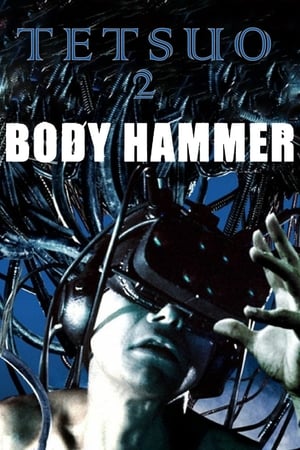
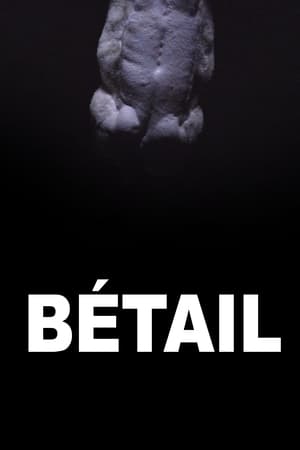
Europe, 2028. A humanlike creature washes ashore, carrying with him a motionless body he calls his mother. He is on a mission of some kind, reporting on the dwindling human activity in an increasingly automated world.
Part of a collection of restored early works by Nam June Paik, the haunting Beatles Electronique reveals Paik's engagement with manipulation of pop icons and electronic images. Snippets of footage from A Hard Day's Night are countered with Paik's early electronic processing.
A Schmelzdahin short wherein a print of a portion of Nosferatu (including the iconic shot of the vampire on the boat) has been degraded and abstracted through the bacterialogical decomposition, disintegration, and chemical processes Schmelzdahin would use.
A man and woman embark on a sexual journey to detach mind from body. The relationship slowly grows into one of emotional domination, physical disease, abandonment and the creation of personal pornography.
Eleven young film-makers got together to collaborate in this atypical project. Atypical not only because of its technical specs, but because of its narrative structure. There are several scenes with only the city in common, and more as a conceptual presence at that than as a precise geography. None of those scenes contains a single "story": Each one of them is part of a larger situation that we cannot see, as though the beginning and end of each "story" had to be filled in by the audience.
"The majority of my 8-mm works were made for the three-minute "Personal Focus" film special put on in Fukuoka. This film is an animation of photographs I had taken on a regular basis as a sort of diary, and was made to have a rough feel to it." - Takashi Ito
I turned my gaze to the various events in daily life and made this filmic diary in a manner as if confessing my feelings. Of course, since I was making the film, I wanted to depict these feelings and events with tricky techniques. I used various methods to shoot photographs of a relative's wedding, the landscape I see from window of my house, commemorative travel photographs and the like frame-by-frame.
Short experimental 16mm film.
A short film recounting the travels of a lonely astronaut confronted by the unknown. Unfolding as a mystery, it becomes a carefully subtle, autobiographical examination of the feeling of loneliness and the existential issue of not understanding life on earth and ones place among it.
This fantastical movie inspired by the music of Michael Jackson features imaginative interpretations of hit tracks from the iconic 1987 album “Bad”.
A work produced for the Morimura Yasumasa Exhibition at the Yokohama Museum of Art, (April 6 to June, 1996). It was shown in an old-style theater constructed within the exhibit space that featured photographs of Morimura playing famous foreign and Japanese actresses.
A small portrait of the volatility of intimacy and of breaking free from abusive cycles: made in response to a year of collapsing relationships and violent accidents that left me broken, dislocated and stuck in my apartment.
The Kuwaiti short film العاصفة (The Storm) explores Kuwait's social and economic shifts before and after the discovery of oil. Through the perspectives of an older father and his modernized son, it delves into the challenges of tradition versus rapid modernization.
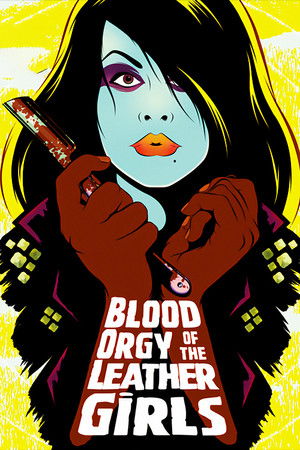
A gang of women wreak havoc in the city, killing various men who have treated women poorly. And sometimes they do it just for fun.
Thanks to his myriad film roles, Lon Chaney is known as “the man of a thousand faces,” and you could say that the early horror era never beheld a figure more intriguing. Yet because of his numerous transformations, his face never became as iconic as that of, say, Boris Karloff. Accompanied by a soundtrack from Bernhard Lang, this “re-imagination of shots” taken from Chaney´s forty-six surviving films offers a beguiling excursion into the history of film. The director reveals surprising associations, while highlighting the enduring magic of works which are now more or less forgotten.
This film describes a psychological state "kin to moonstruck, its images emblems (not quite symbols) of suspension-of-self within consciousness and then that feeling of falling away from conscious thought. The film can only be said to describe or be emblematic of this state because I cannot imagine symbolizing or otherwise representing an equivalent of thoughtlessness itself. Thus the actors in the film, Jane Brakhage, Tom and Gloria Bartek, Williams Burroughs, Allen Ginsberg, Peter Olovsky and Phillip Whalen are figments of this 'Thought-Fallen Process', as are their images in the film to find themselves being photographed."
The final 17 years of American singer and musician Karen Carpenter, performed almost entirely by modified Barbie dolls.
The quasi-fictional story of transgender sex workers living in Rio de Janeiro's swampy red light district, who are joined by a group of hippies and a runaway stockbroker, "Mangue-Bangue" is the paradigmatic expression of the post-1968 spirit of desbunde, the Brazilian slang catchword for "sex, drugs, and rock 'n' roll".
"Adrift" is shot on the arctic island of Spitzbergen and in Norway. It combines time-lapse photography with stop-motion animation of the landscape. Through camera-angles and framing the film gradually dislocates the viewer from a stable base where one loses the sense of scale and grounding.
Lacking a formal narrative, Warhol's mammoth film follows various residents of the Chelsea Hotel in 1966 New York City. The film was intended to be screened via dual projector set-up.