Pilot JP Schulze and filmmaker Louis Cole set off to circumnavigate the world in a single-engine, 1974 Cessna T210L airplane named Balloo. They had 90 days to complete the journey, and as they traveled they met people from many different cultures and asked them - is what divides us greater than what brings us together?
This Traveltalk series short celebrates San Francisco, past and present.
This Traveltalk series short visits The Grand Canyon and Bryce Canyon.
A woman narrates the thoughts of a world traveler, meditations on time and memory expressed in words and images from places as far-flung as Japan, Guinea-Bissau, Iceland, and San Francisco.
This Traveltalk series short takes a look at Cairo's landmarks, people, and culture.
This Traveltalk series short highlights such Maryland destinations as Baltimore, Johns Hopkins, Annapolis, and Fort McHenry.
Lake Patzcuaro, located 230 miles west of Mexico City, is one of the highest and most picturesque bodies of water in Mexico. The heritage of the indigenous peoples of the area, the Tarascans, still prevails, such as the production of lacquer-ware handicrafts, and the means of hunting and fishing, the latter which uses nets shaped like large butterfly wings. Although most current day Tarascans are Roman Catholic, they have not totally abandoned their indigenous pagan gods. On Janitzio, one of the many islands in the lake, stands a large statue commemorating José María Morelos, a prominent figure in Mexican liberation and a great benefactor to the Tarascans. Janitzio is also the inspiration for many famous paintings. The town of Tzintzuntzan just inland from the lake's shore acts as the regional center for the market and for festivals.
James A. FitzPatrick takes a look at colorful Guatemala.
A visit to Singapore, an essential port city in Britain's empire, established in 1813 when Raffles negotiated its separation from the independent Malay state of Jahor. The camera observes Singapore's traditional neighborhoods, trade, and small craft, which are dominated by people of Chinese ancestry. Then, we drive the modern causeway to Jahor's small capital, Johor Bahru, for a look at imposing buildings and a visit to the grounds of the sultan. The sultan's son invites the crew in, and we meet the sultan, "H.H." himself. The narrator relates the sultan's commitment to commerce, economic well-being, and tolerance, stemming in part from his European education.
This Traveltalk short visits southern Mexico.
The drive from Riverside, California to Phoenix, Arizona is affectionately known as the Cactus Trail. Starting in Riverside, sights of note include: the Mission Inn in Riverside whose unique style was the brainchild of Frank Miller; the Chapel of St. Francis in Riverside, which because of its dedication to aviation is the site of many weddings associated with aviators; the Camelback Mountain outside of Phoenix, so named for its shape.
This Traveltalk series short starts off in Denver, capital of Colorado. Known as a recreational and health center, it is noted for its beautiful parks. The Museum of Natural History has specimens of local animal life. About an hour's drive from Denver on Lookout Mountain is the grave of Col. William Cody, 'Buffalo Bill', known as a scout and a plainsman. In Colorado Springs, there is a monument to the great American humorist Will Rogers who loved the stretches of open country. Much of the mountain area of Colorado is owned by the Federal government as national forest and there are many well stocked trout streams. In Mesa Verde National Park you will find the cave dwellings once used by Native Americans.
A tour of Salt Lake City, Utah.
A visit to the structures built by the ancient Mayans at Chichén Itzá, on the Yucatán Peninsula.
We begin this short visit to Guatemala at the port town of Livingstone, then journey up the Rio Dulce. We stop to watch men tap the trees, harvest the sap, and load the product onto small planes. At a local market, we see indigenous life much as it's been for hundreds of years. Then it's back to the coast, to the prosperous Isla de Flores, a trading island.
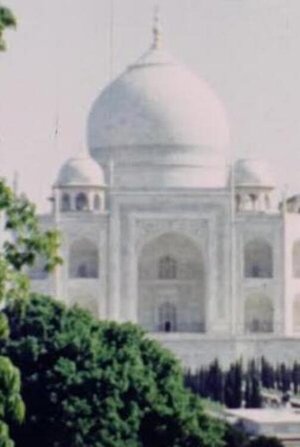
This Traveltalk series short visits a few locations where the centuries-old traditions of ancient India are kept alive in contemporary times.
This Traveltalk series short visits the State of Virginia. In 1947, agriculture was the mainstay of the economy. Tobacco, molasses from cane and peanuts were the agricultural mainstays. The State capitol, Richmond, can boast the oldest legislature in the Western Hemisphere. There are many attractions including old caverns with beautiful rock displays.
Located in the United Kingdom, the Principality of Wales, home to 2.5 million people, is filled with rolling mountains, and green valleys. Because of its culture and language, it is unique within the UK. Much of the economy is based on small independent farms, but also includes coal and slate mining. Its many castles - including Caernarfon and Conwy - comprise its most famous built landmarks. Another landmark is the Menai suspension bridge - spanning the Menai Straits - the longest such structure in the UK. As Wales is a largely coastal jurisdiction, the Welsh have taken advantage of water opportunities, whether it be for fishing, or for recreation at one of the many coastal resorts, such as the most famous, Llandudno. There are also mountain resorts, such as Betws-y-Coed. Mount Snowdon, the highest peak in Wales, offers great hiking and climbing opportunities.
This Traveltalk series short looks at four of Spain's most famous cities, Granada, Seville, Toledo, and Madrid, with an emphasis on the Moors and their influence on the country.
This travelogue begins with the vast agricultural wealth of the country, whose farmers can produce four times the amount required to feed the country's population. As such, the export of these agricultural products is a vital part of the country's economy. This agricultural tradition extends to its food consumption, as Denmark's vast array of open faced sandwiches is world renowned. It also extends to flower production and the Dane's love of flowers, which are sold in public markets. Denmark has a strong social support system, as witnessed by the free and mandatory public schooling, free medical services for expectant mothers and children, the provision of cooperative housing and housing for seniors, and the provision of old age pensions without premiums.