A history of the French Revolution beginning from the decision of the king to convene the Etats-Generaux in 1789 in order to deal with France's debt problem. Part one spans the event until August 10, 1792 (when the King Louis XVI lost all authority and was imprisoned). Part two carries the story through the end of the terror in 1794.
The enigma of the personality cult is revealed in the grand spectacle of Stalin’s funeral. The film is based on unique archive footage, shot in the USSR on March 5 - 9, 1953, when the country mourned and buried Joseph Stalin.
16th century ruler King Philip II of Spain maneuvers within a court of deceit and betrayal
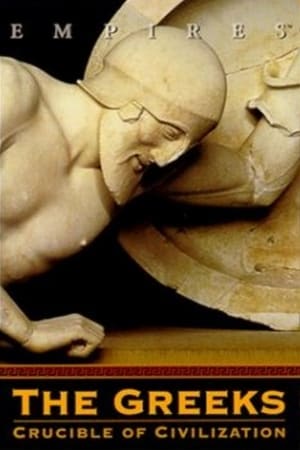
It was perhaps the most spectacular flourishing of imagination and achievement in recorded history. In the Fourth and Fifth Centuries BC, the Greeks built an empire that stretched across the Mediterranean from Asia to Spain. They laid the foundations of modern science, politics, warfare and philosophy, and produced some of the most breathtaking art and architecture the world has ever seen. This series, narrated by Liam Neeson, recounts the rise, glory, demise and legacy of the empire that marked the dawn of Western civilization. The story of this astonishing civilization is told through the lives of heroes of ancient Greece. The latest advances in computer and television technology rebuild the Acropolis, recreate the Battle of Marathon and restore the grandeur of the Academy, where Socrates, Plato and Aristotle forged the foundation of Western thought.
The fascinating story of the rise to power of dictator Benito Mussolini (1883-1945) in Italy in 1922 and how fascism marked the fate of the entire world in the dark years to come.
Take a technological thrill ride The Magic of Flight takes you on a technological thrill ride faster, higher and wider than modern science or even your imagination! Relive the first flight of the Wright Brothers, then soar with the Blue Angels as they defy the laws of gravity. Narrated by Tom Selleck.
Filmed in IMAX, a young girl questions her grandfather about the alleged curse of King Tutankhamen. His response takes us up to the source of the nourishing river Nile, to the Great Pyramids of Giza, to the Valley of the Kings.
It is the year 2546. Corporations rule the world, and an agent is on a secret mission to explore the untold stories of the past. His journey leads him into a secret virtual reality where one corporation has recreated the 1980s, an era that witnessed the birth of video game development, an event in which a politically and economically restricted small European country, Hungary, had a significant role. He discovers a strange but exciting world, where computers were smuggled through the Iron Curtain and serious engineers started developing games. This small country was still under Soviet pressure when a group of people managed to set up one of the first game development studios in the world, and western computer stores started clearing room on their shelves for Hungarian products.
The Prince of Guastalla falls in love with the young citizen Emilia Galotti, who is soon to marry Count Appiani. In order to win Emilia, the prince tries to send the count on an "honorable" journey on his behalf with the help of his chamberlain Marinelli. However, after the Count refuses this offer, Marinelli decides to have the wedding carriage robbed on his own initiative in order to have Emilia abducted to the Prince's nearby pleasure palace. But he has not thought of the prince's mistress, Countess Orsina, and Emilia's shaken father Odoardo, both of whom soon arrive at the castle, one to meet the prince, the other to look after his daughter...
The film portrays MacArthur's life from 1942, before the Battle of Bataan, to 1952, when he was removed from his Korean War command by President Truman for insubordination, and is recounted in flashback as he visits West Point.
This MGM Passing Parade series short presents how separate events led to the creation of three provisions - freedom of speech, freedom of the press, and prohibition of the infliction of cruel and unusual punishments - in the U.S. Constitution's Bill of Rights.
The incredible story of Lucrezia Borgia (1480-1519), daughter of Pope Alexander VI (1431-1503), deliberately used politically by her powerful family and historically slandered as a poisoner and incestuous femme fatale. But who was the real Lucrezia?
A short film depicting the execution of Mary, Queen of the Scots. Mary is brought to the execution block and made to kneel down with her neck over it. The executioner lifts his axe ready to bring it down. After that frame Mary has been replaced by a dummy. The axe comes down and severs the head of the dummy from the body. The executioner picks up the head and shows it around for everyone else to see. One of the first camera tricks to be used in a movie.
New York City's Stonewall Inn is regarded by many as the site of gay and lesbian liberation since it was at this bar that drag queens fought back against police June 27-28, 1969. This documentary uses extensive archival film, movie clips and personal recollections to construct an audiovisual history of the gay community before the Stonewall riots.
This short-form documentary focuses on the true story of Alfons Heck, who as an impressionable 10-year-old boy became a high-ranking member of the Hitler youth movement during World War II. The story is told in his own words. This film originally aired as part of the "America Undercover" series on HBO.
A young Bulgarian girl digs into her grandfather's turbulent life in an attempt to unravel the past and find answers and explanations for the catastrophic fall of communism.
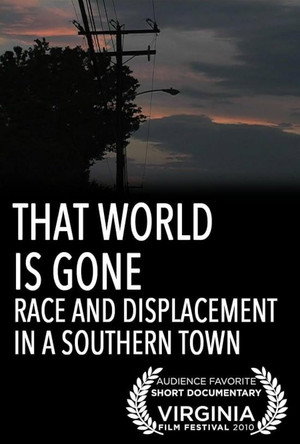
Kathy's family left on a Saturday morning in 1965. The rumble of bulldozers echoed through the neighborhood, and her block was empty. Federally-funded urban renewal had arrived in Charlottesville, scattering dozens of families like Kathy's. The once-vibrant African American community, built by formerly enslaved men and women who had secured a long-denied piece of the American dream, disappeared.
A love story offering an intimate look inside the marriage of Winston and Clementine Churchill during a particularly troubled, though little-known, moment in their lives.
During the Italian Renaissance, Pope Julius II contracts the influential artist Michelangelo to sculpt 40 statues for his tomb. When the pope changes his mind and asks the sculptor to paint a mural in the Sistine Chapel, Michelangelo doubts his painting skills and abandons the project. Divine inspiration returns Michelangelo to the mural, but his artistic vision clashes with the pope's demanding personality and threatens the success of the historic painting.
In 1910, the Pennsylvania Railroad successfully accomplished the enormous engineering feat of building tunnels under New York City's Hudson and East Rivers, connecting the railroad to New York and New England, knitting together the entire eastern half of the United States. The tunnels terminated in what was one of the greatest architectural achievements of its time, Pennsylvania Station. Penn Station covered nearly eight acres, extended two city blocks, and housed one of the largest public spaces in the world. But just 53 years after the station’s opening, the monumental building that was supposed to last forever, to herald and represent the American Empire, was slated to be destroyed.