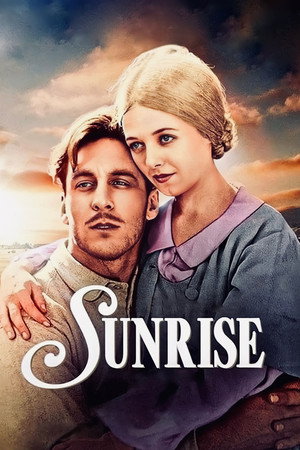
A married farmer falls under the spell of a slatternly woman from the city, who tries to convince him to drown his wife.
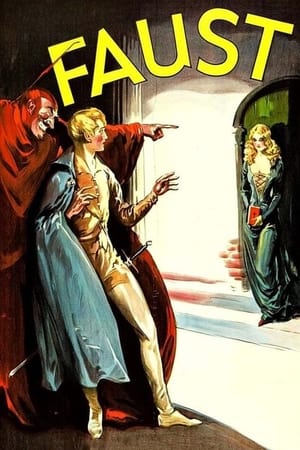
God and Satan war over earth; to settle things, they wager on the soul of Faust, a learned and prayerful alchemist.
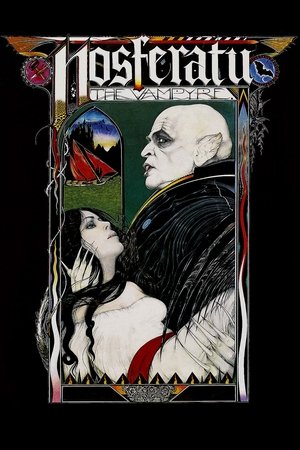
A real estate agent leaves behind his beautiful wife to go to Transylvania to visit the mysterious Count Dracula and formalize the purchase of a property in Wismar.
As a young couple stops and rests in a small village inn, the man is abducted by Death and is sequestered behind a huge doorless, windowless wall. The woman finds a mystic entrance and is met by Death, who tells her three separate stories set in exotic locales, all involving circumstances similar to hers.
Prague, Bohemia, 1820. Balduin, a penniless student, falls in love with Countess Margit, a wealthy noblewoman whom he has saved from drowning.
A banker, after a prophetic meeting with a Gypsy fortune teller, becomes delusional as he searches for a trunk which the seer has told him holds the key to either his happiness or his death. This film is considered lost.
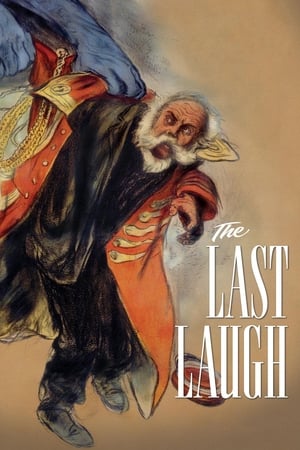
An aging doorman, after being fired from his prestigious job at a luxurious hotel, is forced to face the scorn of his friends, neighbours and society.
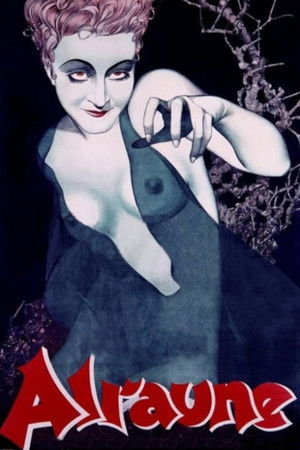
Hanns Heinz Ewers' grim science-fiction novel Alraune has already been filmed twice when this version was assembled in 1928. In another of his "mad doctor" roles, Paul Wegener plays Professor Brinken, sociopathic scientist who combines the genes of an executed murderer with those of a prostitute. The result is a beautiful young woman named Alraune (Brigitte Helm), who is incapable of feeling any real emotions -- least of all guilt or regret. Upon attaining adulthood, Alraune sets about to seduce and destroy every male who crosses her path. Ultimately, Professor Brinken is hoist on his own petard when he falls hopelessly in love with Alraune himself. Alraune was remade in 1930, with Brigitte Helm repeating her role, and again in 1951, with Hildegarde Knef as the "heroine" and Erich von Stroheim as her misguided mentor.
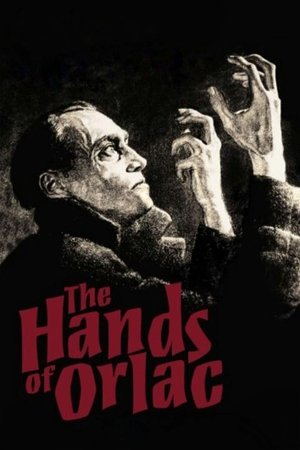
A world-famous pianist loses both hands in an accident. When new hands are grafted on, he is horrified to learn they once belonged to a murderer.
John, a young man raised by his aunt, is in love with Anna, a servant girl who is going to have his baby. He is willing to marry her but his stern aunt wants him to marry a rich girl. To separate the lovers, she arranges for her nephew to be enrolled at a university in a distant town. She then has Anna sent away to live with Torgus the coffin maker and his mother where she will be secluded until the birth of the child. Torgus, a clumsy golem-esque sort of fellow, is immediately charmed by the beautiful girl and takes pity on her. Meanwhile, Anna anxiously awaits John's return.
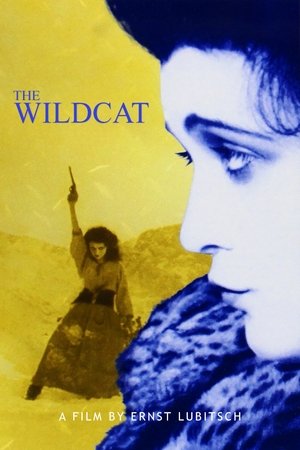
A charismatic lieutenant newly assigned to a remote fort is captured by a group of mountain bandits, thus setting in motion a madcap farce that is Lubitsch at his most unrestrained. A wonderfully anarchic and playfully subversive satire of military life from one of the great comedy filmmakers.
Scientist Martin Fellmann is tormented by an irrational fear of knives and the irresistible compulsion to murder his wife. Driven to the brink of madness by fantastic nightmares, he encounters a psychoanalyst who offers to treat the perplexing malady.
During a dinner given by a wealthy baron and his wife, attended by four of her suitors in a 19th century German manor, a shadow-player rescues the marriage by giving all the guests a vision what might happen tonight if the baron stays jealous and the suitors do not reduce their advances towards his beautiful wife. Or was it a vision?
A traumatized man returning home from war discovers that his wife has slipped into the underclass.
In a monotone and a long-walk routine, Heitor is headed to another work day, until something begins to follow him
Hamlet and Ophelia reckon with their doomed narratives against the backdrop of the similarly doomed pre-Wende Germany and 2020s United States. A short-film adaptation of the 1977 East German Heiner Müller play of the same name.
The young Evelyne lives with a man, her fiancee Frank, with whom she has a child. But her fiancee is a rundown drunk constantly hanging over the bottle. Evelyne wants to leave Frank.
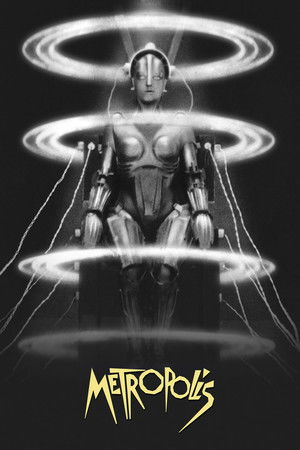
An alien from the planet Algol gives a man a device that creates enough energy to power the entire world.
The film tries to capture the "nervous epidemic" caused by war and misery which "drives people mad". This unique portrait of the life in 1919 Germany, filmed on location in Munich, describes the cases of different people from all levels of society: Factory owner Roloff, who loses his mind in view of catastrophies and social disturbances; teacher John, who is the hero of the masses; and Marja who turns into a radical revolutionary.
Student Raskolnikow, who has written an article about laws and crime, proposing the thesis that un-ordinary people can commit crimes if their actions are necessary for the benifit of mankind, murders an old woman, who operates a crooked loaning house, as well as her sister, who made the mistake of visiting her at the wrong time. He is suspected of the crime, but somebody else confesses to the murder.