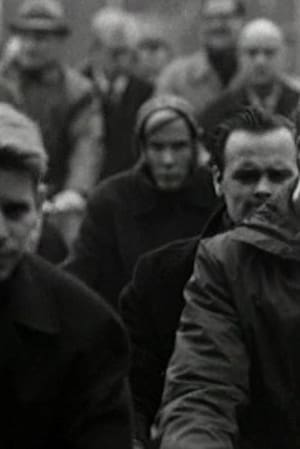
Cinéastes de notre temps : Erich von Stroheim
Cinéastes de notre temps : Jean Vigo
Filmmakers of Our Time: François Truffaut or the Critical Spirit
The first of two documentaries about Ingmar Bergman produced to mark his 70th birthday. Includes behind the scenes "home movies" from Bergman's personal archive, interviews with Bergman recorded over his 40 years in the film industry and passages from his autobiography read by Max von Sydow and Bergman himself.
Materialista, idealista, cinematógrafo, magnetófono, buen chico y sádico
Denis Lavant reads long passages from Luis Buñuel's semi-autobiographical "My Last Sigh". From this text, without film excerpts, Laurence Garret travels in the footsteps of Buñuel, from Calanda to Zaragoza, Madrid to Toledo, Spain to Mexico.
Watching My Name Go By is a 1976 BBC documentary on the birth of graffiti in New York City, and the fight to both prevent it, and expand it's artistic value. In 'Watching my name go by' kids in New York have a unique kind of occupation - sitting on the subway stations ' watching my name go by'. Eleven to 17-year olds compete to see how many times they can 'get their names up ' in a colorful way - a kind of graffiti cult game which has its own rules and regulations. It's illegal and dangerous-some New Yorkers think it's a kind of ' art others think it's disgusting.
'if you only had one year left of your life, what would you do?' This question asks Swiss author Franz Hohler. His answer: 'Make death your adviser to live life to the fullest.' He is one of several carefully chosen Swiss citizens who give us an insight into their personal views on life and death. Besides these colorful, oftentimes funny quotes we meet Tom, a 50-year old male that has been diagnosed with incurable brain tumor. Contrary to what one would expect, Tom takes his sickness not as a burden but as a chance and lives his life happier than ever before. This to the surprise of his family and friends and above all - himself. The film encourages people to live life more consciously.
What does it mean to belong to a place, a country? In a south Tel Aviv elementary school, that question is addressed head-on by a fourth-grade class and their teacher. The children are asylum seekers whose families mostly do not have a legal status in Israel, yet learn, sing and play in Hebrew all the while examining their identity and sense of belonging.
As a letter to her son, the filmmaker testifies her experience as a photographer aboard the Aquarius, a ship that rescued 29,523 people in the Mediterranean between 2016 and 2018.
The documentary story of Harlan Ellison
Newfoundland painter Gerald Squires has referred to his portraits as "confrontations," though not intending the hostility that word can convey. This film shows a meeting between the artist and Edythe Goodridge, art curator and critic. Through a combination of Squires's reflections on his life and work and the good-natured banter of these two friends, an intimate portrait evolves of the artist and his subject.
NYC based photographer, Khalik Allah, travels to Jamaica to connect with family and document the streets. This is his synopsis.
Affectionate portrait of Timothy "Speed" Levitch, a tour guide for Manhattan's Gray Line double-decker buses.
During the pandemic, a 14 year old boy remains stuck in his school dormitory while his mother tries to contact him.
Life in a rural area in Spain where the sole source of income is the physically gruelling labour of salt mining.
A documentary about the production of From Dusk Till Dawn (1996) and the people who made it.
A short film featuring a coastal forest and the rocky coastline of downeast Maine.
A Local Reno Artist and DJ discusses the many inspirations behind her work and how it impacts herself and others.
Targeted for several failed redevelopment plans dating back to the days of Robert Moses, Willets Point, a gritty area in New York City known as the “Iron Triangle,” is the home of hundreds of immigrant-run, auto repair shops that thrive despite a lack of municipal infrastructure support. During the last year of the Bloomberg Administration, NYC’s government advanced plans for a “dynamic” high-end entertainment district that would completely wipe out this historic industrial core. The year is 2013, and the workers of Willets Point are racing against the clock to forestall their impending eviction. Their story launches an investigation into New York City’s history as the front line of deindustrialization, urban renewal, and gentrification.