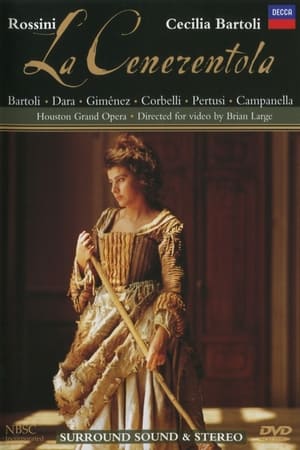
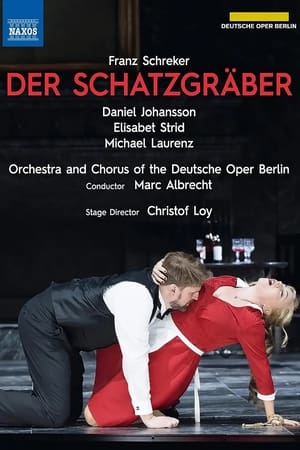
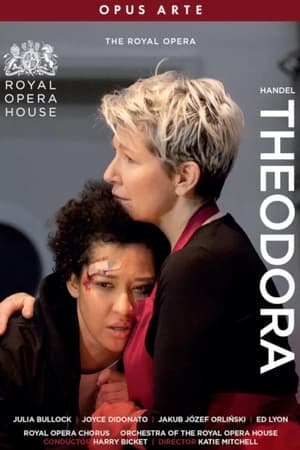
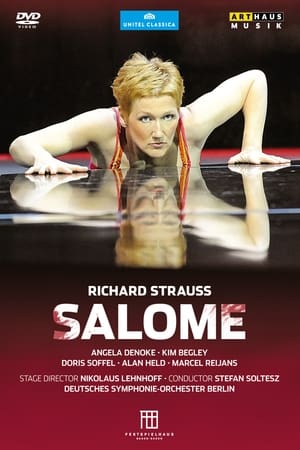
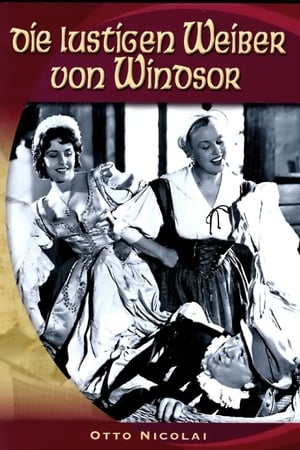
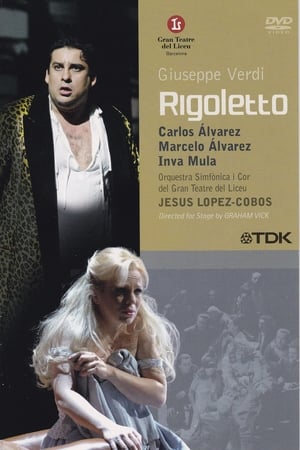
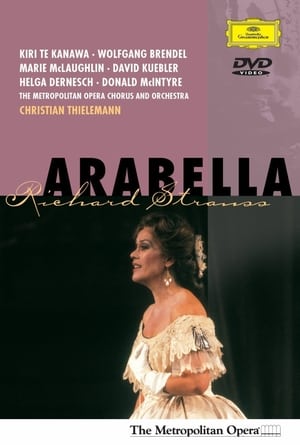
A live performance of Giuseppe Verdi's opera.
The Fool's Revenge
In June 2015, superstar tenor Jonas Kaufmann walked onto the stage of La Scala in Milan to perform a concert of Puccini arias. The concert made national news in Italy with the audience demanding five encores and a forty minute standing ovation. The film of this legendary performance, Jonas Kaufmann An Evening with Puccini, will be shown nationwide in over 300 movie theaters on February 23, and is available as a DVD and Blu-ray. Directed by Brian Large, the film includes an introduction about Puccini the man, the musician, the superstar narrated by Jonas and featuring rare archive footage. The program features a selection of Puccini s world-famous tenor arias all of which appear on Kaufmann s latest recording, Nessun dorma The Puccini Album.
The story is set in southern Italy and recounts the tragedy of Canio, the lead clown (or pagliaccio in Italian) in a commedia dell'arte troupe, his wife Nedda, and her lover, Silvio. When Nedda spurns the advances of Tonio, another player in the troupe, he tells Canio about Nedda's betrayal. In a jealous rage Canio murders both Nedda and Silvio. Although Leoncavallo's opera was originally set in the late 1860's, Zeffirelli's production is updated to the period between World War I and World War II.
Director Rolf Liebermann’s 1968 filmed-for-TV production of Carl Maria von Weber’s opera, with the Hamburg State Opera performing an adapted stage version. Soloists include Bernhard Minetti, Toni Blankenheim and Arlene Saunders. The conductor is Leopold Ludwig.
Production from Antwerp. The knight Titurel has built a fortress for two sacred objects he has miraculously obtained: thechalice from the Last Supper in which Christ's blood was later collected, and the spear thatwounded Christ on the cross. The chalice is believed to be the Holy Grail that gives life and has apurifying effect on the human race. The Grail has become the focus for a community of knightswho, strengthened by the holy chalice, are willing to fight for the faith. All the knights have takena vow of chastity. However, the Grail King Amfortas, their leader and Titurel’s son, fails to resistseduction by Kundry, a woman with a double life: she is both a Grail messenger and temptressin the service of Klingsor.
Performance of La Bohème in Teatro alla Scala, 1979.
The sensational hit of Salzburg's 2008 festival season arrives on DVD! Starring tenor Rolando Villazón in a stunning performance, this was the must have ticket of the season. Soprano Nino Machaidze, only 25 years old, burst upon the Salzburg stage with an emotionally vulnerable and vocally spectacular performance. With movie star good looks and a large, warm voice, Machaidze wowed the press and audiences alike. Tony Award winner (South Pacific) Bartlett Sher directs this production of Gounod's classic opera. With sets by Michael Yeargan and costumes by Catherine Zuber, the visually vibrant production is sure to become the benchmark. Bonus materials includes "Salzburg Impressions--Behind the Scenes of Roméo et Juliette," "Love and Death in Verona" and Villazón giving an introduction to the opera.
While best known today for having composed the ending to Puccini's unfinished Turandot, Franco Alfano wrote some dozen operas, including Cyrano de Bergerac (1936) with a libretto by Henri Cain based on Edmond Rostand's drama of the same name. It is a moving tale of romantic misunderstanding, swashbuckling bravado and heartbreaking loyalty, in which the eloquent Cyrano feels unable to express his love for Roxane because of his famously protuberant nose except on behalf of his handsome but inarticulate friend, Christian.
Since it's premiere in a tiny suburban theatre in Vienna, Die Zauberflote has delighted audiences young and old for over 200 years. Mozart's Singspiel seamlessly alternates seriousness and jollity, and combines philosophical ideas with a fairytale world of wondrous animals and magical musical instruments. Emanuel Schikaneder's original production was theatrically inventive, and this new interpretation from director Simon McBurney emulates that in fresh and current terms. Fusing music, technology and stagecraft, this exciting production gives Die Zauberflote a refreshing new treatment that is both thrilling and simple in it's approach. Following an overwhelming success on stage, McBurney's unique production received five-star reviews in the Dutch press: 'a feast for the eyes and the ears' (Het Parool) and 'Delicious!' (Trouw).
After Tosca (2019), which marked Puccini’s entry into its repertoire, the Festival celebrates the centenary of the composer’s death this year by putting on his ‘Japanese tragedy’ Madame Butterfly: the cruel story of a vulnerable but strong and wilful heroine, driven by her blind perseverance to ritual suicide. By enveloping her with a bright lyricism and a supremely refined orchestration, Puccini reaches the heart of his artistic identity – reminding us of the real pleasure of tears. Conducting the orchestra of the Opéra de Lyon, Daniele Rustioni offers the finest of backdrops to Ermonela Jaho, whose rare combination of force and delicacy has made her a go-to choice in this wonderful yet harrowing role, in which she is making her prized debut in Aix.
With their “musical comedy” in the spirit of Mozart, Richard Strauss and his brilliant librettist Hugo von Hofmannsthal created the most popular of all their works and one of the most frequently performed operas of all time. Disguised as a refined comedy, light as a feather and extremely entertaining, “Der Rosenkavalier” tackles universal themes such as love, sexuality, marital fidelity, and the changes that human relationships undergo over time. All set to music of the most sumptuous kind. With its prestigious cast under the inspired direction of Harry Kupfer, the 2014 Salzburg Festival production of *Der Rosenkavalier* was one of the most internationally acclaimed interpretations of the work since the start of the new millennium.
Wolfgang Amadeus Mozart's Magic Flute is undoubtedly one of the most multi-layered, profound, complicated, and therefore also most difficult to stage works in the entire opera repertoire. In terms of genre, it can only be understood if it is seen as a mixture of four things: a philosophically profound drama of ideas with countless encryptions, a naïve fairy tale, a bawdy comedy, and a crude Punch and Judy show. It is based on the intersection of the traditions of Baroque magic opera, Italian buffa, and Viennese Singspiel, where all manner of wonders are conceivable and permissible. Peter Ustinov's production appeals to all those who love a primarily fairy-tale-like interpretation; the atmosphere is traditional and conventional. An outstanding ensemble of singers has been assembled.
From the Styriarte Festival in Graz Austria, the acclaimed mezzo-soprano Cecilia Bartoli and Maestro Nikolaus Harnoncourt with his orchestra Concentus Musicu Wien, present a concert on Haydn arias and Symphony No.92, the "Oxford". The singing virtuosity of "Scena di Berenice" is sublime as is the performance of The "Oxford" Symphony from the ensemble renown for its specialty in early music and playing on period instruments. A unique concert.
Non-musical account of Puccini's opera: Tosca and Cavaradossi are in love, but the tyrant Scarpia desires Tosca and oppresses Cavaradossi who is fighting for freedom.
a film opera; music by: Gaetano Donizetti (Philharmonic Orchestra of Rome) Directed by Giuseppe Zedda.
In 1935, renowned Portuguese neurologist Egas Moniz visits psychiatrist Sobral Cid, trying to convince him to use his patients as subjects for an experimental treatment: frontal leukotomy. The film is a film adaptation of a scene from the play Brainland, which explores three key episodes in the history of 20th-century neuroscience. Each episode addresses dilemmas related to clinical ethics.
"The Queen of Spades" is considered Tchaikovsky's best creation by the world-famous conductor, People's Artist of the USSR Vladimir Ivanovich Fedoseev. He took over the leadership of the musical process of recreating the production at Helikon Opera. The original reading, modern stage language, love for Tchaikovsky's music, which became the hallmarks of Helikon's "Queen of Spades," are preserved in the new version. To this were added the thoughtful gaze of maestro Fedoseev, the stunning stage capabilities of the new hall and the artistic talent of the Helikon troupe.
Anew production of Tannhäuser, which was premiered on 26 July 2019 and presented the Bayreuth debut of conductor Valery Gergiev, as well as the house debut of young soprano star Lise Davidsen. Tobias Kratzer’s staging presented Tannhäuser as a wildly contemporary parable of art and freedom which was praised as “novel” and “wrenching” (New York Times) and received exceptional press acclaim. hey were joined by mezzo soprano Elena Zhidkova’s Venus (“scene stealing”, according to Opera Today), baritone Markus Eiche’s Wolfram and Stephen Milling’s Landgraf.
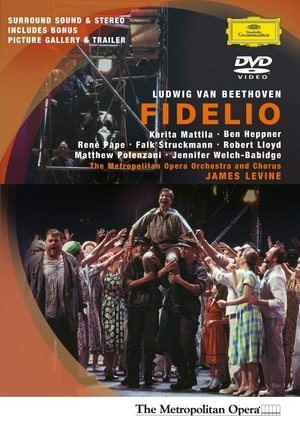
Two years prior to the opening scene, the nobleman Florestan has exposed or attempted to expose certain crimes of the nobleman Pizarro. In revenge, Pizarro has secretly imprisoned Florestan in the prison over which Pizarro is governor. The jailer of the prison, Rocco, has a daughter, Marzelline, and a servant (or assistant), Jaquino. Florestan’s wife, Leonore, came to Rocco’s door dressed as a boy seeking employment, and Rocco hired her. On orders, Rocco has been giving Florestan diminishing rations until he is nearly starved to death. Place: A Spanish state prison, a few miles from Seville; Time: Late 18th century.